
Unified Go To Market Strategy: The Complete Executive Framework
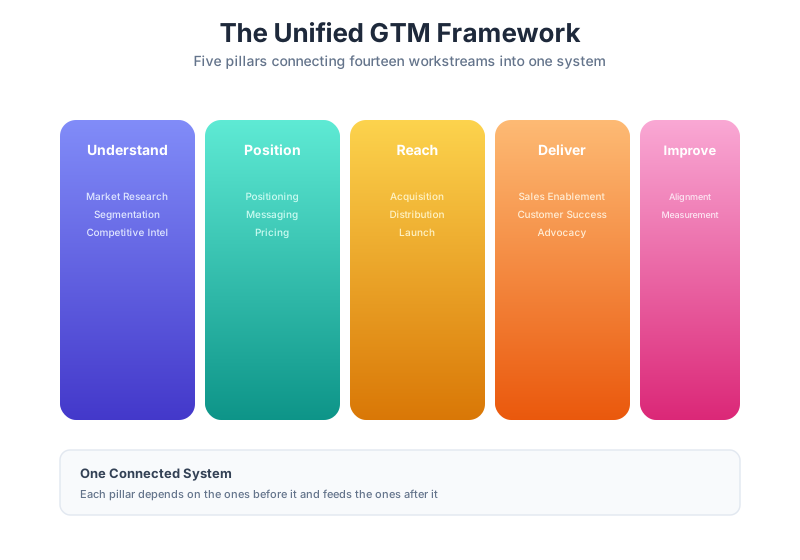
A go to market strategy is not a single document, it is a connected system of decisions, about the market, the customer, the product, the price, the channel, the message, and the people responsible for delivering all of it consistently. Built in isolation, each of these decisions can look reasonable on its own and still add up to a confused, disjointed experience for the customer standing on the other side of them. This unified strategy exists to close that gap, drawing together market research, segmentation, competitive intelligence, positioning, messaging, pricing, acquisition, distribution, alignment, launch execution, measurement, sales enablement, customer success, and advocacy into a single coherent narrative that leadership can use to steer the business with confidence.
This document is intentionally structured as a synthesis rather than an exhaustive deep dive into any single discipline. Each section condenses the essential strategic direction from its corresponding detailed workstream, giving executives and cross functional leaders a fast, complete view of the whole strategy without needing to read through every underlying analysis in full. Anyone wanting the complete detail behind a given section can turn to its dedicated deep dive documentation, while this unified view remains the single source of truth for how all the pieces fit together and what to do next.
Executive Summary
The unified go to market strategy exists to answer one question clearly: how does this business consistently win, keep, and grow the right customers. Every section that follows contributes a piece of that answer, from understanding the market and the customer through positioning the product, pricing it appropriately, reaching the right buyers efficiently, and supporting them well enough that they stay and grow over time.
The strategy rests on a small number of core convictions. Growth compounds fastest when every function works from the same shared understanding of the target customer and the same core message. Positioning and pricing decisions made without competitive and customer research tend to drift toward guesswork. Acquisition efforts disconnected from customer success create a leaky bucket where new customers arrive faster than existing ones are retained. And measurement without a genuine culture of acting on what the data reveals produces reports nobody uses rather than decisions that improve outcomes.
| Strategic Pillar | Core Question Answered | Primary Owner |
|---|---|---|
| Understand | Who is the customer and what do they need | Market research, segmentation, competitive intelligence |
| Position | Why should they choose us | Positioning, messaging, pricing |
| Reach | How do we efficiently find and win them | Acquisition, distribution, launch |
| Deliver | How do we keep and grow them | Customer success, advocacy |
| Improve | How do we know it is working | Measurement, alignment, enablement |
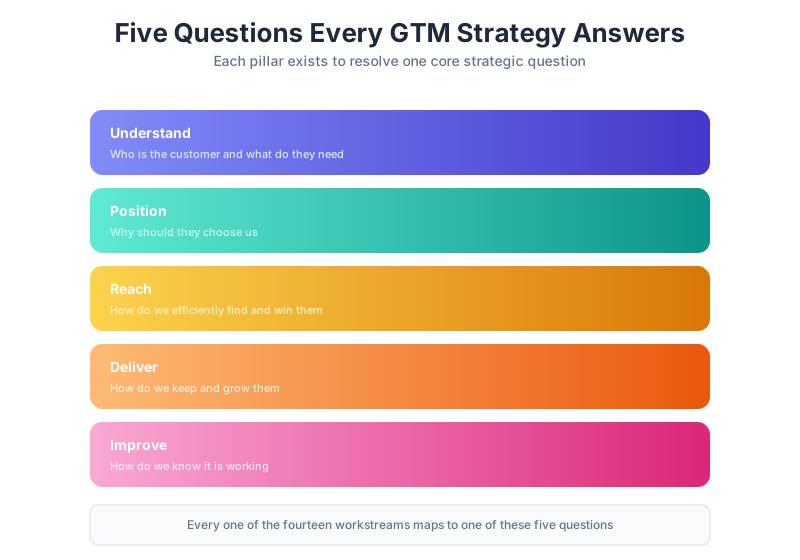
This executive summary should be read alongside the roadmap at the close of this document, since strategy without a specific, time bound plan for execution tends to remain aspirational rather than genuinely operational. Each pillar in the table above corresponds to a cluster of the detailed sections that follow, and leadership reviewing this document for the first time should treat the pillar table as a map for navigating the rest of the strategy according to whichever question matters most to their own current priorities.
Company Intelligence & Strategic Context
Every go to market decision in this strategy is grounded in the company's actual current position, its stage of growth, its existing customer base, its competitive standing, and the internal capabilities available to execute against ambition. Strategic context matters because the right go to market approach for an early stage company entering a new category looks meaningfully different from the right approach for an established player defending share in a mature, well understood market.
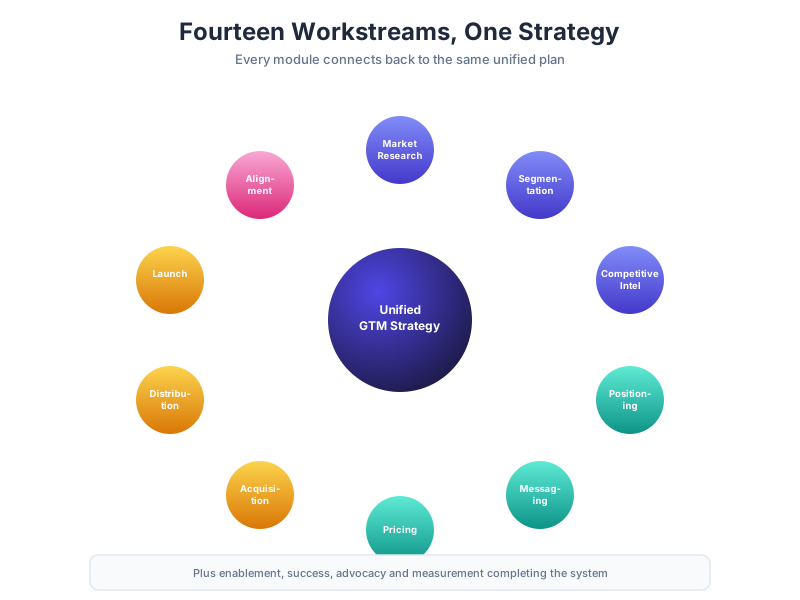
This section captures the honest starting point the rest of the strategy builds from, including current revenue scale, team capacity, product maturity, and the broader industry and economic conditions shaping how aggressively the business can reasonably pursue growth right now. Grounding the strategy in this context prevents an otherwise well reasoned plan from assuming resources or market conditions that do not actually exist.
Revisiting this context at least annually, and more frequently during periods of rapid change, keeps the broader strategy honest and current rather than anchored to assumptions about the company's position that quietly become outdated as the business itself evolves. A strategy built for a fifty person organization competing in a nascent category requires meaningful revision once that same company reaches five hundred people and a mature, well contested market, and treating strategic context as a fixed starting point rather than a variable worth revisiting is one of the more common reasons an otherwise sound strategy gradually loses its relevance.
Market Research
Market research establishes the size, structure, and trajectory of the market the business is competing within, covering the total addressable market, the serviceable available and obtainable portions of it, and the trends, opportunities, and regulatory considerations shaping how the category is likely to evolve.
The market research deep dive found meaningful growth potential in the segments the business is best positioned to serve, alongside clear structural risks worth planning around, including increasing competitive intensity and specific regulatory considerations relevant to the industries being targeted. The unified strategy treats this market picture as the foundation everything else builds on, since positioning, pricing, and channel decisions all depend on an accurate read of how large the opportunity genuinely is and how quickly it is likely to grow.
Market conditions are never static, and the research underlying this section should be refreshed on a regular cycle rather than treated as a one time exercise completed at the outset of the strategy. A shift in the competitive landscape, a new regulatory development, or a change in broader economic conditions can each meaningfully alter the addressable opportunity, and the rest of the strategy should be revisited accordingly whenever the underlying market picture changes in a material way.
Market & ICP Segmentation
Segmentation translates the broad market into specific, actionable groups of buyers, culminating in a clearly defined ideal customer profile that concentrates go to market investment where it is most likely to succeed. The segmentation work identifies primary and secondary ICP definitions, priority tiers across the broader customer base, and the specific firmographic, technographic, and behavioral signals that indicate a strong fit.
| Segment Tier | Investment Level | Strategic Role |
|---|---|---|
| Tier 1 | Highest, dedicated resourcing | Core revenue engine |
| Tier 2 | Moderate, targeted investment | Efficient secondary growth |
| Tier 3 | Opportunistic | Long term optionality |
This tiered structure keeps acquisition, messaging, and sales resourcing consistently aligned around the same prioritized set of customers, rather than each function independently deciding who to pursue based on its own separate criteria. When marketing, sales, and product all reference the same ICP definition, the entire organization avoids the common failure mode where each function quietly optimizes for a slightly different version of the ideal customer, producing inconsistent targeting that dilutes the impact of every individual function's own efforts.
Competitive Intelligence
Competitive intelligence maps the direct, indirect, and emerging players shaping how customers evaluate their options, along with the broader competitive dynamics, pricing norms, and positioning strategies each significant rival relies on. The analysis identifies where the business holds genuine, durable advantages, where competitors currently hold an edge worth addressing, and where white space exists to claim a differentiated position before others do.
This intelligence feeds directly into positioning, messaging, and sales enablement, ensuring the story the business tells the market, and the specific responses reps give when a competitor comes up in a live deal, both reflect an accurate, current understanding of the competitive landscape rather than an outdated or overly optimistic internal narrative. Because competitors continue to evolve their own products, pricing, and messaging, this section of the strategy requires the most frequent refreshing of any covered here, ideally reviewed at least quarterly rather than left static between major strategic planning cycles.
Product Positioning
Positioning defines the strategic ground the business occupies in the customer's mind, built around a clear positioning statement, a differentiated value proposition, and a set of pillars validated against genuine market relevance, customer fit, and competitive distinctiveness. The positioning work resolved which specific differentiators are genuinely durable and defensible versus which are more easily replicated by competitors, directing brand and product investment toward the advantages worth reinforcing over time.
Positioning serves as the shared reference point every other customer facing function draws from, ensuring messaging, sales conversations, and marketing content all reinforce the same core story rather than drifting into inconsistent, competing narratives. Any proposed change to positioning should be evaluated carefully against the validation criteria established in the underlying deep dive, since a positioning shift ripples immediately into messaging, sales training, and marketing content, and an unplanned drift in how the company describes itself is one of the more common sources of the inconsistency this unified strategy is specifically designed to prevent.
Product Messaging
Messaging translates positioning into the actual words used across every customer touchpoint, organized into a clear hierarchy running from a single core message through supporting themes down to specific tactical copy. The messaging framework addresses distinct audiences, executives, business stakeholders, technical evaluators, and end users, each requiring a different emphasis while still reinforcing the same underlying value proposition.
| Audience | Primary Emphasis | Where It Shows Up |
|---|---|---|
| Executives | Strategic business impact | Board decks, executive briefs |
| Business Stakeholders | Operational improvement | Case studies, demos |
| Technical Buyers | Architecture and security | Documentation, technical proof |
| End Users | Daily ease of use | Onboarding, product tours |
Consistency across these audiences and channels is what allows a prospect encountering the company at any touchpoint, a website, a sales call, a support interaction, to receive the same coherent story. Maintaining this consistency as the organization grows requires more than a document, it requires an accessible, living messaging resource that every new hire across marketing, sales, and customer success can reference directly, rather than each new team member independently reconstructing their own version of the message from whatever materials happen to be readily at hand.
Pricing Strategy
Pricing strategy anchors price to genuine customer value, validated against competitive benchmarks and supported by clear packaging, tiering, and economics that protect margin while remaining accessible to the priority segments identified during segmentation. The pricing analysis clarified which value metric best aligns with how customers experience the product, and confirmed the tier structure genuinely reflects meaningful differences in customer need rather than arbitrary feature gating.
Pricing decisions ripple through nearly every other part of the strategy, shaping messaging, sales conversations, and the specific packaging offered to different segments, which is why pricing changes should always be evaluated against their downstream effect on the rest of the go to market motion rather than in isolation. A pricing change that looks favorable purely from a revenue modeling perspective can still create meaningful friction if it is not accompanied by updated sales enablement, messaging, and clear communication to the customer success team responsible for explaining it to existing accounts.
Customer Acquisition Strategy
Acquisition strategy defines how the business finds and converts new customers efficiently, blending inbound, outbound, product led, and partner led approaches based on what genuinely works best for the target segments and buying behavior established earlier in the strategy. The acquisition analysis identified the channels producing the strongest return relative to cost, along with the specific funnel stage currently limiting overall conversion the most.
Acquisition investment should follow the priority segments defined during segmentation rather than chasing volume indiscriminately, since efficient growth depends on winning the right customers, not simply the largest number of customers regardless of fit. Reviewing acquisition performance regularly against the specific efficiency and quality benchmarks established in the underlying deep dive ensures growth investment continues flowing toward the channels genuinely producing durable, well fitted customers rather than toward whichever channel happens to generate the most immediate but ultimately shallow volume.
Distribution Channel Strategy
Distribution strategy determines the actual paths through which the product reaches customers, whether direct sales, indirect partners, digital self serve, or marketplace listings, each offering a different balance of control, cost, and scaling speed. The distribution analysis prioritized the channels best matched to the product's complexity and the sophistication of the target customer base, while identifying specific partner relationships worth deeper investment.
| Channel Type | Best Fit | Strategic Priority |
|---|---|---|
| Direct Sales | Complex, higher value deals | Primary for enterprise segment |
| Digital Self Serve | Simpler, smaller transactions | Primary for smaller segment |
| Partner Channel | Extended reach, credibility | Secondary, targeted expansion |
Distribution decisions carry lasting weight since they shape sales team structure, pricing model, and customer relationship ownership for years, making this one of the harder strategic choices to reverse once meaningfully underway. Because of this durability, distribution strategy deserves particularly careful review before any major commitment, weighing not only near term reach and cost efficiency but also the longer term implications for brand positioning and direct access to customer feedback that a heavily indirect distribution model can otherwise quietly erode over time.
Marketing Alignment Plan
Marketing alignment ensures every customer facing function, marketing, sales, product, and customer success, operates from the same shared priorities, messaging, and planning cadence. The alignment work established a clear RACI framework for major go to market decisions, a shared set of KPIs tracked across functions, and a regular operating cadence that keeps cross functional coordination active rather than only occurring reactively when problems arise.
Alignment is what allows every other part of this unified strategy to actually function as one coherent system rather than a set of good individual plans that quietly work against each other in practice. Sustaining this alignment requires ongoing attention rather than a single kickoff effort, since the coordination challenges facing a growing organization tend to intensify with scale, and the operating cadence and governance structures established in the underlying deep dive need to mature alongside the business rather than remaining fixed at whatever level of formality made sense when the team was considerably smaller.
Launch & Execute
Launch strategy governs how new products and major initiatives actually reach the market, covering readiness assessment across product, team, operational, and partner dimensions, a clear rollout model, and a detailed timeline connecting pre launch preparation through the critical first ninety days after go live. The launch framework emphasizes that a launch date is a beginning, not a finish line, with sustained post launch attention often determining whether initial momentum becomes durable success.
Every major initiative in this unified strategy, a new pricing model, a repositioning effort, a new channel investment, should move through this same disciplined launch process rather than being introduced informally without coordinated cross functional preparation. Applying this same launch discipline consistently, regardless of whether the initiative is a flagship new product or a smaller internal process change, builds an organizational muscle for coordinated execution that pays dividends well beyond any single launch, making each subsequent initiative easier to execute well than the one before it.
Measure & Optimize
Measurement establishes the performance framework connecting a single North Star metric down through strategic and operational KPIs to the leading indicators that provide early warning before lagging outcomes fully materialize. The measurement discipline covers funnel performance, marketing and sales metrics, and customer performance, feeding into a continuous optimization cycle of measuring, analyzing, testing, and applying what is learned.
| Framework Layer | Review Cadence | Primary Audience |
|---|---|---|
| North Star Metric | Ongoing, always visible | Entire organization |
| Strategic KPIs | Quarterly | Executive leadership |
| Operational KPIs | Weekly to monthly | Functional teams |
| Leading Indicators | Daily to weekly | Analytics and functional owners |
This framework is what keeps the unified strategy alive after its initial launch, ensuring the organization continues learning and adjusting rather than executing an unchanging plan regardless of what real performance data reveals. Every other section of this document ultimately depends on this measurement discipline to know whether it is genuinely working, which is why building reliable, consistently defined metrics early, and reviewing them with the same seriousness given to revenue targets, deserves priority even when the temptation exists to defer measurement infrastructure in favor of more immediately visible go to market activity.
Sales Enablement
Sales enablement equips the sales organization with the process, messaging, assets, and training needed to represent the strategy consistently and effectively in every customer conversation. The enablement analysis assessed sales readiness across maturity, product knowledge, team capability, and process discipline, producing a prioritized set of playbooks, battlecards, and training programs addressing the most significant gaps.
Enablement is the mechanism that turns strategy on paper into consistent behavior across every individual sales conversation, regardless of which specific rep a prospect happens to speak with. As the strategy evolves, whether through updated positioning, a pricing change, or new competitive intelligence, enablement content and training need to be refreshed in step, since a gap between what this unified strategy says and what sales actually communicates in the field undermines the coherence the entire document is designed to protect.
Customer Success & Support
Customer success and support strategy protects and grows the value of every customer already won, covering onboarding and time to value, ongoing adoption and engagement, support model design, and a disciplined approach to renewal, retention, and expansion. A customer health framework combining usage, engagement, and support signals gives the organization a proactive way to identify risk and opportunity across the full customer base.
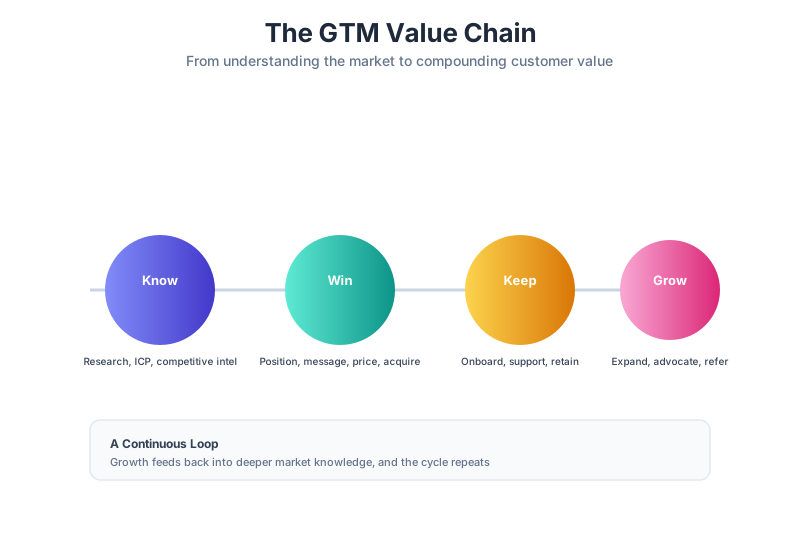
Customer success closes the loop on everything acquisition and sales promised during the buying process, making it one of the most direct protections against the wasted investment of winning a customer only to lose them shortly afterward. Every dollar spent on acquisition depends on customer success for its eventual return, since a new customer who churns quickly after signing effectively erases the acquisition investment made to win them, which is why retention and expansion metrics deserve a place alongside new customer growth in how leadership evaluates overall go to market health.
Customer Advocacy & References
Advocacy and reference strategy turns the strongest customer relationships into active participants in the go to market motion, through structured reference programs, a growing library of proof assets, genuine community and champion relationships, and referral programs that convert satisfied customers into a source of efficient new growth.
Advocacy compounds the credibility of every other part of this strategy, since a prospect hearing directly from a genuine, satisfied peer carries a kind of persuasive weight that no amount of internally produced marketing content can fully replicate on its own. Because advocacy depends entirely on the strength of the underlying customer relationship, this section of the strategy is ultimately a lagging reflection of how well every earlier part of the unified strategy, from positioning through customer success, has actually been executed, making a thriving advocacy program one of the clearest overall signals that the broader strategy is working as intended.
Unified GTM Roadmap & Executive Recommendations
Bringing every workstream together, the unified roadmap sequences execution across the near, mid, and long term, ensuring the organization pursues the highest impact initiatives first while building the foundation needed to sustain growth well beyond the initial push.
Sequencing matters as much as the individual initiatives themselves. Attempting every recommendation across all fourteen underlying workstreams simultaneously overwhelms both organizational capacity and change tolerance, while a well sequenced roadmap builds credibility through early wins, creating momentum and organizational buy-in that make the more ambitious, longer horizon initiatives considerably easier to execute once their turn arrives.
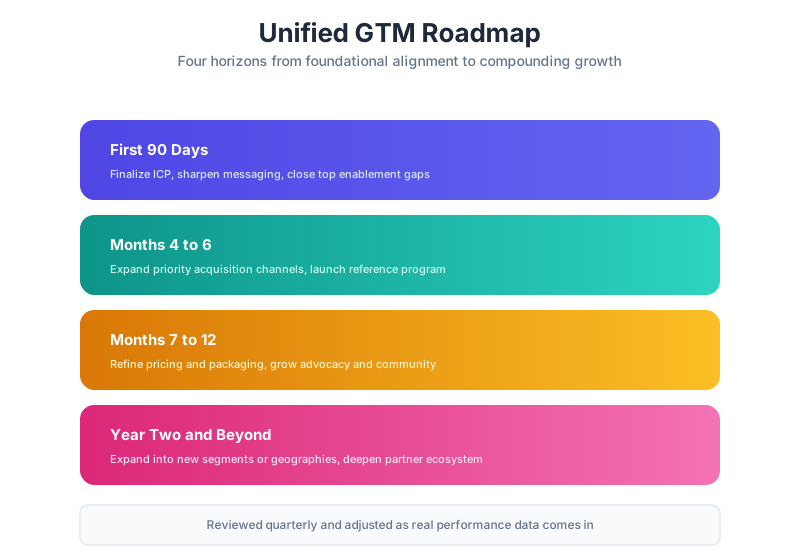
| Horizon | Primary Focus | Representative Initiatives |
|---|---|---|
| First 90 Days | Foundational alignment and quick wins | Finalize ICP, sharpen messaging, close top enablement gaps |
| Months 4 to 6 | Scaling proven channels and programs | Expand priority acquisition channels, launch reference program |
| Months 7 to 12 | Deeper optimization and expansion | Refine pricing and packaging, grow customer advocacy and community |
| Year Two and Beyond | Sustained, compounding growth | Expand into new segments or geographies, deepen partner ecosystem |
Executive Recommendations
Leadership should prioritize three things above all else in the near term: closing the alignment gaps that prevent functions from working as one coherent system, investing in the measurement discipline needed to know quickly whether the strategy is working, and protecting the existing customer base as carefully as new acquisition, since durable growth depends on retention and expansion at least as much as new customer volume.
Beyond these three immediate priorities, leadership should establish a recurring cadence, ideally quarterly, for revisiting this unified strategy as a whole rather than only reviewing individual workstreams in isolation. A quarterly review that walks through each pillar in the executive summary, checking whether the underlying assumptions still hold and whether the roadmap sequencing still reflects current priorities, keeps the entire strategy genuinely current rather than allowing individual sections to drift out of sync with each other as the business and market continue to evolve.
This unified strategy is not a static plan to be filed away once approved. Markets shift, competitors respond, and customer needs evolve, and the organizations that sustain durable go to market success are the ones that revisit this strategy regularly, testing its assumptions against real performance data and adjusting deliberately rather than clinging to a plan that no longer reflects the reality it was built to address. Treated as a living, continuously refined system rather than a one time document, this unified strategy gives the business its clearest path to winning, keeping, and growing the right customers over the long run.
Contents