
AI GTM Platform Features
A full breakdown of the nine feature areas that actually define an AI GTM platform, how to tell a genuine capability from a checkbox feature with the same name, and which features matter most depending on your stage.
Published 2026-07-31
Two vendor feature pages, printed side by side, will list almost identical capabilities: market intelligence, competitive monitoring, ICP development, positioning, messaging, analytics. A buyer comparing the pages alone would reasonably conclude the two products are nearly interchangeable. Sit through a real trial of both, and the gap becomes obvious within days. One platform's competitive intelligence is a static battlecard template a person fills in once and rarely revisits. The other continuously ingests pricing pages, review sites, and call transcripts, and flags a competitor's repositioning within days of it happening. Both vendors call this feature the same thing on their website.
This is the core problem with evaluating AI GTM platforms by feature list. The name of a feature tells you almost nothing about its depth, and depth is exactly what determines whether that feature delivers the value its name implies. This guide breaks down the nine feature areas that genuinely define this category, explains specifically what separates a checkbox version of each feature from a real one, and shows which features matter most depending on your company's stage, so a feature comparison actually tells you something useful before you buy.
Why Feature Names Are a Poor Guide on Their Own
Every vendor in this category has a strong incentive to list the same broad set of feature names, since buyers search for and expect to see them. The problem is that a feature name describes a category of capability, not its depth, and the depth is where the actual value, or the actual disappointment, lives.
Consider positioning and messaging, a feature nearly every AI GTM platform claims. In its shallow form, this feature means a person writes a positioning document once, and the platform simply stores and distributes it, perhaps with an AI assisted first draft. In its deep form, this feature means positioning is treated as a hypothesis under continuous test, with message variants generated and tested against real engagement data, with the system surfacing which specific phrasing is working and which has quietly stopped working. Both versions of this feature appear as "AI-powered positioning" on a features page. Only one of them changes what actually happens inside your GTM motion.
This is why the rest of this guide is organized around a specific question for each feature area: not does the platform have this feature, but what does the platform actually do automatically within this feature, versus what still depends entirely on a person.
The Nine Feature Areas That Define the Category
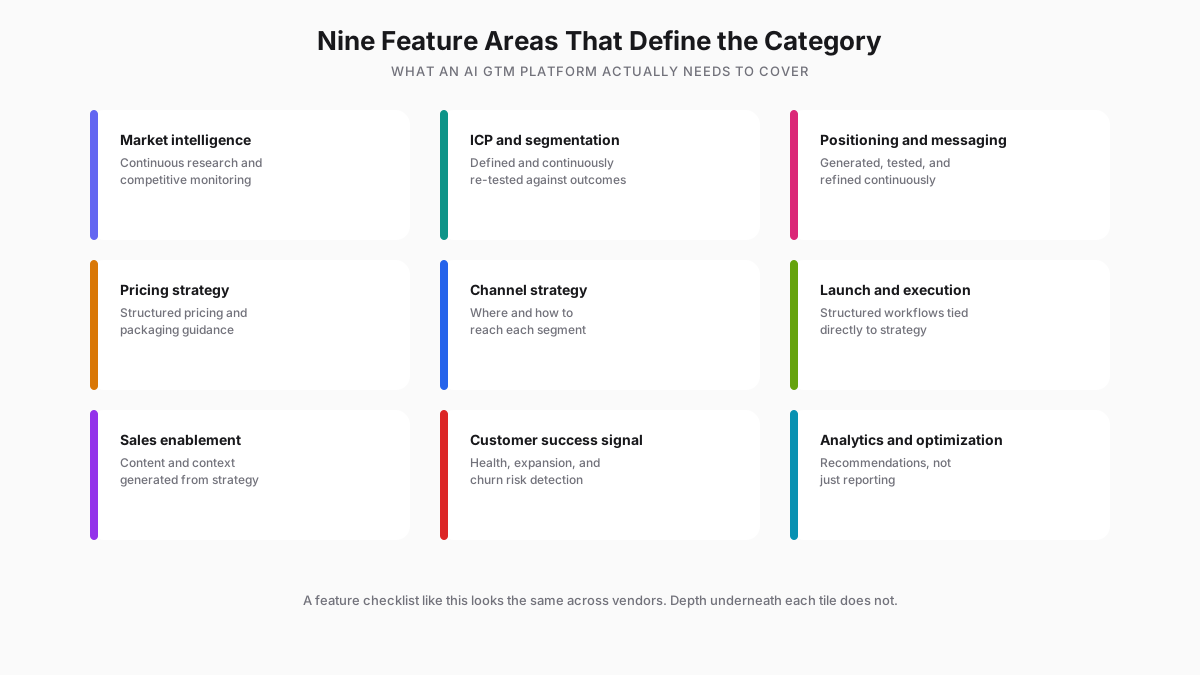
Market intelligence covers how the platform gathers and synthesizes information about the market, competitors, and buyers. In its shallow form, this means periodic reports a person commissions and manually loads into the system. In its deep form, this means continuous ingestion of call transcripts, review sites, competitor pricing pages, and support tickets, with patterns surfaced without anyone specifically requesting a research cycle. The practical difference shows up in how quickly a genuine shift in buyer language or competitive positioning actually reaches the people who need to know about it, days in the deep version, often a full quarter or longer in the shallow one.
ICP and segmentation covers how the platform defines and maintains the ideal customer profile a GTM motion targets. Shallow versions treat the ICP as a document, defined once and revisited on an annual cadence. Deep versions continuously re-test the ICP against actual closed-won and churn data, flagging when the profile that is actually converting has quietly drifted from the one the team is still targeting. This distinction matters because ICP drift, described in more depth elsewhere in this content series, is one of the most common and most costly forms of strategic staleness, and a feature that only defines the ICP once does nothing to catch drift after the fact.
Positioning and messaging covers how the platform develops and maintains the narrative a company uses to differentiate itself. Shallow versions store a fixed asset. Deep versions treat messaging as a hypothesis under continuous test against real conversion and engagement data, surfacing which specific phrasing is working and which has quietly stopped working well before a scheduled messaging refresh would have caught the same signal.
Pricing strategy covers how the platform supports pricing and packaging decisions. Shallow versions offer a static framework or template a person fills in manually. Deep versions connect pricing guidance to actual win-loss and competitive data, flagging when a pricing assumption stops matching what is actually winning deals, rather than waiting for a formal pricing review to surface the same gap months later.
Channel strategy covers how the platform identifies and prioritizes where and how to reach a given segment. Shallow versions offer generic channel recommendations disconnected from actual performance data. Deep versions tie channel prioritization directly to which channels are actually converting the ICP the platform has most recently validated, adjusting recommendations as both the ICP and channel performance shift over time rather than relying on a channel mix decided once at the start of a planning cycle.
Launch and execution covers how the platform turns strategy into structured, actionable workflows. Shallow versions produce a plan document a team then manually operationalizes elsewhere. Deep versions generate execution workflows tied directly to the current strategy, updating automatically as that strategy changes rather than requiring a person to manually propagate the change across every campaign brief, sequence, and script that depends on it.
Sales enablement covers how the platform equips a sales team with content and context. Shallow versions produce generic collateral disconnected from what is actually happening in live deals. Deep versions generate content directly from current positioning and competitive intelligence, staying current as those inputs change rather than going stale between refresh cycles, and often surface context specific to a given deal rather than only generic, one-size-fits-all materials.
Customer success signal covers how the platform detects account health, expansion readiness, and churn risk. Shallow versions rely on a single usage metric checked periodically. Deep versions synthesize usage, support, and engagement signal continuously, surfacing risk or opportunity before it becomes visible in a lagging metric like renewal date proximity, often early enough that a save play or an expansion conversation can still meaningfully change the outcome.
Analytics and optimization covers how the platform reports on and improves GTM performance over time. Shallow versions are purely descriptive, dashboards that explain what happened. Deep versions are prescriptive, surfacing not just that a metric moved but a specific hypothesis about why, along with a recommended next action, closing the interpretation gap a purely descriptive dashboard leaves for a person to fill in manually.
| Feature area | Shallow version | Deep version |
|---|---|---|
| Market intelligence | Periodic reports, manually loaded | Continuous ingestion from live sources |
| ICP and segmentation | A document, revisited annually | Continuously re-tested against outcomes |
| Positioning and messaging | A fixed asset, scheduled revisions | A hypothesis under continuous test |
| Pricing strategy | A static framework or template | Connected to live win-loss and competitive data |
| Channel strategy | Generic recommendations | Tied to actual channel performance for the current ICP |
| Launch and execution | A plan document, manually operationalized | Workflows updating automatically with strategy |
| Sales enablement | Generic, static collateral | Generated from current, live positioning |
| Customer success signal | A single periodic usage metric | Continuous, multi-source synthesis |
| Analytics and optimization | Descriptive dashboards | Prescriptive, specific recommendations |
The Checkbox Feature vs the Real Capability
It is worth looking at one feature area in close detail to see exactly how the same name can describe two very different products.

A checkbox version of competitive intelligence is a template, a document structure with fields for a competitor's strengths, weaknesses, and pricing, that a person fills in once during onboarding. It looks identical in a demo to a genuinely continuous version, since both display a populated battlecard on screen. The difference only becomes visible under real use: the checkbox version sits static until someone remembers to update it, usually surfacing a competitor's repositioning weeks or months after it actually happened, if it gets caught at all. The real version continuously ingests the competitor's pricing pages, public reviews, and even patterns from your own team's call transcripts, flagging a shift within days and feeding that update directly into the messaging and sales enablement content downstream, without a person having to notice the shift and manually propagate it through every place it should show up.
The only reliable way to tell these two apart before buying is asking the specific question this guide has emphasized throughout: what changes automatically, and can you show me a real, recent example. A vendor with the shallow version will describe the feature in general terms and struggle to produce a specific example of an automatic update. A vendor with the deep version can usually pull up a real, recent instance immediately.
This same pattern repeats across every one of the nine feature areas described above, not just competitive intelligence. A shallow ICP feature produces a document that gets stale the moment the underlying market shifts. A shallow customer success signal feature checks one metric on a schedule rather than synthesizing several signals continuously. A shallow analytics feature tells you a number moved without ever proposing why or what to do about it. The specific mechanics differ by feature area, but the underlying test is identical each time: does the feature update itself as the world changes, or does it wait for a person to notice the change and manually intervene. A buyer who internalizes this single test can apply it to any feature area a vendor names, including ones not explicitly covered in this guide, which makes it more durable than memorizing feature-specific criteria that may shift as the category continues to evolve.
Mapping Features to the Full GTM Lifecycle
These nine feature areas are not independent modules competing for attention. They map onto a single, continuous lifecycle, and the value of a genuine AI GTM platform comes specifically from how well these areas stay connected to each other, not from how many of them exist as standalone capabilities.
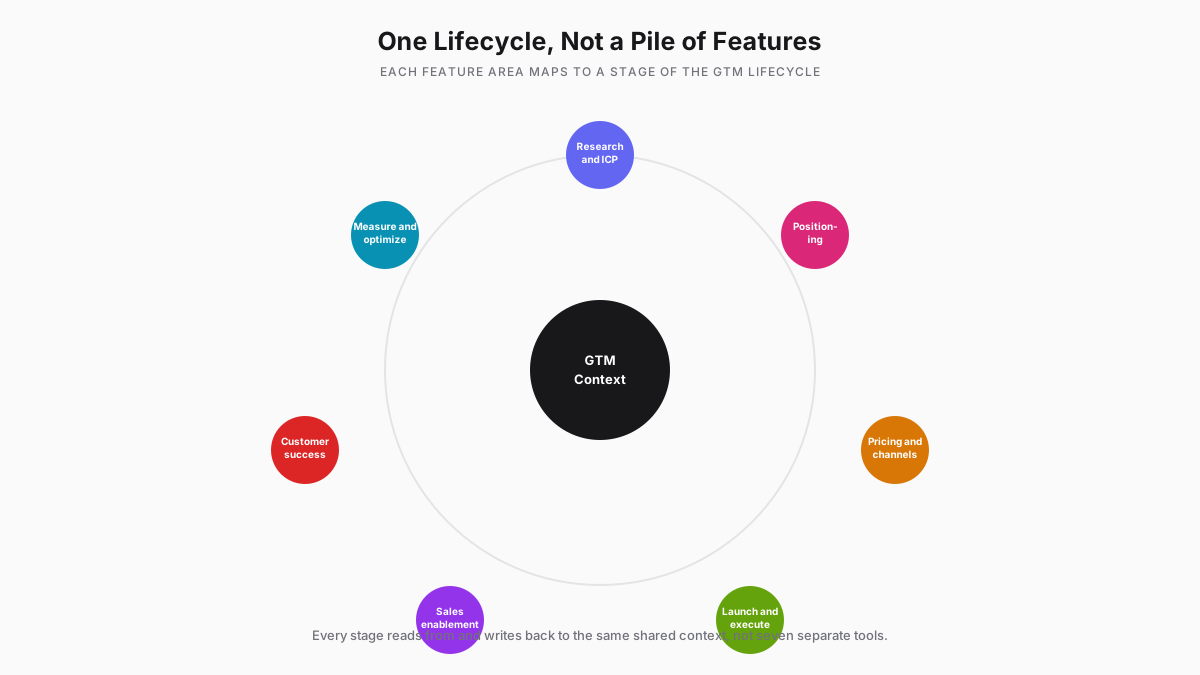
Market research and ICP definition sit at the foundation, since everything downstream depends on an accurate, current picture of who the target customer actually is. Positioning builds directly on that foundation, translating an accurate ICP into a differentiated narrative. Pricing and channel strategy determine how that narrative reaches the market efficiently. Launch and execution turn strategy into structured, running workflows. Sales enablement equips the team executing those workflows with current, accurate context. Customer success signal closes the loop by tracking what happens to customers acquired through this motion, feeding retention and expansion data back into the same shared context that informed the original ICP and positioning. Measurement and optimization sit across the entire cycle, continuously assessing whether each stage is still performing as expected.
The reason this matters for a buyer is that a platform strong in one feature area but disconnected from the others is not actually delivering the lifecycle benefit this diagram describes. A powerful market intelligence feature that never feeds into positioning, or a sophisticated customer success signal that never updates the ICP it should be informing, is a strong point feature operating in isolation, not a genuine, connected AI GTM platform. This is the same architectural distinction this content series has drawn elsewhere between a collection of point solutions and a genuine operating system, applied specifically to the internal structure of a single platform rather than to a company's broader stack of separate tools.
It is worth being specific about what a broken connection actually looks like in practice, since it is easy to overlook during a demo that shows each feature working well individually. A broken connection typically shows up as a delay, not an outright failure: an ICP update takes weeks to show up in positioning guidance because a person has to notice it and manually update a separate document, or a customer success signal about churn risk never makes its way back into how the sales team scores similar prospects going forward. None of these gaps look like a bug. They look like ordinary organizational friction, which is exactly why they are easy to miss during an evaluation focused on whether each individual feature works, rather than on whether the features actually talk to each other.
Where Vendors Actually Differ Most
Not every feature area shows the same spread in depth across vendors. Some features are relatively commoditized, with most serious platforms offering comparable depth, while others show a much wider gap between the shallow and deep versions this guide has described.
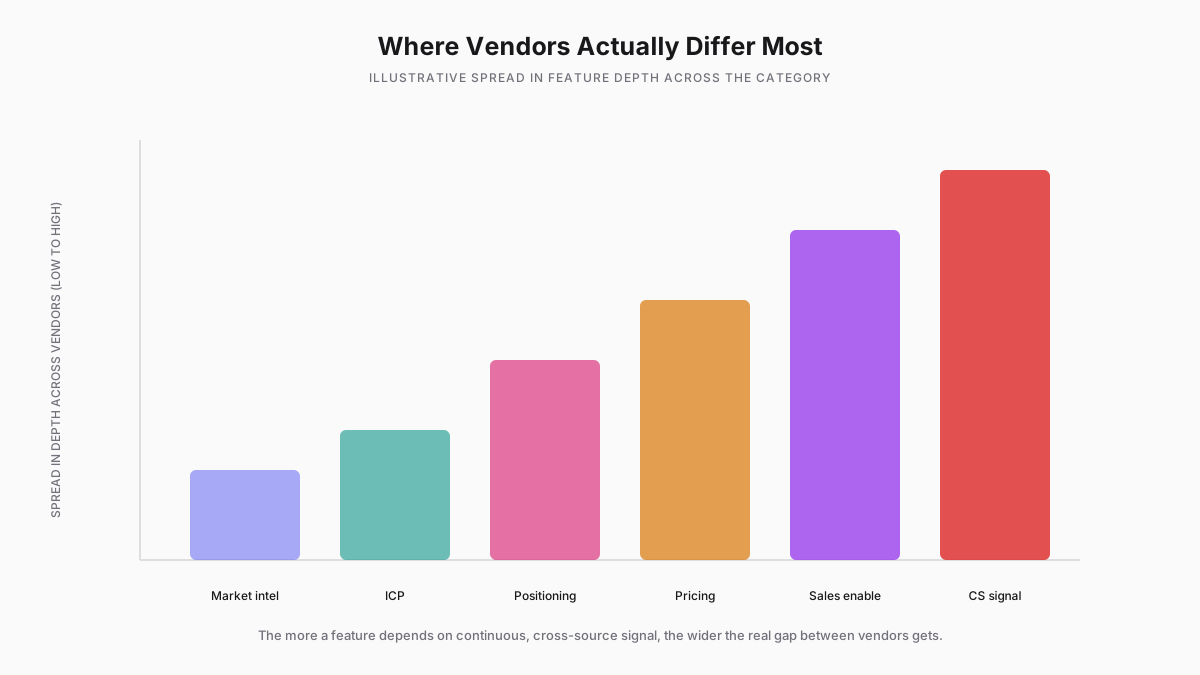
Market intelligence and ICP features tend to show a narrower spread, since most established platforms in this category have invested meaningfully in these foundational areas, and building even a reasonably capable version of this functionality has become a well understood engineering problem across the industry. Positioning and pricing show a moderate spread, since these areas require genuinely synthesizing several different kinds of signal to do well, which fewer vendors have built out fully, and the quality gap tends to show up specifically in how well the system connects a positioning or pricing recommendation to the actual competitive and win-loss data behind it, rather than in the polish of the interface presenting that recommendation. Sales enablement and customer success signal tend to show the widest spread, since both require continuously synthesizing cross-functional data, deal activity, product usage, support tickets, that many platforms only partially integrate, and the difference between a platform that does this well and one that does it superficially is large and immediately noticeable once a team relies on it daily.
This pattern is useful for prioritizing where to scrutinize most carefully during an evaluation. A feature area with a narrow spread across vendors is a lower risk area to take somewhat on faith, since most serious competitors in the category have already solved the basic version of the problem reasonably well. A feature area with a wide spread, sales enablement and customer success signal in particular, deserves the most specific, evidence based questioning during a vendor evaluation, since that is where a shallow version is most likely to disappoint after purchase, and where the gap between what a demo shows and what daily use actually delivers tends to be largest.
Which Features Matter Most, by Stage
Not every organization needs deep capability across all nine feature areas immediately, and prioritizing based on your actual stage is more useful than trying to evaluate every vendor against a uniform, maximalist checklist.
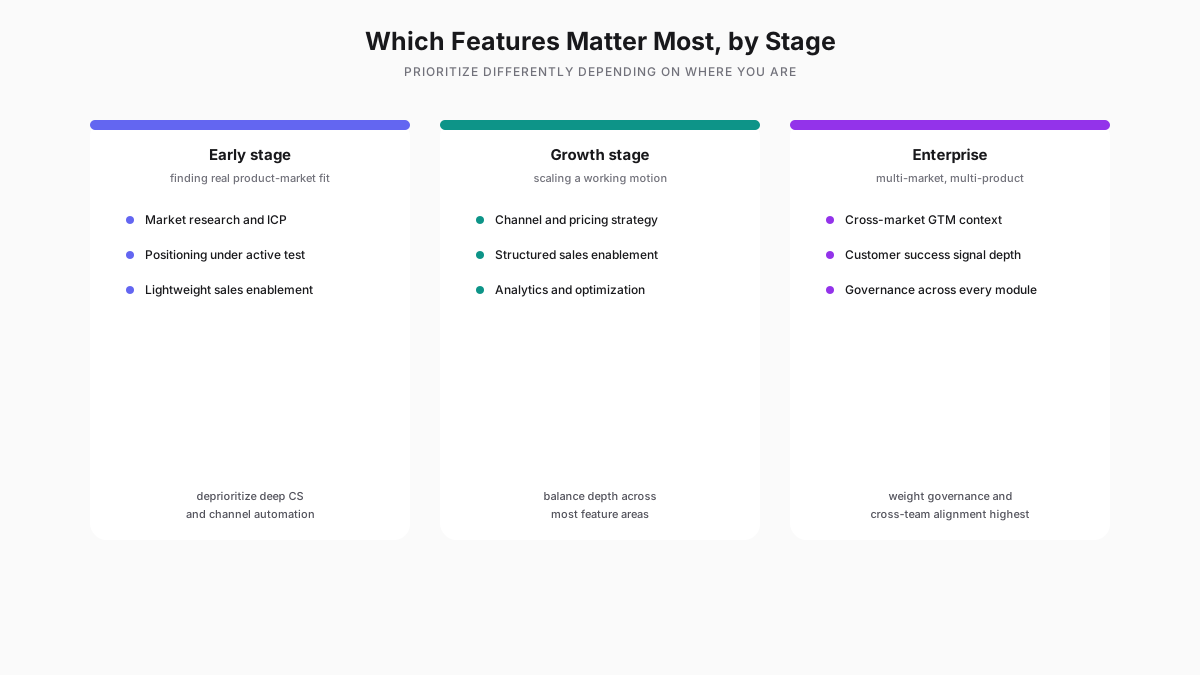
Early stage companies, still working toward genuine product-market fit, get the most value from deep market research and ICP capability, and from positioning features that support active, rapid testing rather than a finished, polished narrative. Deep customer success signal and sophisticated channel automation are usually premature at this stage, since the volume of customers and channels involved is often too small to justify the investment yet.
Growth stage companies, scaling a GTM motion that is already working, benefit most from strong channel and pricing strategy features, more structured sales enablement, and genuine analytics and optimization capability, since this is the stage where inefficiency in scaling an already validated motion becomes expensive. A reasonably balanced level of depth across most feature areas becomes worthwhile at this stage, rather than concentrating investment narrowly in one or two areas.
Enterprise organizations, operating across multiple markets, products, or segments simultaneously, need the deepest investment in cross-market GTM context, since keeping strategy coherent across several parallel motions is a genuinely harder problem than managing one. Customer success signal depth and governance across every module also become higher priorities at this scale, since the cost of a missed churn signal or an ungoverned automated action grows considerably with the size and complexity of the customer base involved.
| Stage | Highest priority features | Reasonable to deprioritize |
|---|---|---|
| Early stage | Market research, ICP, active positioning testing | Deep customer success signal, channel automation |
| Growth stage | Channel strategy, pricing, sales enablement, analytics | Highly specialized enterprise governance features |
| Enterprise | Cross-market context, customer success depth, governance | Rapid, experimental positioning testing at high volume |
A Practical Feature Evaluation Checklist
Bringing this together into something directly usable during a vendor evaluation, a few specific practices consistently surface real feature depth faster than a features page comparison.
Ask for a live, specific, recent example within each feature area you care about most, rather than a general description of the capability. A vendor's willingness and ability to produce this example on the spot, rather than promising to follow up with one later, is itself informative. Ask what data sources feed each feature, and specifically whether those sources update continuously or require a person to manually refresh them, since a feature fed by a continuously updating source behaves very differently over time than one fed by a data source someone has to remember to refresh. Ask how a change in one feature area propagates to the others, for instance whether an ICP update automatically affects positioning guidance, or whether that connection requires a person to notice and manually align them, since this single question, more than any other, separates a genuinely connected platform from a well organized bundle of separate tools. Ask to see the feature working against a use case specific to your own business, not just the vendor's most polished, rehearsed demo scenario, since a vendor's own curated example is, by definition, the case where the feature is most likely to look its best. And weight your scrutiny toward the feature areas this guide has identified as showing the widest spread across vendors, sales enablement and customer success signal in particular, since those are the areas most likely to look similar in a demo while performing very differently in production.
A useful final practice is running this same checklist against your own current stack, not just against vendors you are evaluating. Applying the same specific questions, what changes automatically, what data feeds it, how does it connect to everything else, to your existing tools often reveals gaps in your current setup that a new platform could reasonably be expected to close, which sharpens exactly what you should be testing for most rigorously during vendor evaluation.
Common Mistakes When Evaluating Features
Treating a feature list as a scorecard. Counting how many feature names a vendor claims, and picking the platform with the longest list, systematically favors vendors with broad but shallow coverage over vendors with narrower but genuinely deep capability in the areas that actually matter for your situation. A platform claiming fourteen features at moderate depth is not automatically a better choice than one claiming nine features with genuine depth in the specific areas your team relies on daily.
Accepting a demo of the feature's best case scenario. Every vendor demo shows the feature working in its most favorable, most rehearsed scenario. Asking specifically to see the feature applied to a case similar to your own actual data and workflows surfaces a more honest picture of what to expect, and a vendor's reaction to this request, whether they accommodate it readily or find reasons to redirect back to their prepared demo, is itself a useful signal.
Assuming feature depth is uniform across a single vendor's product. A platform can be genuinely deep in market intelligence and comparatively shallow in customer success signal, and assuming uniform quality across every claimed feature, based on strength in the one or two areas you evaluated most closely, is a common and costly error. This is precisely why the evaluation checklist in this guide recommends applying the same specific questions to every feature area independently, rather than extrapolating from the strongest one.
Ignoring how features connect to each other. Evaluating each feature area in isolation misses the question that actually determines whether a platform functions as a genuine AI GTM platform rather than a bundle of separate tools: does a change in one area propagate automatically to the others, or does that connection still depend on a person noticing and manually aligning them. This is the single most commonly overlooked criterion in a typical feature evaluation, since it requires testing across features rather than within any one of them.
Prioritizing feature areas that do not match your actual stage. Evaluating an early stage company's needs against an enterprise focused feature checklist, or the reverse, produces a mismatched sense of which vendor is actually the strongest fit for where your organization currently stands. A vendor optimized for enterprise governance and multi-market complexity may look unnecessarily heavy for an early stage team, while a vendor optimized for rapid, lightweight positioning experiments may look thin to an enterprise buyer who actually needs the governance the first vendor specializes in.
| Mistake | What it looks like | Fix |
|---|---|---|
| Treating features as a scorecard | Picking the longest feature list | Weight depth in the areas that matter most for your stage |
| Accepting the best case demo | A polished, rehearsed scenario, not your own data | Ask to see the feature applied to your actual use case |
| Assuming uniform depth | Judging the whole platform by one strong feature area | Evaluate each of the nine areas independently |
| Ignoring cross-feature connection | Features that look complete but do not talk to each other | Ask specifically how a change in one area propagates to others |
| Wrong features for your stage | Enterprise checklist applied to an early stage evaluation | Prioritize using the stage-based table above |
What This Looks Like in Practice
A growth stage company evaluating platforms initially ranked vendors by total feature count, and the vendor with the longest list won an early internal vote. A closer, more specific evaluation of the two feature areas the company actually cared about most, channel strategy and sales enablement, revealed that the longer feature list vendor's version of both was considerably shallower than a competitor with a shorter overall list but genuinely deep capability in exactly those two areas. The company ultimately chose the shorter list, and reported considerably better outcomes in the specific areas that mattered to their actual GTM motion, along with a smoother rollout, since a platform genuinely deep in the areas a team relies on daily tends to need less workaround and manual patching than one that is broad but shallow in exactly the places daily use exposes weakness fastest.
A different company discovered during a pilot that its chosen platform's ICP feature and positioning feature, both individually strong in isolation, did not actually connect to each other. The platform could flag that the ICP had drifted based on recent closed-won data, but that flag never automatically updated the positioning guidance the sales team was working from, requiring a person to notice the ICP alert and manually go update messaging separately. This was not a failure of either individual feature, both worked as advertised in isolation, it was a failure of the connection between them, exactly the kind of gap a feature-by-feature evaluation without checking cross-feature propagation would have missed entirely.
A third company, evaluating platforms for a multi-product, multi-market rollout, initially assumed its enterprise scale meant it needed maximum depth across all nine feature areas simultaneously. A more careful assessment, using the stage based prioritization in this guide, revealed that the two features actually determining success for their specific rollout were cross-market GTM context and governance, not the deepest possible customer success signal, which they already handled reasonably well through an existing tool. Narrowing the evaluation to the two features that actually mattered most for their situation shortened the buying process considerably without sacrificing the outcome.
How This Connects to a GTM Operating System
The nine feature areas in this guide are not, on their own, what makes something a genuine AI GTM platform rather than a well organized collection of point tools. What makes the difference, consistent with the broader argument this content series has made about the category overall, is whether these feature areas are connected into one continuous system, reading from and writing to the same shared GTM context, rather than operating as separate modules that happen to sit inside the same product.
This distinction has a direct implication for how a buyer should read any vendor's feature page going forward. A long list of well named features is evidence that a vendor understands the category and has built capability across a broad surface area. It is not, on its own, evidence that those features are connected in the specific way this guide has argued actually determines value. The propagation test described throughout this guide, asking specifically how a change in one feature area affects the others, is the fastest way to convert a features page from a list of promises into something closer to verified evidence.
Elevate GTM Solutions organizes its own capability around this same lifecycle structure, spanning market research, ICP and segmentation, competitive intelligence, positioning, messaging, pricing strategy, customer acquisition, distribution channel strategy, marketing alignment, launch and execution, measurement and optimization, sales enablement, customer success, and customer advocacy, connected through a shared GTM context rather than built as fourteen separate, independently operating tools. This is the same distinction this guide has emphasized throughout: the individual feature names matter less than whether they are genuinely connected, and evaluating any platform, including this one, against the specific propagation test described above is the most reliable way to confirm that connection actually exists rather than simply being implied by how the features are listed together on a single pricing page.
Frequently Asked Questions
Which AI GTM platform feature is most important to get right first? Market intelligence and ICP definition are usually the highest leverage starting point, since nearly every other feature area, positioning, pricing, channel strategy, depends on an accurate, current picture of who the target customer actually is. A platform with a weak foundation here will underperform across every downstream feature regardless of how strong those individual features look in isolation.
Do all nine feature areas need to be equally strong for a platform to be worth buying? No. As this guide has described, the right priority depends heavily on your company's stage, and a platform that is exceptionally strong in the two or three feature areas that matter most for your specific situation is often a better choice than one with uniform, moderate depth across all nine.
How do I know if a feature is genuinely AI-native versus a traditional feature with AI added? Ask specifically what changes automatically within that feature as new data arrives, versus what still requires a person to manually update, and ask for a concrete, recent, specific example. A feature that only produces a suggestion a person must review and manually apply before anything happens is a traditional feature with an AI layer, not a genuinely continuous capability.
Can a platform be strong in some feature areas and weak in others? Yes, and this is common rather than exceptional. Evaluating each of the nine feature areas independently, rather than assuming uniform quality across a single vendor's entire product, is essential for an accurate assessment, since a platform's marketing will rarely volunteer which specific areas are less mature than others.
What is the biggest mistake buyers make when comparing feature lists? Treating the feature list itself as the primary decision criterion, rather than using it as a starting point for asking the deeper, more specific questions this guide has described about what actually happens automatically within each named feature.
Should a smaller team pay for all nine feature areas, or focus on fewer? Most smaller teams get better value focusing deeply on the two or three feature areas identified as highest priority for their stage in this guide, rather than paying for uniform coverage across all nine before the organization has grown into needing that breadth. Many platforms, including module or usage based pricing structures described elsewhere in this content series, are built to support exactly this kind of narrower, staged adoption.
Final Thoughts
Two feature lists that look nearly identical on paper can represent products with genuinely different value once actually deployed, and the gap between them is invisible until someone asks the right, specific questions or runs a real pilot against real data. The nine feature areas in this guide, market intelligence, ICP and segmentation, positioning and messaging, pricing strategy, channel strategy, launch and execution, sales enablement, customer success signal, and analytics and optimization, describe what a genuine AI GTM platform needs to cover. Whether any specific vendor's version of each feature is a checkbox or a real capability is a separate question, and it is the question this guide has tried to make concrete and answerable rather than something a buyer discovers only after signing a contract.
The most durable habit from this guide is not memorizing the nine feature areas themselves, it is the specific test that applies to every one of them: what changes automatically, can you show me a real example, and how does a change in this area propagate to the rest of the platform. Applied consistently across every feature a vendor claims, that test does more to separate genuine AI-native capability from a well organized feature list than any comparison chart, vendor or otherwise, is likely to offer on its own. The nine areas will keep evolving as the category matures, and new feature names will keep appearing on vendor pages faster than their depth can be verified. The test does not need to change along with them.
A final, practical note worth carrying into any evaluation: the goal of this guide is not to help a buyer find the platform with the most impressive feature list. It is to help a buyer find the platform whose specific, verified depth matches the specific gaps their own organization actually has, at the stage they are actually at today. Those two goals sound similar but produce very different shortlists in practice, and the difference between them is, in the end, the entire argument this guide has tried to make.