
AI GTM Software
A complete overview of the AI GTM software landscape, what separates it from an AI GTM platform in practice, the five categories that make up the market, and how to find your way through a fast-growing, fast-consolidating space.
Published 2026-07-31
Search for AI GTM software and the results blur together within the first few links: AI GTM platform, revenue intelligence software, AI sales software, GTM operating system, AI-native go-to-market tools. Some of these terms describe genuinely different things. Some are simply different words for the same underlying idea, chosen by whichever vendor's marketing team wrote that particular page. A buyer trying to make sense of this landscape from search results alone will reasonably come away more confused than informed, not because the underlying category is incoherent, but because the language used to describe it has outpaced any shared, precise definition.
This piece exists to bring that landscape into focus. It clarifies what separates the terms software, platform, and operating system in this specific context, maps the five genuinely distinct categories that make up the AI GTM software market today, explains why this category has grown as quickly as it has, and gives a clear-eyed account of where a platform like Elevate GTM Solutions fits within that broader landscape. It draws on, and links out to, the more detailed pieces this content series has published on individual aspects of this category, functioning as the starting point for anyone new to the space rather than a replacement for the deeper guides already available.
Think of this piece as a map rather than a manual. A map tells you which region you are in and how the surrounding territory is organized, which is genuinely useful before diving into the street level detail of any one neighborhood. The companion pieces referenced throughout this guide are that street level detail, covering definitions, feature depth, buyer evaluation criteria, fair vendor comparison, and category specific guidance for B2B SaaS in considerably more depth than this overview attempts to. Read together, this collection is meant to take a reader from complete unfamiliarity with the category to a specific, evidence based purchasing decision, and this piece is deliberately the first stop on that path rather than the last.
Software, Platform, Operating System: What the Words Actually Mean
Before mapping the landscape, it helps to resolve a smaller but genuinely useful question: do the terms AI GTM software, AI GTM platform, and GTM operating system mean different things, or are they interchangeable marketing labels.
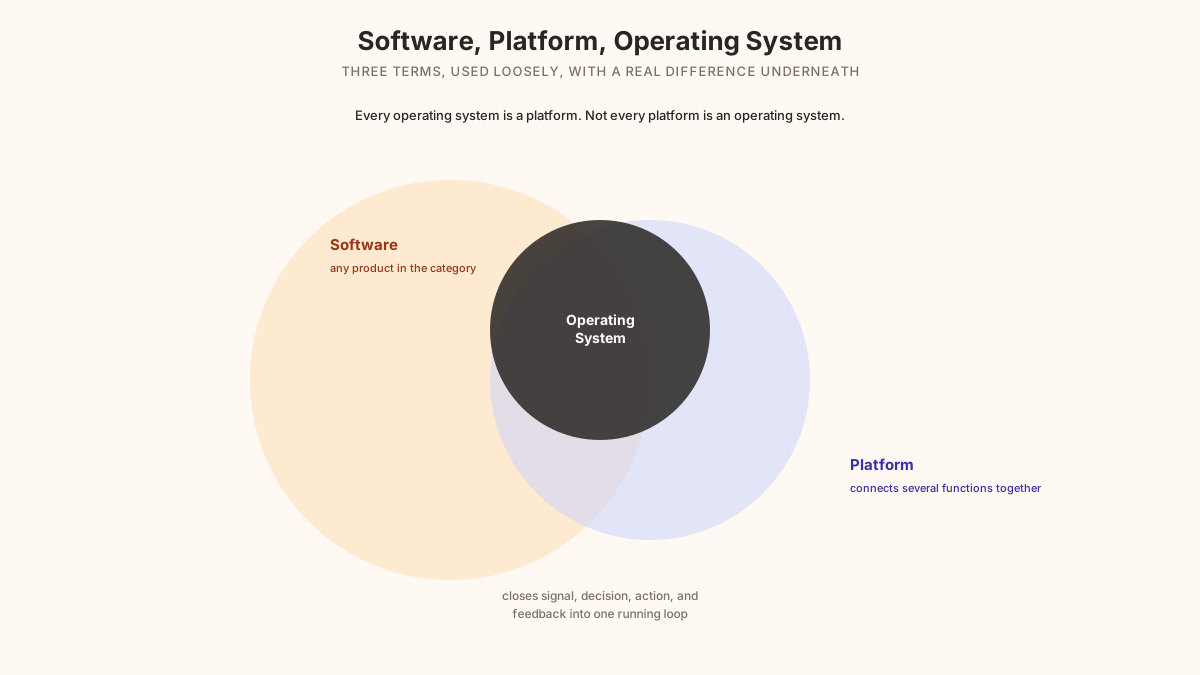
Software is the broadest term, describing any product in this category, regardless of scope or architecture. A narrow tool that does one specific job well, enriching contact data or drafting outreach messages, is fairly described as AI GTM software, even if it makes no claim to cover the full GTM lifecycle. There is nothing wrong with a product accurately describing itself using this broader, more modest term, and a buyer should not read the word software as a signal of lesser quality, only of narrower scope.
Platform implies something more specific: a product that connects several GTM functions together, rather than performing a single, narrow job in isolation. Not all software in this category is a platform in this stricter sense, and the distinction matters practically, since a narrow tool and a genuinely connected platform solve different kinds of problems, a point covered in more detail in the companion piece on what an AI GTM platform actually is. A product that has simply bundled several previously separate features under one login, without those features genuinely sharing data or informing each other's outputs, is using the word platform more loosely than the term's stricter meaning would justify.
Operating system is the most specific and most demanding term, describing a platform that goes further still, closing the loop between signal, decisioning, execution, and analytics so that outcomes automatically refine future decisions, rather than simply housing several functions under one login without genuinely connecting them. This content series has argued throughout that this distinction, closed loop versus disconnected capability, is the single most important architectural test in the category, regardless of which of these three terms a specific vendor happens to use to describe itself. A product can accurately call itself a platform, in the sense of genuinely connecting multiple functions, while still falling short of the closed loop standard the operating system label implies, which is a meaningful, worth noting middle ground between the two stricter terms.
| Term | What it actually implies | Example scope |
|---|---|---|
| AI GTM software | Any product in the category, narrow or broad | A single-purpose enrichment or outreach tool |
| AI GTM platform | Multiple GTM functions connected in one product | Signal, scoring, and execution in a single system |
| GTM operating system | A closed, continuously self-refining loop | Signal, decision, action, and feedback, connected end to end |
The practical takeaway for a buyer is not to reject any vendor for using the broader term software rather than platform or operating system, since plenty of genuinely excellent, narrowly scoped products describe themselves accurately as software without overreaching into platform or operating system language. A narrow, honestly labeled tool that does one job exceptionally well is, in many situations, a better choice than a broadly labeled platform that has not actually earned the architectural claim its own marketing makes. The more useful discipline is testing any specific product against the architectural questions this content series has emphasized throughout, regardless of which of these three words appears in its own marketing, and treating the label itself as, at best, a loose starting hint rather than a reliable classification.
The Five Categories That Make Up the Market
AI GTM software is not one market, it is at least five, each addressing a different part of the underlying coordination problem this content series has described throughout.
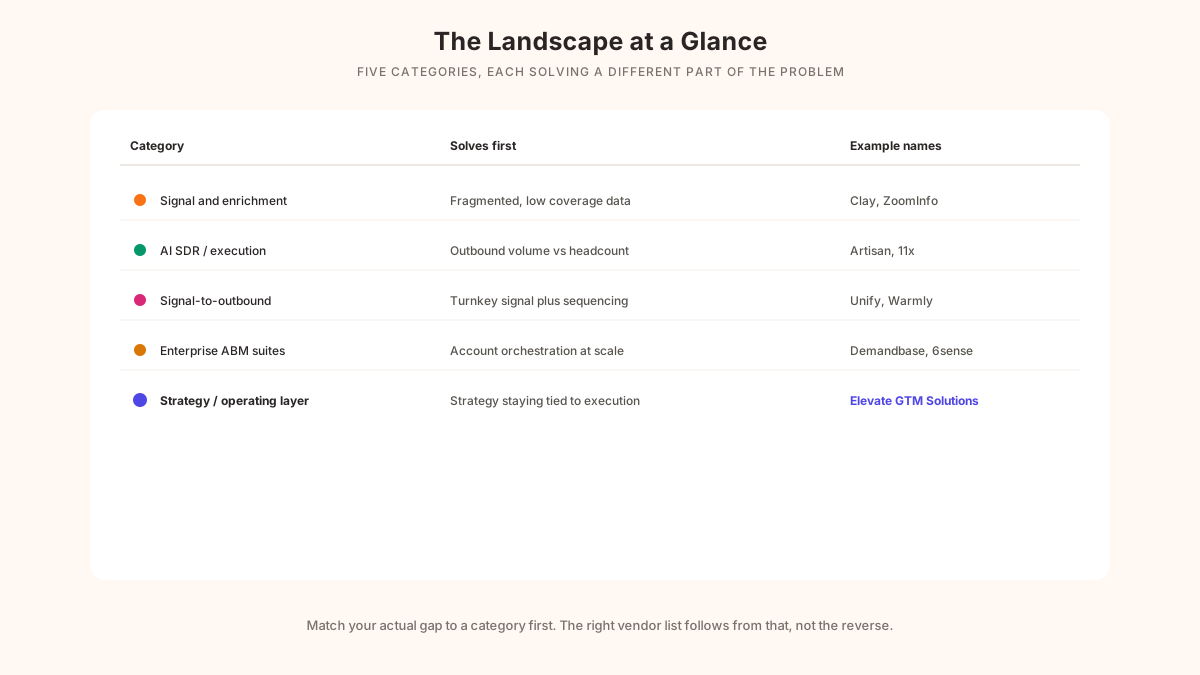
Signal and enrichment software unifies and enriches account and contact data from many sources, with representative names including Clay and ZoomInfo. This category is typically strong on data breadth and comparatively thinner on native execution, meaning it is usually paired with a separate tool for outreach. It is the right starting point when the core problem is fragmented or low coverage data rather than a lack of execution capacity, and it tends to require more hands-on configuration than the other categories, often benefiting from a dedicated operator, sometimes explicitly hired as a GTM engineer, to get the most value from its flexibility.
AI SDR and execution software uses autonomous or semi-autonomous agents to handle prospecting and outreach directly, with representative names including Artisan and 11x. This category solves for outbound volume specifically, with the honest tradeoff that reply rates on autonomous, AI drafted outreach have declined as inboxes increasingly filter for it. It is best suited to teams whose primary constraint is genuinely a shortage of hands to execute outreach at the volume the business needs, rather than a broader strategic or data quality gap.
Signal-to-outbound software combines signal detection and execution in a single, more turnkey product, with representative names including Unify. This category trades some customization flexibility for a faster, more integrated deployment than a fully custom build, sitting deliberately between the flexibility of a pure enrichment tool and the full autonomy of a dedicated execution agent.
Enterprise ABM software covers account identification, advertising, and cross-channel orchestration at large scale, with representative names including Demandbase and 6sense. This category carries the broadest scope and typically the highest implementation cost and longest deployment timeline of the five, reflecting both its wider functional coverage and the more complex, multi-stakeholder buying and rollout process typical of enterprise software at this scale.
Strategy and GTM operating layer software approaches the problem from a different starting point than the other four, beginning with GTM context, positioning, and market intelligence rather than beginning with execution. Elevate GTM Solutions is the clearest current example, an AI-native GTM platform and GTM operating system built to keep strategy connected to execution continuously, addressing a different, often earlier gap than the signal and execution focused categories above it. This category is often the right starting point specifically when the actual problem sits upstream of execution entirely, strategy and positioning drifting out of sync with what the rest of the organization is actually doing, rather than a shortage of data or outbound capacity.
A detailed, evidence based comparison of specific vendors within and across these categories is covered in more depth in the companion pieces on best AI GTM platforms and how to build a fair AI GTM platform comparison, both of which extend the framework introduced here into a full evaluation methodology.
Core Capabilities Across the Category
Regardless of which of the five categories a specific product belongs to, the underlying capability areas this content series has identified as defining the broader AI GTM software space remain consistent: market intelligence, ICP and segmentation, positioning and messaging, pricing strategy, channel strategy, launch and execution, sales enablement, customer success signal, and analytics and optimization. These nine areas describe the full lifecycle a GTM motion moves through, regardless of which specific category of software a company relies on to support any given stage.
What varies by category is not whether these capability areas exist, but which ones a given product invests in most deeply. A signal and enrichment tool will typically show its greatest strength in market intelligence and, to a lesser extent, ICP and segmentation, while showing comparatively thinner capability in sales enablement or customer success signal. A strategy and operating layer platform will typically show the reverse pattern, strongest in positioning, messaging, and the connective tissue linking strategy to execution, with narrower native depth in the specific, high volume execution work an AI SDR platform specializes in. Neither pattern is a flaw, it reflects the different starting point each category takes toward the same broader problem, and the companion piece on AI GTM platform features breaks down each of these nine capability areas in considerably more depth, including the specific test for distinguishing a shallow, checkbox version of a feature from a genuinely deep one.
This same nine area framework is also useful as a diagnostic tool independent of any specific vendor evaluation. A team that maps its own current GTM motion against these nine areas, identifying honestly which are handled well today and which are thin or missing entirely, has effectively built its own requirements document before ever speaking with a vendor, which tends to produce a far more efficient and better targeted evaluation than starting from a vendor's own feature list and working backward toward whether it matches an unstated internal need.
Why This Category Grew So Quickly
The pace at which AI GTM software adoption has grown is worth explaining directly, since understanding the underlying driver clarifies why this category is unlikely to plateau or reverse anytime soon.
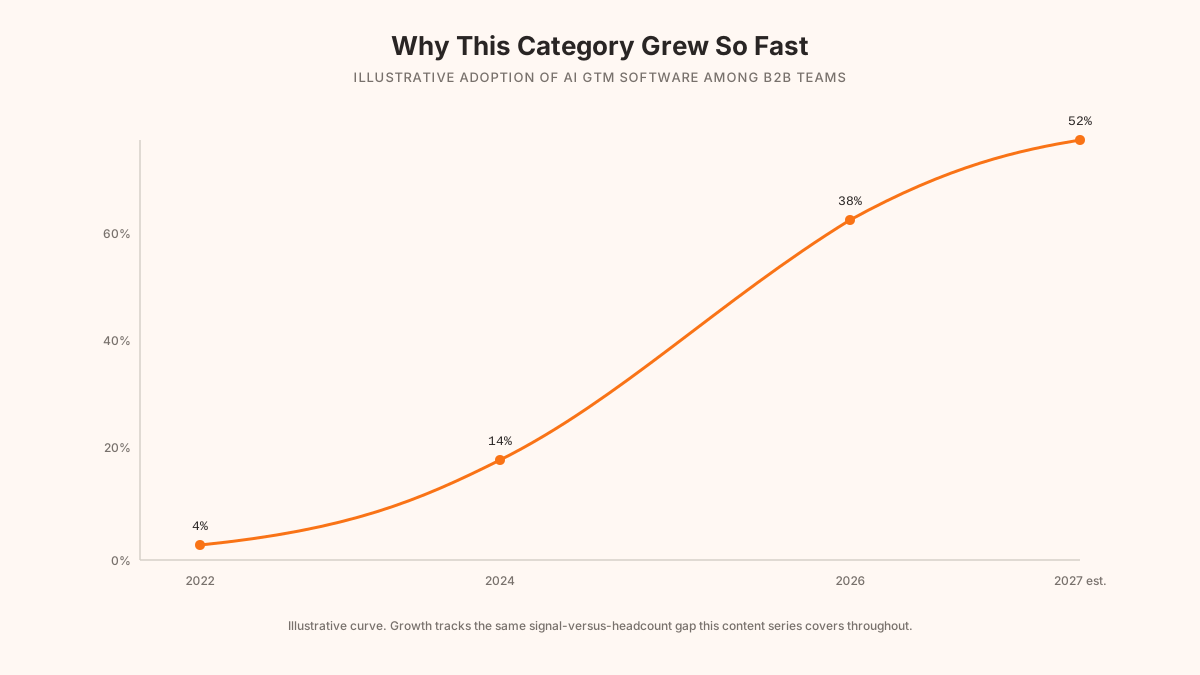
The core driver, covered in depth elsewhere throughout this content series, is a widening gap between the volume of signal a modern GTM motion generates, from intent data, product usage, competitive activity, and AI powered outreach itself, and the number of people available to manually track and act on that signal. This gap is structural rather than cyclical, meaning it does not resolve on its own as a market matures, it tends to widen further as AI powered tooling continues to increase how much activity and signal a given team can generate, which is precisely why adoption of software built to close that gap has accelerated rather than plateaued. A team that adopts AI powered outreach tooling, for instance, generates considerably more reply and engagement volume than before, which is usually framed as a pure productivity win, but it also multiplies the coordination burden on whoever has to make sense of that larger volume, creating exactly the kind of gap AI GTM software across every category in this piece exists to close.
A second, reinforcing driver is the pace of consolidation within the category itself, covered in more detail in the companion piece on the best AI GTM platforms currently on the market. As independent, narrowly scoped vendors get acquired into larger platforms, more of the category's total capability becomes concentrated in fewer, more broadly capable products, which itself increases the perceived maturity and reliability of the category as a whole, encouraging further adoption from buyers who might have been more cautious about a smaller, standalone vendor's staying power. This consolidation pattern is itself a familiar signal in enterprise software history, a fragmented, rapidly growing category tends to consolidate around a smaller number of more capable platforms as buyers gain confidence and vendors compete increasingly on breadth and depth rather than on the novelty of being first to market with a narrow capability.
A third, less discussed driver is the compounding effect of competitive pressure within B2B GTM itself. As more companies adopt AI GTM software and begin operating with faster, more continuously updated strategy and execution, companies that have not yet adopted equivalent tooling face a widening competitive gap, not because their own execution has gotten worse, but because the comparison set they are competing against has gotten faster. This dynamic tends to accelerate adoption within a category once it passes a certain threshold of penetration, since staying on the sidelines becomes an increasingly visible, increasingly costly choice rather than a neutral one.
Common Misconceptions Worth Correcting
A handful of misconceptions recur often enough across how this category gets discussed publicly that they are worth naming and correcting directly.
"AI GTM software means the AI runs everything without human involvement." In practice, even the most architecturally sophisticated products in this category are built around a human supervising exceptions, not a fully autonomous system operating without oversight. The companion piece on AI GTM platforms versus traditional GTM software covers this distinction in depth, including the specific risk of treating autonomy as equivalent to a lack of accountability. Responsible products in this category are built with escalation thresholds and audit mechanisms precisely because full, unsupervised autonomy is neither the reality of how these systems work today nor, in most cases, a genuinely desirable end state even as the underlying technology continues to improve.
"Every product calling itself an AI GTM platform has actually built the architecture that name implies." As this content series has argued repeatedly, category labels in this space have spread considerably faster than the underlying architecture has matured, and a meaningful share of products using platform or even operating system language are, on close inspection, narrower point tools with an AI feature added to one specific function. This is not necessarily deceptive marketing, category labels genuinely do spread through a market faster than the underlying technology can consistently earn them, a pattern this content series has compared elsewhere to earlier waves of loosely applied labels like platform during the 2010s enterprise software boom.
"The category is too new to trust for anything beyond experimentation." This was a more defensible position two or three years ago than it is today. Adoption has grown substantially, as described above, and while the category is genuinely younger and less battle tested at the largest enterprise scale than legacy CRM and marketing automation platforms, dismissing it as purely experimental understates how much real, production usage now exists across companies of meaningfully different sizes and stages. A more accurate framing treats the category as young but genuinely operational, with real, measurable outcomes at many companies, rather than purely speculative or unproven.
"A bigger, more expensive platform is automatically a safer choice than a narrower, more specialized one." The right choice depends entirely on which specific gap an organization actually has, a question covered directly in the companion buyer guide, and a narrower tool genuinely strong in the one or two capability areas that matter most for a specific situation often outperforms a broader, more expensive platform that is only moderately capable across many areas. This misconception is particularly costly because it tends to bias buying decisions toward the most expensive, most broadly marketed option by default, rather than toward the option that actually fits the buyer's specific, evidenced need.
"AI GTM software is only relevant for large enterprises with big budgets." As covered in more detail elsewhere in this content series regarding right sized coordination layers, the actual threshold for meaningful benefit has moved down considerably as tooling has matured, and a growing number of smaller, leaner teams now find real value in a scoped, appropriately sized version of this category rather than needing to wait until they reach enterprise scale. Module based and usage based pricing structures, increasingly common across the category, have specifically lowered the barrier for smaller teams to access a narrow, high value slice of this capability without committing to a full enterprise deployment.
| Misconception | Closer to the truth |
|---|---|
| AI runs everything without oversight | Mature systems keep a human supervising exceptions, not everything |
| Every platform claim reflects real architecture | Category labels have outpaced actual architectural maturity broadly |
| The category is too new to trust | Adoption and production usage have both grown substantially |
| Bigger and pricier is always safer | Fit depends on your specific gap, not overall platform size |
| Only enterprises benefit | The threshold for meaningful benefit has moved down considerably |
Where Elevate Fits in This Landscape
Elevate GTM Solutions sits specifically within the strategy and GTM operating layer category described earlier in this piece, built as an AI-native GTM platform and GTM operating system that helps enterprises build, activate, and execute go-to-market strategy continuously, across markets, products, and industries.
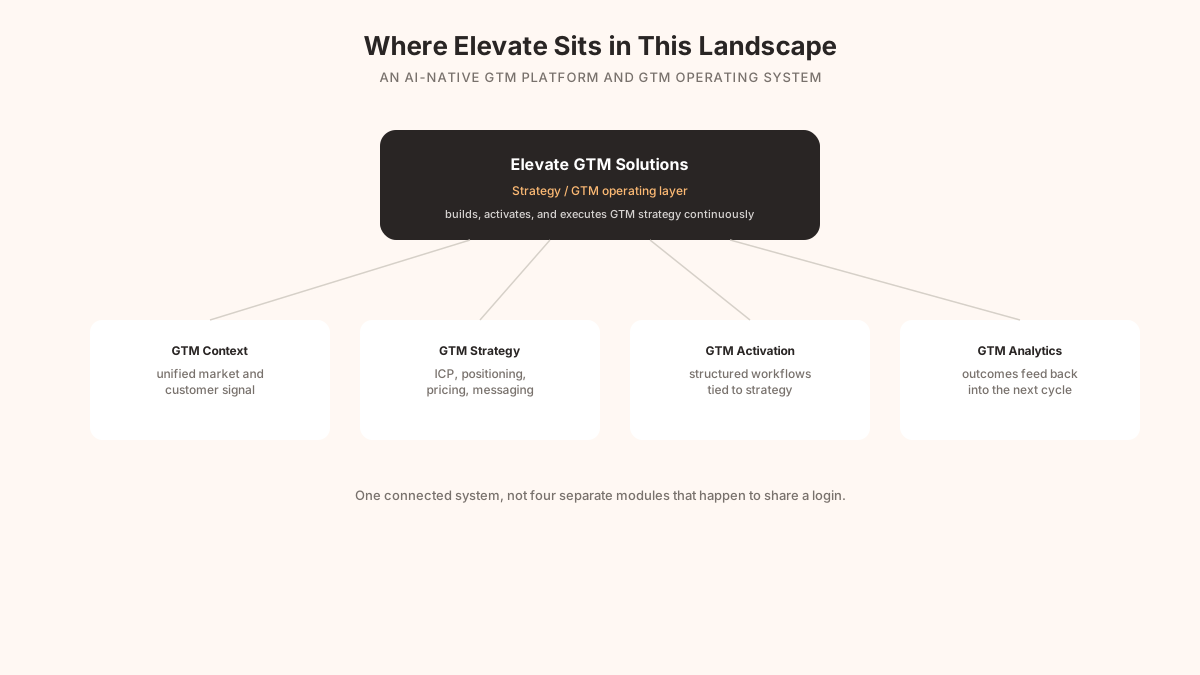
This positioning is a deliberate choice rather than an attempt to cover every category described in this piece equally. Elevate does not compete directly with a signal and enrichment tool like Clay or an AI SDR platform like Artisan, both of which occupy a different part of the landscape, closer to the execution end of the spectrum than the strategy end where Elevate is built to operate. Instead, Elevate is designed to sit above and connect to tools in those other categories, providing the strategic layer, GTM context, positioning, messaging, pricing, market intelligence, that determines what those execution focused tools should actually be pointed at, and keeping that strategic layer current as markets and products change, rather than letting it go stale between quarterly reviews while execution tooling continues to operate against an outdated plan.
Concretely, this means Elevate's GTM Context layer continuously unifies market, customer, and competitive signal, its GTM Strategy layer keeps ICP, positioning, pricing, and messaging current against that signal, its GTM Activation layer ties structured execution workflows directly to whatever the current strategy actually says, and its GTM Analytics layer feeds outcomes back into the next cycle automatically, the same closed loop architecture this piece has used throughout to distinguish a genuine operating system from a looser collection of connected features. This structure is also why Elevate organizes its specific capability around fourteen GTM modules, spanning the full lifecycle from market research through customer advocacy, rather than concentrating narrowly on the earliest, most visible stages of a GTM motion the way many point solutions in the other four categories tend to.
Consistent with the architectural test this content series has applied throughout, the meaningful question about Elevate, or any platform in this category, is not whether it uses the right words to describe itself, but whether its GTM context, strategy, activation, and analytics functions are genuinely connected into a closed loop, where outcomes automatically refine the next cycle's recommendations, or whether they operate as separate modules that happen to share a login screen. Readers evaluating Elevate specifically, or any other platform in this landscape, are encouraged to apply that same test directly, using the specific questions laid out in the companion buyer guide, rather than taking any vendor's own description, including this one, at face value.
Frequently Asked Questions
Is there a real difference between AI GTM software and an AI GTM platform, or is it just marketing language? There is a real difference in how the terms are used precisely, described earlier in this piece, though in casual usage across the industry the two terms are often used loosely and interchangeably. The more reliable signal is not which term a vendor uses, but whether its product actually connects multiple GTM functions into one system, which is the substantive distinction the platform label is meant to convey.
How many companies currently offer AI GTM software? The category includes a large and growing number of vendors across the five categories this piece has described, and an exact count would be outdated within months given the pace of new entrants and acquisitions. The more useful exercise is identifying which category matches your actual need, covered in the companion comparison guide, rather than trying to track a comprehensive vendor count.
Do I need AI GTM software if I already have a CRM? Usually yes, in the sense that a CRM and AI GTM software solve different problems, a distinction covered in detail in the companion piece on why a CRM is not itself a GTM system. A CRM remains the appropriate system of record, and AI GTM software, in whichever category matches your needs, is built to operate above and alongside it.
What is the easiest way to start exploring this category without a big commitment? Starting with a narrow, scoped pilot in the single category most relevant to your most pressing gap, rather than attempting a broad evaluation across all five categories at once, is generally the fastest way to build real, direct experience with how this category performs in practice, an approach covered in more detail in the companion buyer guide.
Will AI GTM software eventually replace human GTM strategists and operators entirely? Based on the pattern this content series has observed consistently across every category examined, the more accurate expectation is a shift in what these roles focus on, from generating and executing routine decisions manually to supervising, validating, and handling the exceptions a system flags, rather than a wholesale replacement of the roles themselves.
How is AI GTM software different from general AI writing or research tools applied to marketing tasks? A general purpose AI writing or research tool can genuinely help with individual tasks, drafting an email or summarizing a competitor's website, but it is not built to maintain persistent GTM context, connect its outputs to a broader strategy, or feed outcomes back into future recommendations automatically. AI GTM software, particularly in the platform and operating system senses described earlier in this piece, is purpose built around that persistent, connected structure in a way a general purpose AI tool applied ad hoc to a marketing task typically is not.
What is the single best first step for someone completely new to this category? Read the companion piece on what an AI GTM platform actually is to internalize the core architectural test this piece has referenced throughout, then use the category map in this guide to identify which of the five categories most closely matches your actual gap, before moving on to the buyer guide for a structured evaluation process. Approaching the category in that order, definition first, category second, evaluation third, tends to produce a considerably more efficient and better informed buying process than starting directly with vendor demos.
Final Thoughts
AI GTM software is a genuinely useful category to understand precisely, not because the terminology itself matters for its own sake, but because a buyer or operator who can distinguish software from platform from operating system, and who can correctly place a specific vendor within the five categories this piece has mapped, is equipped to cut through marketing language that has, across this entire market, spread considerably faster than the underlying architecture it describes.
This piece has intentionally stayed at the level of overview and orientation, pointing toward the more detailed companion pieces this content series has published on definitions, feature depth, buyer evaluation, fair comparison, and category specific fit for B2B SaaS, each of which goes considerably deeper into one specific aspect of the landscape mapped here. Taken together, this collection of pieces is built to serve as a complete, evidence based reference for anyone trying to understand or evaluate this category, whether the immediate goal is a specific purchasing decision or simply a clearer picture of where the market currently stands and where it appears to be heading next.
The category will keep changing, vendors will keep consolidating, and the specific terminology in fashion at any given moment will keep shifting as it has already shifted several times in the few years this space has existed. What should remain stable, regardless of how the surface level language evolves, is the underlying discipline this entire content series has argued for consistently: judge a product by its architecture, not its label, understand which specific category and capability areas actually match your own gap, and require verifiable, specific evidence rather than accepting a polished demo or a persuasive category name at face value. A reader who leaves this piece with that discipline internalized has gotten more lasting value from it than a reader who simply leaves with a longer list of vendor names to research further.