AI GTM Platform Roadmap: A 4-Stage Plan from Static Strategy to Continuous GTM
A practical 4-stage roadmap for adopting an AI GTM platform — from a frozen annual plan to a continuously updated strategy that runs alongside your CRM, data and orchestration tools.
Published 2026-09-24
Most guidance about adopting an AI GTM platform starts in the wrong place: which vendor to buy. The more useful starting question is where your organization actually sits today, because the right first move for a company still running strategy off a slide deck is not the same as the right first move for a company already feeding CRM and intent data into weekly planning.
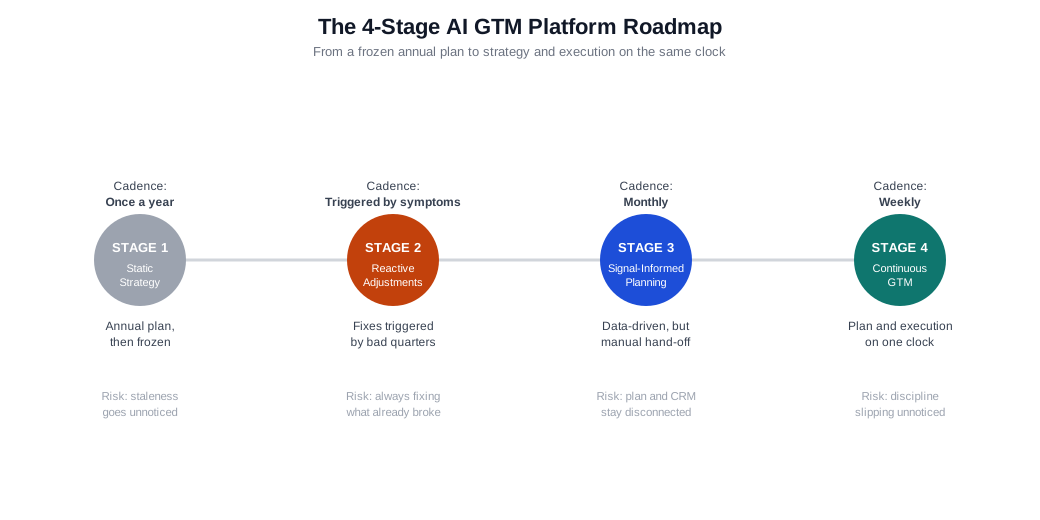
This roadmap lays out four stages between those two points — Static Strategy, Reactive Adjustments, Signal-Informed Planning, and Continuous GTM — with what's true of each stage, the specific work it takes to move to the next one, and the mistakes that keep companies stuck. It builds on the Readiness and Maturity frameworks we use with customers, condensed into a version any RevOps or GTM leader can use to place their own organization and plan the next step, whether or not Elevate is part of that plan.
One framing note before the stages: this roadmap is about the strategy layer specifically — the system that decides ICP, positioning, messaging, pricing and channel mix. It assumes you already have, or are building, the execution layer underneath it (a CRM, some form of data or intent tooling, a way to run campaigns). If those aren't in place yet, that's a different and more foundational gap than the one this roadmap addresses. For the difference between that execution layer and the strategy layer, see GTM Platforms in 2026: Types, Top Vendors and How to Choose.
Stage 1: Static Strategy
What's true here: the GTM strategy exists as a document — usually a slide deck built once a year, sometimes accompanying a kickoff meeting. It defines ICP, positioning, messaging and pricing at a point in time, and then largely sits untouched until the next annual cycle. Sales and marketing execute against it by default, not because anyone actively confirmed it's still accurate.
How you know you're here: if you asked five people on the revenue team to describe the current ICP or positioning, you'd get five different (or outdated) answers, and the honest answer to "when did we last change our pricing or messaging in response to something in the market" is "we don't really track that."
The primary risk at this stage: the strategy degrades silently. Nobody notices it's stale because there's no mechanism that would surface the staleness — no regular comparison between what the plan assumes and what the pipeline or market is actually showing.
The move to Stage 2: the fix isn't a rewrite of the strategy — it's the creation of any planning cadence, even an imperfect one. Naming who owns the strategy document and putting a recurring review on the calendar, monthly at minimum, is the entire task at this stage. It's a process shift before it's a tooling shift.
Stage 2: Reactive Adjustments
What's true here: the plan gets revisited, but only in reaction to something going visibly wrong — a bad quarter, a competitor win, a sudden drop in a segment's conversion rate. Someone (often a founder or a VP) pulls the plan back out, makes a manual adjustment, and communicates it informally to the team. There's a review cadence now, but it's triggered by symptoms rather than by a standing schedule, and the adjustment usually isn't traced back to specific data.
How you know you're here: strategy changes happen, but they show up as a Slack message or a slide added to a QBR deck, not as a structured update anyone can point to later. Two different people asked "why did we change our messaging on the mid-market segment" would give two different explanations.
The primary risk at this stage: reactivity means you're always fixing what already broke, not catching what's about to. By the time a bad quarter forces a strategy conversation, the cost of the stale plan has already been paid in lost pipeline.
The move to Stage 3: the shift here is from reacting to signals to systematically ingesting them. That means connecting the strategy review to actual data sources — CRM win/loss patterns, intent or engagement signals, pipeline velocity by segment — instead of relying on someone noticing a problem informally. This is usually the stage where companies first evaluate a dedicated data or intent platform (see the vendor comparison guide for how ZoomInfo, 6sense and Demandbase differ) if they haven't already, because Stage 3 depends on having reliable signal to plan against.
Stage 3: Signal-Informed Planning
What's true here: the planning cadence is now regular and structured — typically monthly — and it's informed by real data: CRM patterns, intent signals, competitive movement, pipeline health by segment. The strategy document gets updated on schedule based on what that data shows, not just when something breaks. This is meaningfully more mature than Stage 2, and it's where a lot of well-run mid-market and enterprise teams sit today.
How you know you're here: there's a monthly (or more frequent) ritual where someone pulls data from the CRM and other tools, reviews it against the current plan, and makes documented adjustments. The gap between what the market is doing and what the plan says is measured in weeks, not quarters.
The primary risk at this stage: the planning and the execution still live in separate systems. The strategy update happens in a meeting and a document; the actions it implies (new messaging for a segment, a pricing adjustment, a shift in channel mix) still have to be manually translated into changes inside the CRM, the campaign tool and the sales team's daily activity. That translation step is slow, and it's where a lot of well-intentioned monthly strategy work quietly fails to reach the field.
The move to Stage 4: close the loop between the planning system and the execution systems, so that a strategy update doesn't require a separate manual project to implement. This is the point where a dedicated strategy or GTM operating layer earns its place in the stack — not to replace the CRM, data or orchestration tools already in Stage 3, but to sit on top of them, pull their signal in automatically, and push the resulting plan back out as specific weekly actions instead of a monthly document.
Stage 4: Continuous GTM
What's true here: strategy and execution run on the same clock. Signal comes in continuously from the tools already in place; the plan gets reviewed and adjusted on a weekly cadence rather than monthly or quarterly; and updates translate into specific actions for sales, marketing and product without a separate manual handoff project each time. The strategy document, in the Stage 1 sense, stops being the artifact people work from — a living, current plan is.
How you know you're here: if the market shifts — a competitor changes pricing, a segment's conversion rate moves, a new buying signal emerges — the plan reflects that within about a week, and the team already knows what to do differently because the change reached them as an action, not as a slide they have to interpret themselves.
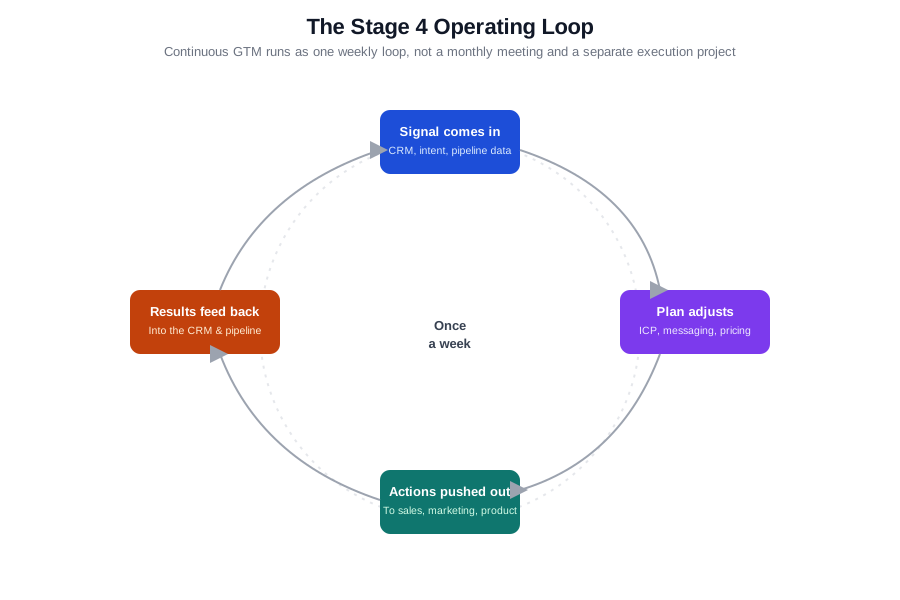
The ongoing risk at this stage: complacency about the systems that got you here. Continuous GTM depends on the underlying data staying clean and the review cadence staying disciplined — it's a habit and a system working together, not a one-time implementation that runs itself forever. Companies that reach Stage 4 and then stop maintaining the discipline behind it can slide back to Stage 3 without noticing.
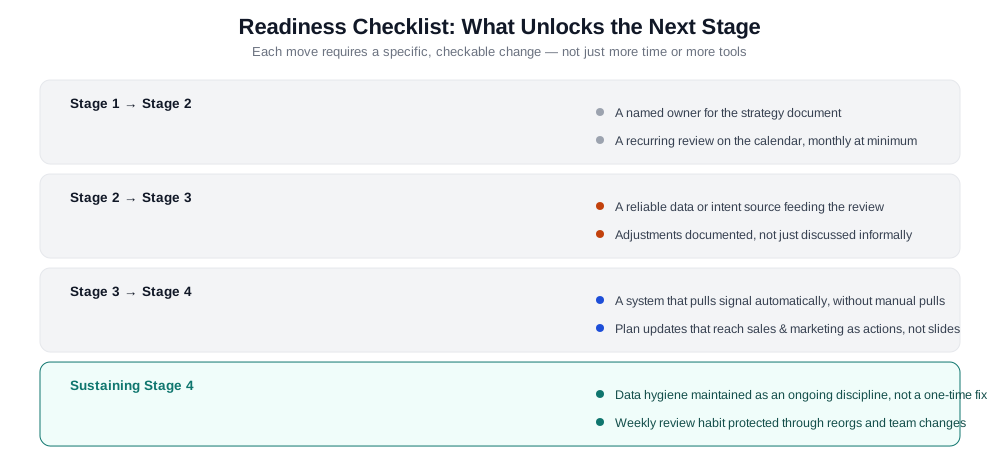
How to use this roadmap
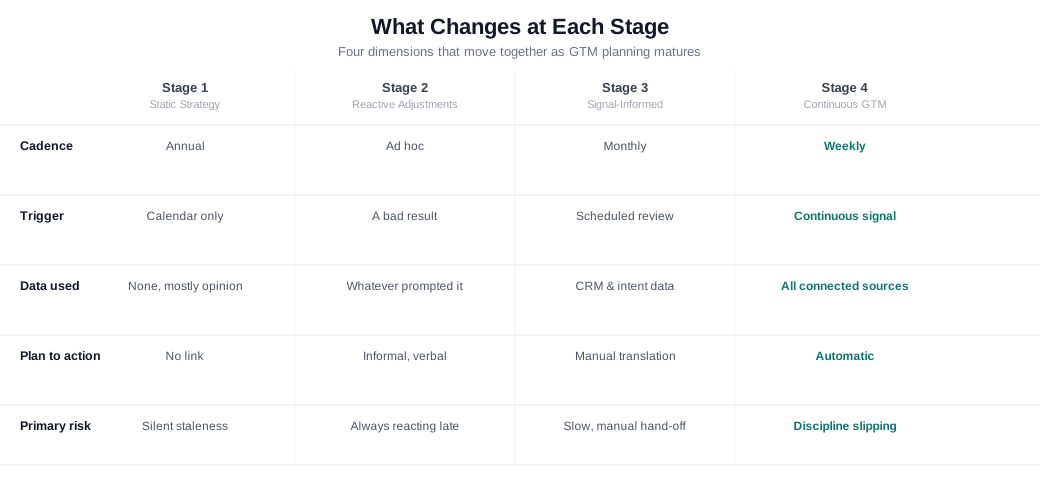
Place your organization honestly before you shop for a platform. A company at Stage 1 buying a sophisticated signal-ingestion tool built for Stage 3 problems will get very little value from it — there's no planning cadence yet for the signal to feed into. A company at Stage 3 that keeps adding more data sources without addressing the manual translation gap between planning and execution will stay stuck at Stage 3 no matter how much signal it accumulates.
The stages are also not always a straight line up. Reorgs, new leadership, a pivot in ICP or a fast-growing new segment can knock a team from Stage 3 back toward Stage 2 temporarily — the roadmap describes a maturity level, not a one-way ratchet. The useful discipline is checking in on where you actually are every couple of quarters, honestly, rather than assuming progress made two years ago is still holding.
Frequently asked questions
How long does it typically take to move from Stage 1 to Stage 4? There's no fixed timeline — it depends far more on organizational discipline than on tooling. The jump from Stage 1 to Stage 2 (creating any recurring review cadence) can happen in a single quarter with no new software at all. The jump from Stage 3 to Stage 4 (closing the loop between planning and execution) is the harder one, because it usually requires both a process change and a platform capable of pushing plan updates into daily workflows automatically.
Can a company skip straight to Stage 4? Not durably. Stage 4 depends on the discipline built at Stages 2 and 3 — a working review cadence and reliable signal to plan against. A company that buys a sophisticated platform without that foundation typically ends up with an expensive tool nobody uses consistently, because the underlying habit of revisiting strategy regularly was never built.
Does reaching Stage 4 mean you no longer need a CRM or data platform? No — Stage 4 assumes those tools are still in place and, if anything, more tightly connected than before. The strategy layer at Stage 4 pulls its signal from the CRM, data and orchestration tools already in the stack; it doesn't replace them. See the GTM platform types guide for how these layers divide up the work.
What's the most common stage companies get stuck at? Stage 3 is the most common sticking point among mid-market and enterprise teams. They've built a real monthly planning ritual informed by good data, but the translation from "we decided this in the meeting" to "this actually changed in the CRM and in what reps say on calls" stays manual, slow and inconsistent — which caps how current the plan can realistically stay.
Is this roadmap specific to companies using AI tools, or does it apply without AI too? The stages themselves are about planning discipline and cadence, not about AI specifically — a company could reach Stage 3 with entirely manual processes. AI mainly changes how fast Stage 3 and Stage 4 are achievable, by automating the signal-gathering and plan-to-action translation that used to require a lot of manual analyst time.
Contents
Related Frameworks
GTM Frameworks
Explore frameworks for assessing, structuring, aligning, and evolving go-to-market.
View Framework Library →