
AI GTM Platform Buyer Guide
A practical, step by step guide to evaluating and buying an AI GTM platform, including the evaluation criteria that actually predict fit, the red flags worth walking away from, and the pricing models you will encounter.
Published 2026-07-31
A head of revenue operations at a growth stage B2B software company was given a mandate last quarter: find and recommend an AI GTM platform within sixty days. She started the way most buyers do, booking demos with the five most visible names in the category, the ones showing up in search results, LinkedIn ads, and peer recommendations. By day thirty, she had five polished demos, five nearly identical pitches about continuous intelligence and adaptive strategy, and no real way to distinguish which of the five would actually deliver that continuous intelligence versus which ones would deliver a faster dashboard and call it the same thing.
She eventually got to a decision, but the path there was longer and more frustrating than it needed to be, because she started with vendor outreach instead of a structured evaluation process. This guide exists to shorten that path. It walks through the five stages of a buying process that actually reduces risk, the specific criteria worth scoring every finalist against, the red flags that show up across sales cycles in this category regardless of vendor, the pricing models you will encounter and how to compare them fairly, and the build versus buy question most teams eventually have to answer honestly.
This guide is written specifically for the buyer, not the vendor side of this decision, and it is built around a simple premise: the fastest way to a good AI GTM platform decision is not more demos, it is a more structured process applied before any demo happens. Every section below is meant to be usable directly, as a checklist, a scorecard, or a set of specific questions, rather than as general background reading to absorb before the real evaluation work begins somewhere else.
What an AI GTM Platform Actually Is, Briefly
Before evaluating vendors, it helps to be precise about what you are actually evaluating. An AI GTM platform is a system built around continuous intelligence generation as its core operating principle, collecting market, competitive, and performance signal on an ongoing basis and using AI to produce strategic recommendations directly, rather than depending entirely on a person to manually synthesize that signal on a quarterly cycle. This is different from traditional GTM software, which executes a strategy a person defines and updates it only when someone manually revises the configuration, and it is also different from a product that simply has an AI feature added somewhere in its interface without changing the underlying architecture.
This distinction matters for a buyer specifically because the label itself has become nearly useless as a filter. A large share of products currently marketed as AI-native are traditional execution tools with a predictive score or a summarization feature layered onto an unchanged core, and distinguishing the two requires asking specific, architectural questions rather than trusting the category a vendor has chosen for its own positioning. This guide is built around exactly those questions.
The Five Stage Buying Process
Most failed AI GTM platform purchases share a common root cause: skipping straight from awareness to vendor demos without a structured process in between. The five stages below are built specifically to catch a mismatch before it becomes an expensive, hard to reverse contract.
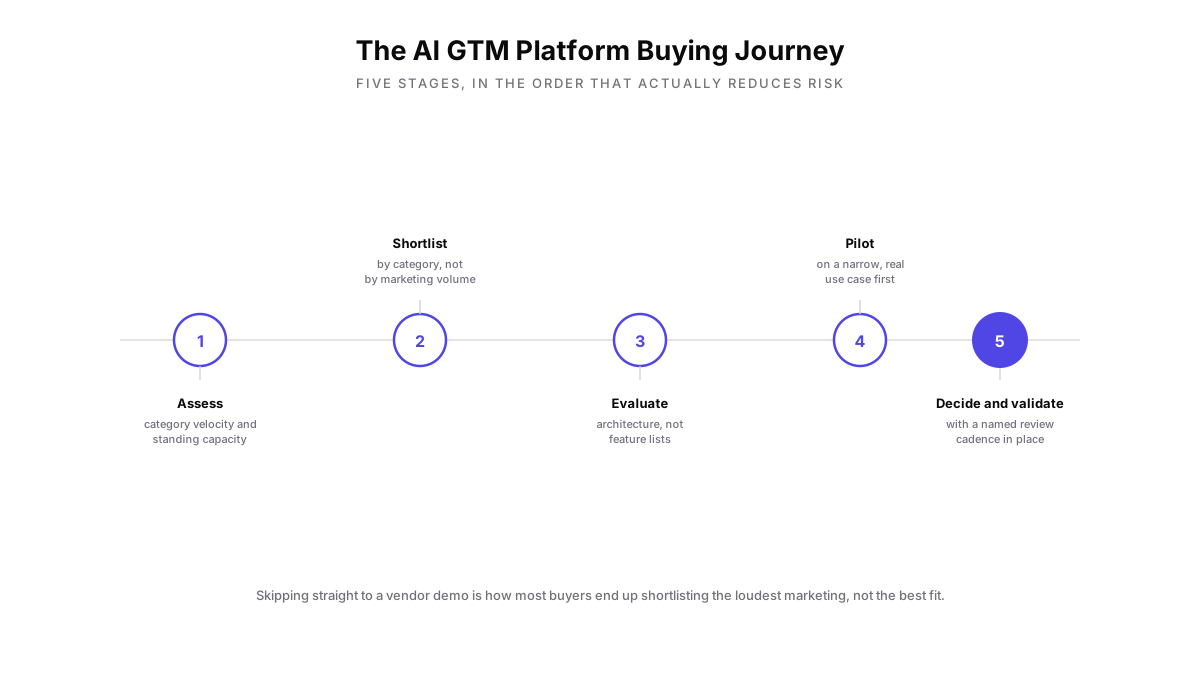
Stage one is assessment. Before looking at any vendor, assess your own situation honestly across two dimensions: how fast your category actually moves, and how much standing strategy capacity your team already has. A market where positioning and competitive dynamics shift meaningfully within a quarter justifies continuous, AI-generated updating far more than a stable, slow moving category where a quarterly review is already fast enough to keep up. A team with a strong, well resourced strategy function will get less incremental value from an AI layer than a lean team with no dedicated intelligence function at all. This assessment should produce a written, specific answer, not a general impression, since the rest of the process depends on it. A useful discipline here is writing down, before any vendor conversation happens, two or three specific recent examples of a market or competitive shift your team either caught quickly or missed for too long, since those concrete examples anchor the rest of the evaluation in your own actual experience rather than a vendor's description of a problem you may or may not genuinely have.
Stage two is shortlisting by category, not by marketing volume. As described in more detail elsewhere in this content series, AI GTM platforms split into several genuinely different categories, and comparing a signal and enrichment tool against an AI SDR agent against a strategy focused operating layer produces a shortlist that looks broad but is not actually comparing like with like. Identify which category matches your actual gap first, then shortlist within that category, rather than assembling a list based on whichever vendors have the most visible marketing presence. A shortlist built this way is usually shorter and more genuinely comparable than one built from a general search for the most talked about names in AI GTM software.
Stage three is evaluation against consistent criteria. This is the stage most buyers shortcut by relying on vendor provided comparison charts, which are built to make a specific product look strongest. A more reliable approach scores every finalist against the same six criteria, detailed in the next section, using specific, verifiable evidence rather than a vendor's own description of itself. This stage typically takes longer than buyers initially expect, since gathering specific, verifiable evidence for six criteria across several finalists is genuinely more work than reading through polished vendor decks, but it is the stage most directly responsible for avoiding an expensive mismatch later.
Stage four is a narrow, real pilot. Rather than committing to a full rollout, run a pilot scoped to one specific, well bounded use case, and use it specifically to test whether the vendor's architecture claims hold up in practice: does scoring genuinely update without manual intervention, does the system integrate with your actual stack the way it claimed during the sales process, and does supervising its output take the amount of time the vendor estimated. A pilot that only tests the platform's most polished, well rehearsed use case tells you less than one scoped specifically to a scenario your team actually struggles with today.
Stage five is deciding and building the validation cadence at the same time. The decision itself should not be the final step. Before signing, decide who will check the system's recommendations against real outcomes, and on what schedule, so the validation discipline this guide describes throughout is in place from day one rather than added reactively after a problem surfaces. Teams that treat this as a negotiable, optional add-on rather than a required part of the decision are the ones most likely to skip it once the excitement of a new platform launch has faded.
The Six Criteria Worth Scoring
A structured scorecard, applied consistently across every finalist, is more reliable than any individual vendor's own comparison chart, because it forces the same specific questions to be asked of every option rather than letting each vendor frame the comparison on its own terms.
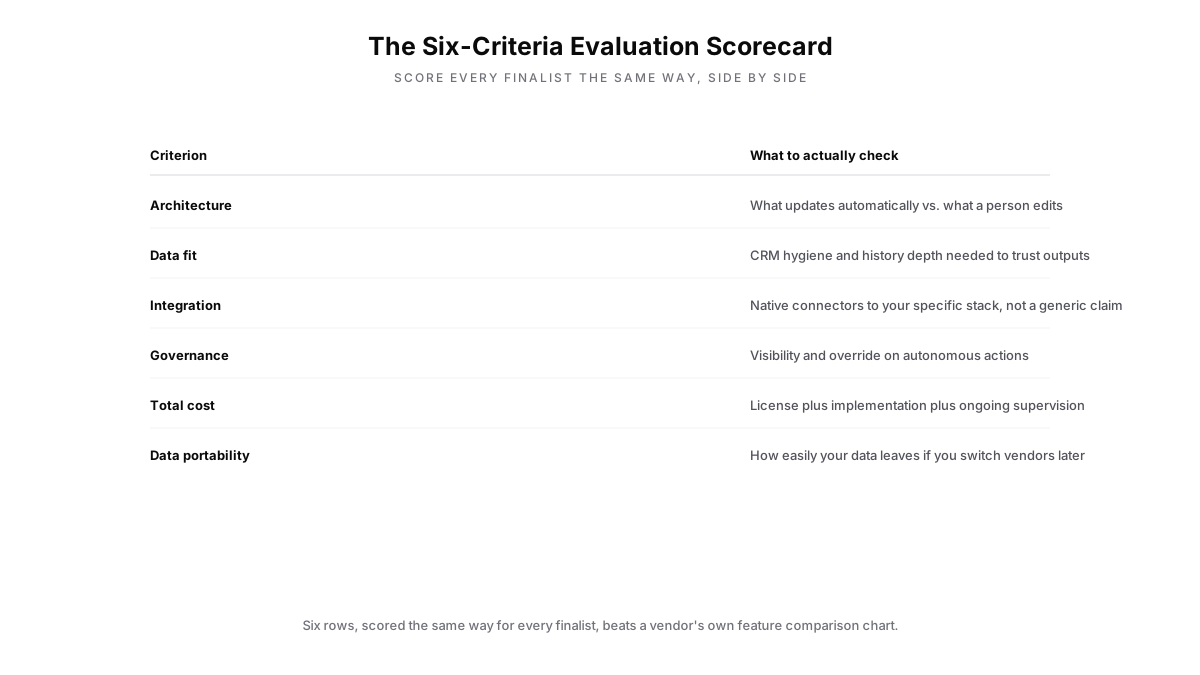
Architecture is the single most important criterion, and the test is specific: ask exactly what changes automatically as new signal arrives, versus what still requires a person to manually update. A vendor that can answer this with a concrete, specific example is more likely to have a genuinely continuous architecture than one that describes its AI capability only in general terms. It is worth pushing past the first answer here, since many vendors will initially describe a feature that sounds continuous but, on closer questioning, still requires a person to review and approve every individual output before anything happens downstream, which is a meaningfully different architecture than one where routine, well defined actions genuinely execute without that manual approval step.
Data fit asks how much CRM hygiene and historical data volume the platform actually needs to produce trustworthy output. An AI GTM platform is only as good as the signal it learns from, and a platform that needs cleaner or more voluminous data than your organization currently has will underperform its own demo regardless of how capable the underlying AI is. A useful practice here is asking the vendor to describe, specifically, what happens to output quality when data is thin or inconsistent, rather than accepting a general assurance that the platform handles messy data well, since every vendor will make that general claim and few will volunteer the specific limitations without being asked directly.
Integration asks specifically how the platform connects to your existing stack, not a generic claim of broad compatibility. A vendor that cannot get specific about your particular CRM, your particular data sources, and what that integration actually requires is signaling that the real integration work may be more custom, and more expensive, than the sales conversation implied. Asking to see the integration actually working against a sandbox or trial version of your specific tools, rather than a generic demo environment, is a more reliable test than accepting a features list that simply names your tools as supported.
Governance asks how much visibility and override you retain over any action the system takes autonomously. A platform without a clear, specific answer to how you would catch and reverse a bad automated recommendation is asking you to trust its judgment without giving you the tools to verify that trust is warranted. Strong governance typically includes an audit trail showing what the system did and why, a clear mechanism to pause or roll back a specific automated behavior, and defined thresholds above which the system escalates to a person rather than acting independently.
Total cost asks for the full picture, license plus implementation plus the ongoing supervision this guide has described throughout, not just the number on the pricing page. A cheaper license with a much larger implementation and supervision burden can easily cost more in the first year than a more expensive, more turnkey option. Requesting a full first year cost estimate, broken out by category, from every finalist, rather than comparing headline license prices, is the only reliable way to make this comparison fairly across vendors with different pricing structures.
Data portability asks how easily your data and configuration would leave the platform if you decided to switch vendors later. Any hesitation or evasiveness on this specific question is worth treating as a serious signal about how the vendor relationship is likely to evolve once you are a paying, less easily replaced customer. A vendor confident in its own value proposition should have no reason to make switching away difficult, and a clear, specific, low friction answer to this question is itself a positive signal about how that vendor is likely to behave throughout the relationship, not just at the point of departure.
| Criterion | What a strong answer looks like | What a weak answer looks like |
|---|---|---|
| Architecture | A specific, concrete example of automatic updating | General language about AI capability with no specifics |
| Data fit | A clear statement of the minimum data quality needed | A claim that the platform works well with any data |
| Integration | Specific detail about your actual tools and data sources | A generic "we integrate with everything" claim |
| Governance | A clear override and audit mechanism you can see directly | Vague reassurance without a specific mechanism named |
| Total cost | An honest, itemized estimate including supervision time | Only the license price, with implementation cost unclear |
| Data portability | A clear, specific export and transition process | Evasiveness or a promise to figure it out later |
Red Flags Worth Taking Seriously
Across sales cycles in this category, a small number of warning signs recur often enough to name directly, regardless of which specific vendor is showing them. None of these signals alone should automatically disqualify a vendor, since a single vague answer in an otherwise strong conversation can simply reflect an inexperienced salesperson rather than a genuine product gap. What matters is the pattern: a vendor showing two or more of these signals consistently across the evaluation deserves more scrutiny before moving forward, not less benefit of the doubt.
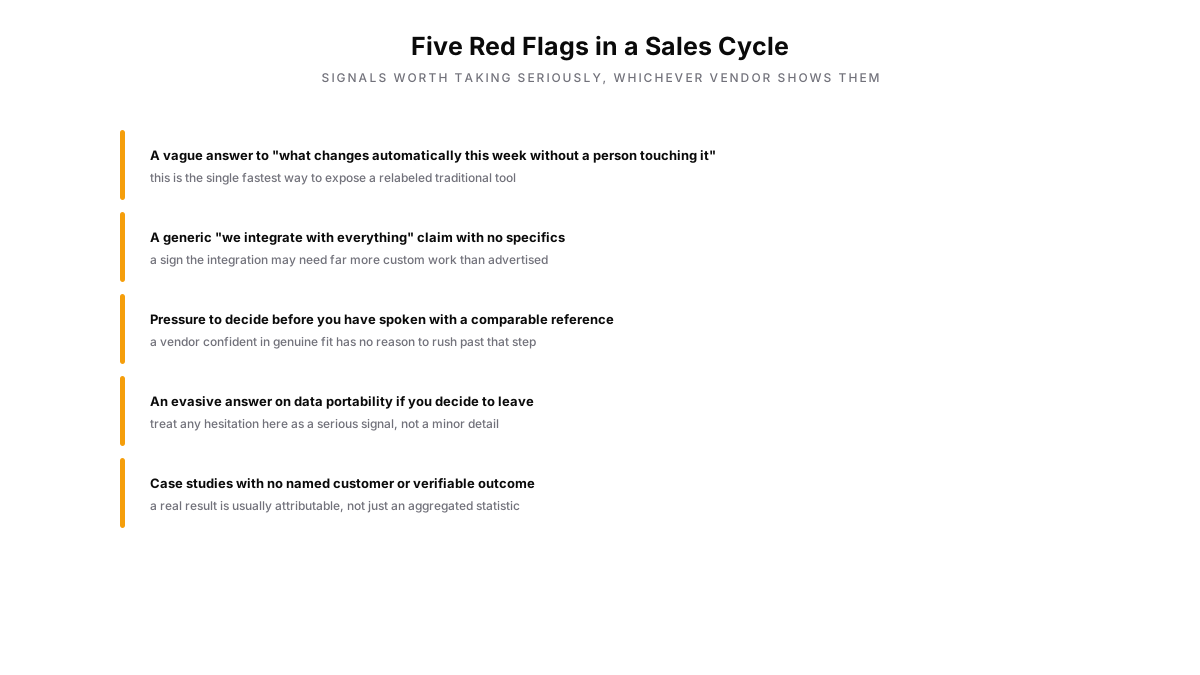
A vague answer to what changes automatically this week without a person touching it is the single fastest way to expose a relabeled traditional tool, since a genuinely AI-native platform can answer this specifically and a traditional tool with an AI feature usually cannot. A generic claim of integrating with everything, without specifics about your actual stack, is a sign the real integration may require considerably more custom work than advertised. Pressure to decide before you have spoken with a comparable reference customer is worth noting directly, since a vendor genuinely confident in fit has no reason to rush a decision past the point where you have validated that fit independently. An evasive answer to the data portability question deserves to be treated as a serious signal rather than a minor technicality to resolve later, since it often previews how the vendor relationship behaves once switching costs are higher. And case studies built around aggregated statistics with no named customer or verifiable specific outcome are considerably weaker evidence than a case study you can actually trace back to a real company and a real result.
Pricing Models You Will Encounter
Pricing in this category varies enormously, and comparing sticker prices across genuinely different pricing structures without understanding what each structure actually charges for is a common source of confusion in buyer conversations.
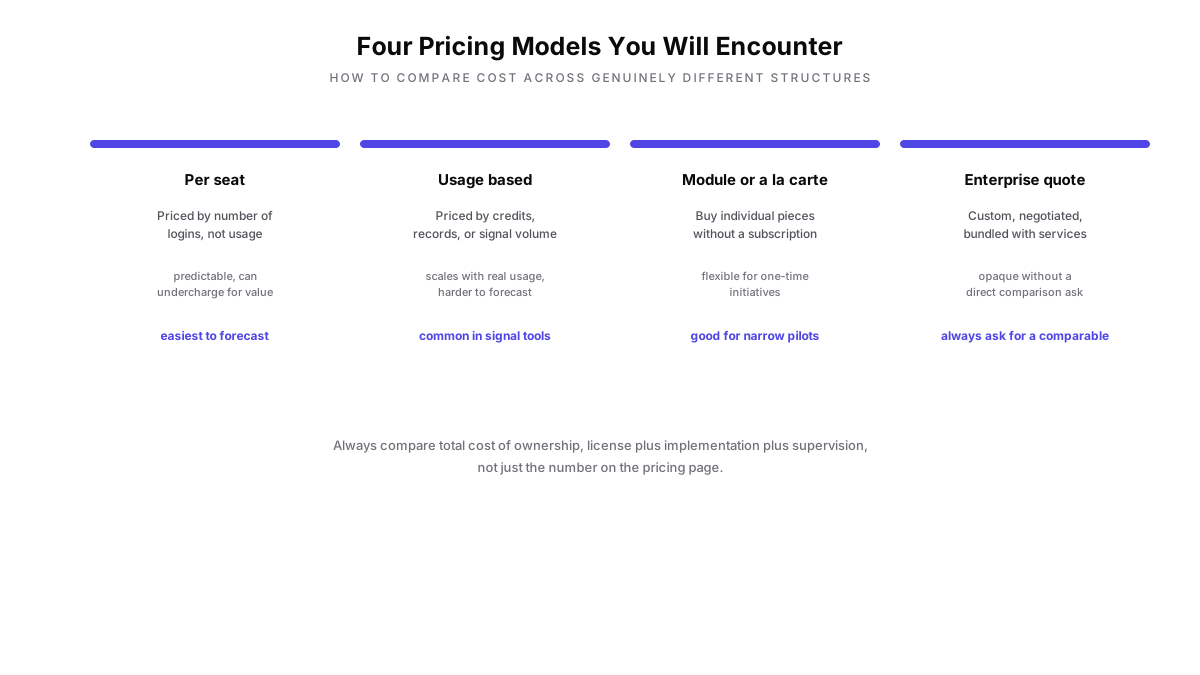
Per seat pricing charges based on the number of people with a login, which is predictable and easy to forecast, but can undercharge for genuinely high value, low headcount use cases and overcharge for teams with many occasional users who need only limited access. Usage based pricing charges based on credits, records processed, or signal volume, which scales more fairly with actual value delivered but is harder to forecast precisely in advance, particularly for a team unsure how much volume a new platform will actually generate. Module or a la carte pricing lets a team purchase individual pieces of capability without committing to a full subscription, which is well suited to a narrow pilot or a one time initiative, though it can end up costing more than a bundled subscription if a team's needs grow to span most of the available modules anyway. Enterprise quote based pricing is custom negotiated and often bundled with implementation services, which offers flexibility for a large, complex deployment but is inherently opaque without directly asking a vendor for a comparable reference deal.
| Model | How it charges | Best fit | Watch for |
|---|---|---|---|
| Per seat | Number of logins | Predictable teams with steady headcount | Undercharging high value, low headcount use cases |
| Usage based | Credits, records, or signal volume | Teams with variable or growing usage | Harder to forecast total spend in advance |
| Module or a la carte | Individual capability, no subscription | Narrow pilots and one-time initiatives | Can cost more than a bundle at broader scope |
| Enterprise quote | Custom, negotiated, often bundled | Large, complex enterprise deployments | Opaque without asking for a comparable reference |
Regardless of the specific model, always compare total cost of ownership, the license plus implementation plus the ongoing supervision time this guide has described throughout, rather than the number that appears first on a pricing page. It is also worth asking every vendor directly how their pricing model would change as your usage grows, since a model that looks attractive at pilot scale can behave very differently once a platform is genuinely embedded in daily GTM operations across a full team, and a vendor unwilling or unable to model that growth scenario concretely during the sales process is asking you to sign without a clear picture of what year two actually costs.
Questions to Ask Every Vendor
A short, consistent list of questions, asked identically of every finalist, surfaces more real information than a longer, less structured conversation. Writing these down in advance and asking them the same way, in the same order, across every vendor conversation makes it far easier to compare answers afterward than relying on notes taken during a more free-flowing, vendor-led demo.
Ask what changes automatically in the system this week, without a person touching it, and ask for a specific, concrete example rather than a general description. Ask to see the reasoning behind one specific, real recommendation, rather than accepting a polished but unexplained output. Ask exactly how the platform integrates with your specific CRM and existing stack, by name, rather than accepting a general claim of broad compatibility. Ask what data quality and volume the platform actually needs to produce trustworthy recommendations, and what happens to output quality when that bar is not met. Ask how you would notice and reverse a bad autonomous recommendation before it caused real damage. Ask for a reference customer in a genuinely comparable situation, not just the vendor's strongest overall case study. And ask directly what the full first year cost looks like, including implementation and the ongoing supervision time the vendor expects you to budget for.
| Question | What a strong answer sounds like |
|---|---|
| What changes automatically this week? | A specific example, named and traceable, not a general capability claim |
| Can you show the reasoning behind one real recommendation? | A clear, specific explanation you can independently sanity check |
| How does this integrate with our specific stack? | Named tools, named data sources, a demonstrated connection |
| What happens when our data is thin or messy? | An honest description of degraded output, not a blanket reassurance |
| How do we catch and reverse a bad recommendation? | A specific audit trail and override mechanism, demonstrated live |
| Can we speak with a comparable reference customer? | A prompt, specific introduction, not a delayed or redirected response |
| What is the full first year cost? | License, implementation, and supervision time, itemized separately |
A useful discipline is scoring each vendor's answer to these seven questions on the same simple scale used for the six criteria earlier in this guide, since a vendor that answers most of these questions specifically and confidently is providing meaningfully stronger evidence of genuine fit than one that answers most of them in general, reassuring, but ultimately vague terms.
Common Mistakes Buyers Make
Starting with vendor demos instead of an internal assessment. Booking calls with the most visible vendors before honestly assessing your own category velocity and standing strategy capacity is how a buyer ends up with a shortlist shaped by marketing budget rather than genuine fit.
Comparing across categories as if they were the same market. Evaluating a signal and enrichment tool against an autonomous execution agent against a strategy focused platform as if they compete head to head produces a confusing, apples to oranges shortlist, since each is built to solve a different part of the underlying problem.
Accepting a vendor's own comparison chart at face value. A comparison built and published by one of the vendors being compared is, unsurprisingly, usually built around criteria that favor that vendor. A consistent, buyer built scorecard applied to every finalist is more reliable.
Skipping the pilot stage to save time. A pilot scoped to a real, narrow use case is the fastest way to test whether a vendor's architecture claims hold up once your actual data and workflows are involved, and skipping it to save a few weeks often costs considerably more time later if the platform underperforms its demo.
Signing without a validation cadence already defined. Deciding who checks the system's recommendations against real outcomes, and how often, is not a detail to figure out after go live. Teams that treat this as an afterthought are the ones most likely to trust a quietly wrong recommendation for months before anyone notices.
Underestimating the true first year cost. Budgeting only for the license, without accounting for implementation effort and ongoing supervision time, consistently produces a first year cost meaningfully higher than the number that appeared on the initial pricing conversation.
| Mistake | What it looks like | Fix |
|---|---|---|
| Starting with demos, not assessment | A shortlist shaped by marketing visibility | Assess category velocity and capacity honestly first |
| Comparing across categories | An apples to oranges shortlist that confuses more than clarifies | Identify your actual category gap before shortlisting |
| Trusting vendor comparison charts | Criteria that happen to favor whichever vendor built the chart | Build one consistent scorecard and apply it to every finalist |
| Skipping the pilot | Architecture claims untested against your real data | Run a narrow, real pilot before a full commitment |
| No validation cadence at signing | Nobody explicitly responsible for checking outputs | Name an owner and a schedule before go live, not after |
| Underestimating total cost | License budgeted, implementation and supervision ignored | Ask for a full first year estimate including both |
What This Looks Like in Practice
A few real patterns, drawn from how this buying process actually plays out, make the stakes more concrete than an abstract checklist alone.
A company that skipped the assessment stage entirely picked a widely recommended platform primarily because a peer at another company had praised it publicly. Six months in, the platform's continuous scoring capability, its core selling point, was underused because the company's own CRM data was too thin and inconsistent to give the model anything reliable to learn from. The platform itself was not the problem. The mismatch between what it needed to work well and what the company actually had was, and it was a mismatch the data fit criterion in this guide would have caught during evaluation rather than six months into a contract.
A different company ran the pilot stage seriously, scoping it to a single, well bounded use case, expansion signal detection for existing customers, before committing to a broader rollout. The pilot surfaced a specific integration gap between the platform and the company's billing system that the sales process had not mentioned, since the vendor's default integration path assumed a different billing tool. Catching this during a four week pilot, rather than during a company wide rollout, saved a significant amount of rework and kept the eventual full deployment on a realistic timeline.
A third company built the validation cadence into its contract negotiation itself, requiring the vendor to provide a monthly report specifically showing which recommendations the system had made, which ones a human had overridden, and why. This turned what could have been an informal, easily skipped internal habit into a contractual deliverable, which meaningfully increased the odds that the validation discipline this guide has emphasized throughout actually got followed once the initial enthusiasm of a new platform launch wore off.
Build, Buy, or Both
A question many teams eventually have to answer honestly is whether to build this capability internally, using GTM engineering resources to connect existing tools into something closer to a genuine AI GTM platform, or to buy a platform already built around this architecture.
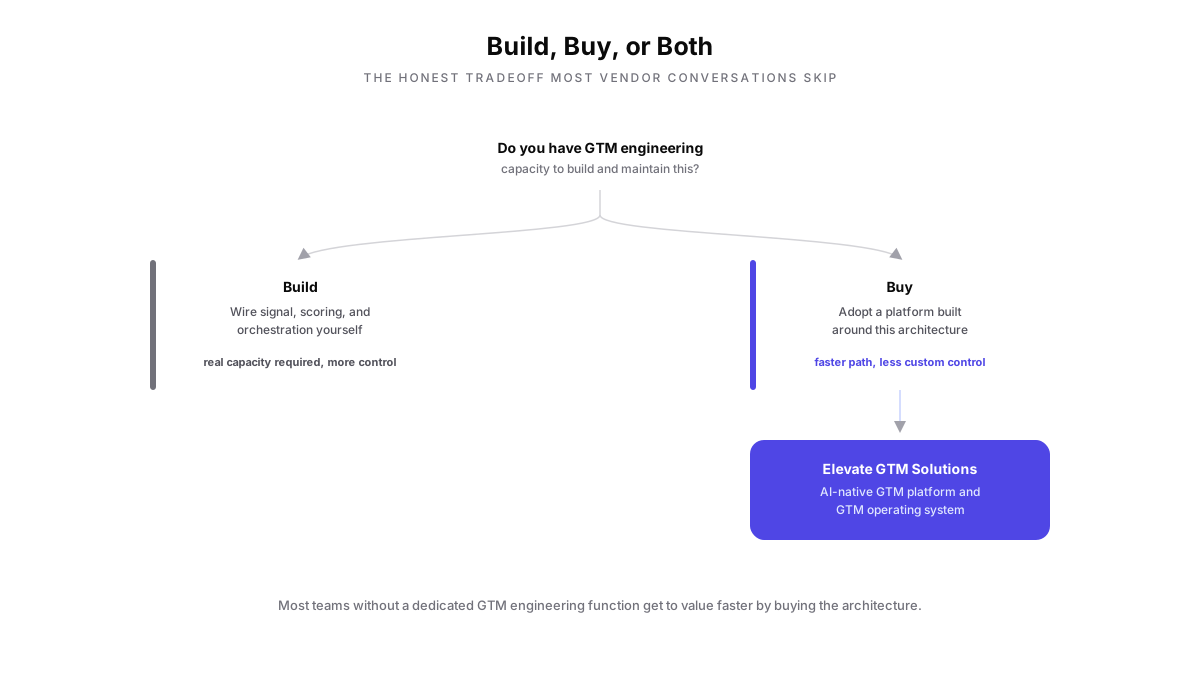
Building makes sense for a team with genuine, dedicated GTM engineering capacity and a strong preference for custom control over exactly how signal, scoring, and orchestration connect. It is a real, viable path, but it requires ongoing maintenance, not just an initial build, since the connections between tools need to keep working as each individual tool changes its own API and data model independently. Teams that underestimate this ongoing maintenance burden often find that a build which looked complete at launch requires a meaningful, recurring share of engineering time indefinitely afterward, simply to keep pace with changes in the underlying tools it connects.
Buying makes sense for the more common case: a team without dedicated engineering capacity to build and maintain this architecture themselves, who would rather adopt a platform where that architecture already exists and is already maintained by the vendor. Elevate GTM Solutions is built specifically for this path, an AI-native GTM platform and GTM operating system where the continuous intelligence, structured execution, and analytics this guide has described are already connected, rather than a set of separate capabilities a team has to wire together internally. For a team that has gone through the assessment in this guide and concluded that its category moves quickly and its standing strategy capacity is thin, buying a platform built around this architecture from the outset is usually the faster, lower risk path to actual value.
Many teams land on a hybrid answer in practice, buying the core platform for the bulk of their GTM motion while building lightweight, custom connections for a specific, unusual workflow the platform does not natively cover. This is a reasonable outcome, and it is worth deciding deliberately rather than defaulting into it by accident. The clearest sign that a hybrid approach is the right call, rather than a sign of an incomplete platform decision, is when the custom piece being built addresses a narrow, genuinely unusual need specific to your business, rather than a core capability any AI GTM platform should reasonably be expected to provide natively.
How This Connects to a GTM Operating System
An AI GTM platform is a category of tool. A GTM operating system, as this content series has described elsewhere, is the broader structural discipline of connecting signal, decisioning, execution, and analytics into one continuous loop, achievable in principle with or without AI. Buying the right AI GTM platform is a meaningful step toward building that operating system, but it is not the same thing as having actually built it. A platform can be genuinely well architected and still fail to deliver value if nobody assigns clear ownership of its outputs, if the validation cadence this guide has emphasized throughout never gets built, or if the organization keeps treating strategy as a document produced separately from what the platform is generating in real time.
This distinction has a direct, practical implication for how a buyer should think about the purchase itself. Signing a contract with a well evaluated AI GTM platform is the easier half of this project. The harder half, and the half most likely to determine whether the purchase actually delivers the value described during the sales process, is the organizational work of assigning a named owner to the platform's outputs, building the review cadence this guide has described at several points, and making sure the rest of the organization actually trusts and acts on what the system recommends rather than quietly continuing to make decisions the old way alongside it. A buyer who treats the signed contract as the finish line, rather than the starting point for this organizational work, is significantly more likely to end up with a platform that looks good in a renewal conversation about feature usage but has not actually changed how GTM decisions get made day to day.
This is the practical reason the evaluation in this guide goes beyond a feature comparison. The right AI GTM platform, evaluated honestly against the six criteria described above, gives an organization the technical foundation for a genuine operating system. Whether that foundation actually becomes one depends on the organizational discipline built around it, a distinction worth keeping in mind through every stage of the buying process this guide has described.
Frequently Asked Questions
How long does an AI GTM platform evaluation typically take? A structured evaluation following the five stages in this guide typically takes six to ten weeks for a mid-market buyer, longer for a large enterprise with more stakeholders and a more complex existing stack. Rushing past the assessment or pilot stages to save time is the most common way this timeline gets shortened at the cost of a worse final decision.
Do we need a dedicated GTM engineer to evaluate or run an AI GTM platform? Not necessarily to evaluate one, since the questions in this guide can be asked by a RevOps or marketing leader without deep technical background. Running one well over time benefits from having someone with enough technical fluency to understand what the platform's architecture actually does, whether that is a dedicated hire or a capable generalist who takes on the role.
What is a reasonable budget range for a first year AI GTM platform deployment? This varies enormously by category and company size, and any specific figure quoted here would likely be outdated quickly given how fast this market moves. The more durable guidance is to always request a full first year estimate covering license, implementation, and expected supervision time, and to treat any vendor unwilling to provide that full picture as a red flag in itself.
Should a small team with a thin budget still consider an AI GTM platform? Often yes, provided the pricing model fits the team's scale. A module based or usage based pricing model, rather than a large enterprise commitment, can let a smaller team access AI-native capability for a narrow, high value use case without the overhead of a full platform rollout.
How do we know if our data is ready for an AI GTM platform? A reasonable rule of thumb is asking whether your CRM data would let a new, reasonably competent human hire understand your current GTM motion accurately within a day of reading it. If the honest answer is no, because records are inconsistent, stages are used unpredictably, or history is thin, that same weak foundation will limit what any AI system can reliably learn from it, and cleaning that up first is usually a better investment than working around it after the platform is already live.
What happens if we choose the wrong AI GTM platform? The costs of a wrong choice usually show up as either a demo that never translates into real, trusted output because of a data or integration mismatch, or a platform that works technically but nobody actually uses because the organizational discipline around it was never built. Both are recoverable, but both are also more expensive to fix after a full rollout than to catch during the pilot stage this guide has recommended.
Should the RevOps team or the marketing team own this decision? Ownership varies by organization, but the evaluation itself benefits from involving both perspectives directly, since RevOps typically has the clearest view of data quality and integration requirements while marketing or a strategy function typically has the clearest view of how well the platform's recommendations would actually get used. A decision made entirely by one function without direct input from the other risks optimizing for criteria that matter less to the team that will actually depend on the platform daily.
How do we compare vendors that use different terminology for similar capabilities? This is a common source of confusion, since one vendor's continuous scoring might be another vendor's predictive intelligence, describing largely the same underlying capability with different marketing language. The fix is translating every vendor's description back into the same specific, architectural questions this guide has proposed throughout, rather than trying to compare vendor specific terminology directly, since terminology varies far more than the underlying architecture actually does across serious vendors in this category.
What is the single most important thing to get right in this decision? If only one part of this guide can be applied under time pressure, it is the architecture test: asking specifically what changes automatically without a person touching it, and requiring a concrete example rather than a general answer. This single question, asked consistently across every finalist, catches the majority of the mismatches this guide has described, since it is the fastest way to separate a genuinely continuous platform from a traditional tool with an AI feature layered on top.
Final Thoughts
The RevOps leader from the opening of this guide eventually made a good decision, but she made it despite her process, not because of it, spending weeks comparing polished demos before finally asking the specific, architectural questions that actually separated the finalists. The five stage process, six criteria scorecard, and red flags described throughout this guide exist to get a buyer to that same clarity considerably faster, without needing to learn the hard way which questions actually matter.
None of this replaces the judgment a buyer brings to their own specific situation. The right AI GTM platform for a fast moving, lean team is not the right choice for a stable, well resourced enterprise, and the honest assessment this guide opens with, how fast does your category actually move, and how much standing capacity do you have to generate and supervise strategy, still does more work than any individual vendor comparison. What a structured process adds is protection against the most common and most costly mistake in this category: choosing based on which vendor's marketing sounded most confident, rather than which platform's actual architecture, evaluated honestly against your specific situation, was genuinely the better fit.
This category will keep evolving quickly, and the specific vendors, pricing models, and even the terminology used to describe this space are likely to shift meaningfully within the next year or two. What should not change is the underlying discipline this guide has tried to make concrete: assess your own situation honestly before looking at any vendor, evaluate architecture rather than marketing language, pilot narrowly before committing broadly, and build the validation habit into the decision itself rather than treating it as an afterthought. A buyer who internalizes that discipline will make a good decision in this category regardless of how the specific vendor landscape looks by the time they are actually making it.