The Continuous GTM Loop
A framework for thinking about go to market as four connected stages running continuously, rather than a project that starts and stops. Observe, decide, act, learn, and back to observe, without waiting for the next scheduled review.
Published 2026-07-25
Most GTM process, even at sophisticated companies, is still built as a line: research an account, reach out, run the meeting, close or lose, then wait for the next scheduled review to reflect on what happened and adjust. That line has a start and an end, and between the end of one pass and the start of the next, nothing is running. Signal that arrives during that gap sits unused until someone eventually loops back around.
The Continuous GTM Loop is a simple reframe of that structure: four stages, Observe, Decide, Act, and Learn, that do not run once and stop, but run continuously, each cycle feeding the next automatically rather than waiting for a person to notice it is time to start over. This piece defines the framework precisely, explains why the loop shape matters more than it might first appear, and shows how the same four stages apply across marketing, sales, and customer success without changing shape.
This framework is deliberately simple, and that simplicity is intentional rather than a limitation. A framework earns reuse by being memorable and precise enough that a team can apply it consistently across different situations without needing to relearn it each time, and the four stage loop described here is built specifically to meet that bar: simple enough to sketch on a whiteboard in under a minute, precise enough that each stage has a specific, testable definition rather than a vague aspiration.
The Four Stages, Defined Precisely
Before applying the framework anywhere, it is worth defining each stage carefully, since the value of a framework like this comes from precision, not from a vague, motivational restating of ideas most GTM leaders already hold informally.
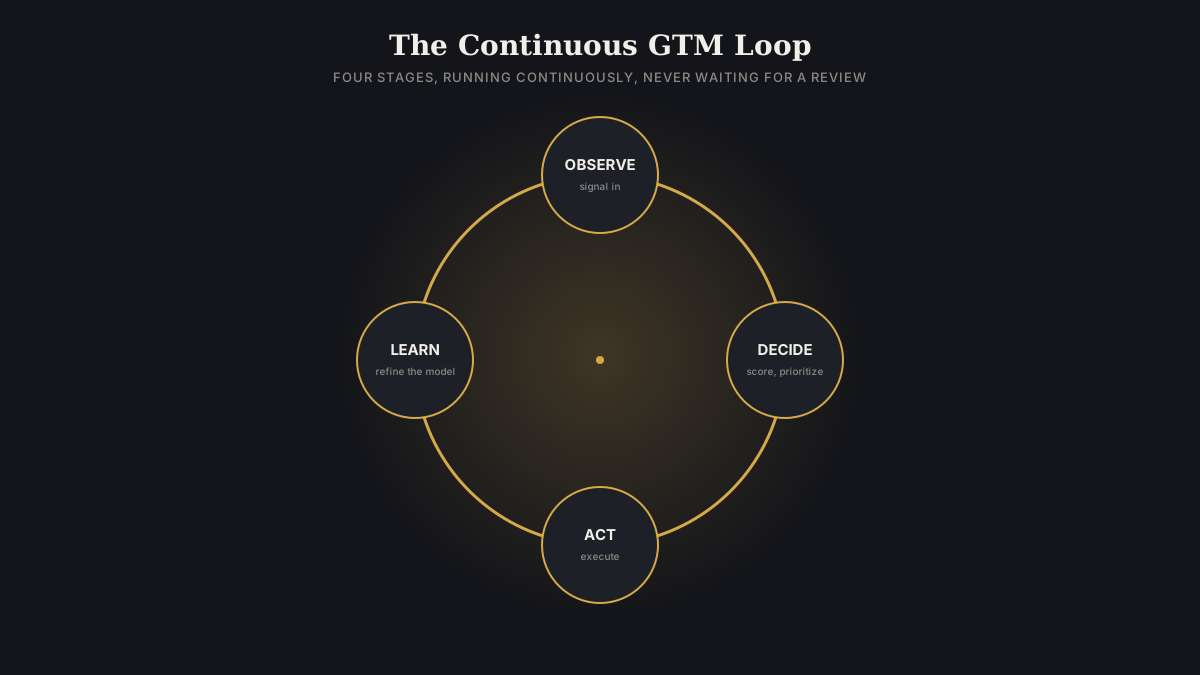
Observe is the stage where raw signal, from any source, CRM activity, intent data, product usage, support tickets, engagement history, gets collected and unified into a single, current view of an account or contact. The output of this stage is not a decision, it is simply an accurate, up to date picture of what is currently true.
Decide takes that unified picture and applies scoring logic to it, producing a ranked next action: which account deserves attention right now, and what specifically should happen. The output of this stage is a specific, actionable recommendation, not just a score sitting in a dashboard waiting for someone to interpret it.
Act takes that recommendation and executes it, or routes it to the right owner for execution, whether that is an automated email, a task assigned to a rep, or an alert escalated to a manager. The output of this stage is something happening in the world, a touch, a routing decision, an update, not just a plan sitting in a queue.
Learn closes the loop by capturing what happened as a result of that action, whether it worked, whether the account engaged, whether the deal progressed, and feeding that outcome back into the scoring logic used in the Decide stage, so the next cycle's decisions are informed by what the last cycle actually produced.
| Stage | Core question it answers | What it produces |
|---|---|---|
| Observe | What is currently true about this account? | A unified, current signal picture |
| Decide | What should happen next, and for whom first? | A ranked, specific next action |
| Act | Who or what executes that action? | An executed touch, route, or alert |
| Learn | What actually happened, and what does it teach the model? | An updated scoring input for the next cycle |
Where This Shape Comes From
It is worth being direct about the lineage of this framework, since the four stage, closed loop shape is not a novel invention. It draws deliberately on a family of feedback loop frameworks with a long, well tested history across other disciplines, and understanding that lineage helps explain why the shape works rather than treating it as an arbitrary choice.
The most direct ancestor is the OODA loop, developed originally for military decision making, which frames rapid, iterative response around observing a situation, orienting to what it means, deciding on an action, and acting on it, with the outcome of that action feeding directly back into the next observation. The core insight behind OODA, that the side able to complete this cycle faster than its opponent gains a compounding advantage regardless of the specific decisions made at any single pass, translates directly to the competitive dynamic this content series has described elsewhere regarding loop velocity in GTM: a team that observes, decides, acts, and learns faster than a competitor is not just executing faster in any single instance, it is compounding an advantage that widens with each cycle.
A second, closely related ancestor is the plan, do, check, act cycle used widely in quality management and continuous improvement disciplines, which similarly frames improvement as an ongoing loop rather than a one time project, with the check stage's findings feeding directly back into how the next plan gets made. This lineage is useful specifically because it comes from a discipline, manufacturing and operations management, that has spent decades refining exactly this kind of closed loop thinking at industrial scale, and much of what that discipline has learned about where these loops tend to break, most commonly at the connection between measuring an outcome and actually changing the next plan based on it, applies directly to the equivalent weak point in a GTM context, described later in this piece.
Control theory, the branch of engineering concerned with systems that adjust their own behavior based on continuous feedback, offers a third, more technical grounding for the same idea. A well designed control system does not simply execute a fixed plan, it continuously measures the gap between its current state and its target state, and uses that gap to adjust its next action, in a loop that never fully stops. The Continuous GTM Loop applies this same logic to go to market: rather than executing a fixed quarterly plan and hoping it stays accurate, the system continuously measures the gap between what is happening and what the current scoring model expects, and uses that gap to refine the next decision.
None of these three lineages is being claimed as an original contribution of this piece. What this framework offers is a translation of that well established family of ideas into a vocabulary and a set of stage definitions built specifically for GTM, precise enough to apply consistently across marketing, sales, and customer success, and paired with the specific architectural test, does the Learn stage's output become an automatic input to the next Decide stage, that determines whether a given implementation is a genuine loop or simply four related activities happening near each other.
Why the Shape Is a Loop and Not a Line
The choice to frame this as a loop rather than a sequence is not a stylistic preference. It reflects a specific, load bearing architectural claim: each stage's output should become the next cycle's input automatically, without a person having to notice that a cycle has ended and manually restart the next one.
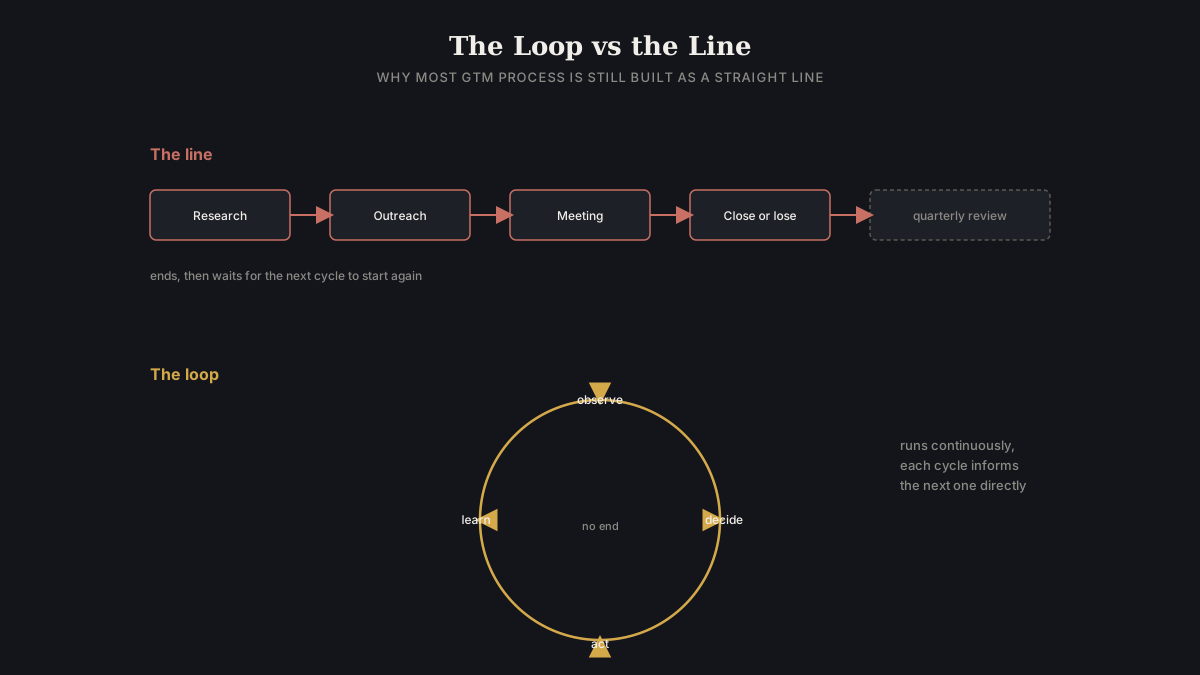
A line has a natural stopping point, and that stopping point is exactly where most GTM process quietly loses momentum. A deal closes or is lost, a campaign ends, a quarter finishes, and whatever was learned during that process sits, unused, until the next scheduled planning cycle picks it back up, if it ever does. The gap between the end of one line and the start of the next is where signal goes stale, where a good insight from one deal fails to inform the next similar one, and where the compounding value of experience gets lost simply because nothing in the process structure carries it forward automatically.
A loop, by definition, has no such gap. The Learn stage's output is not a report sitting in a slide deck waiting for the next quarterly review, it is a direct, structural input into the next cycle's Decide stage. This is the same architectural principle described elsewhere in this content series as the defining feature of a genuine GTM operating system: not simply having each of these four capabilities present somewhere in the stack, but having them connected into a loop that closes itself automatically, cycle after cycle, without requiring a person to notice and manually restart it.
Loop Velocity Compounds
A loop that closes itself automatically has a property a linear process does not: its value compounds with speed, not just adds up with it.
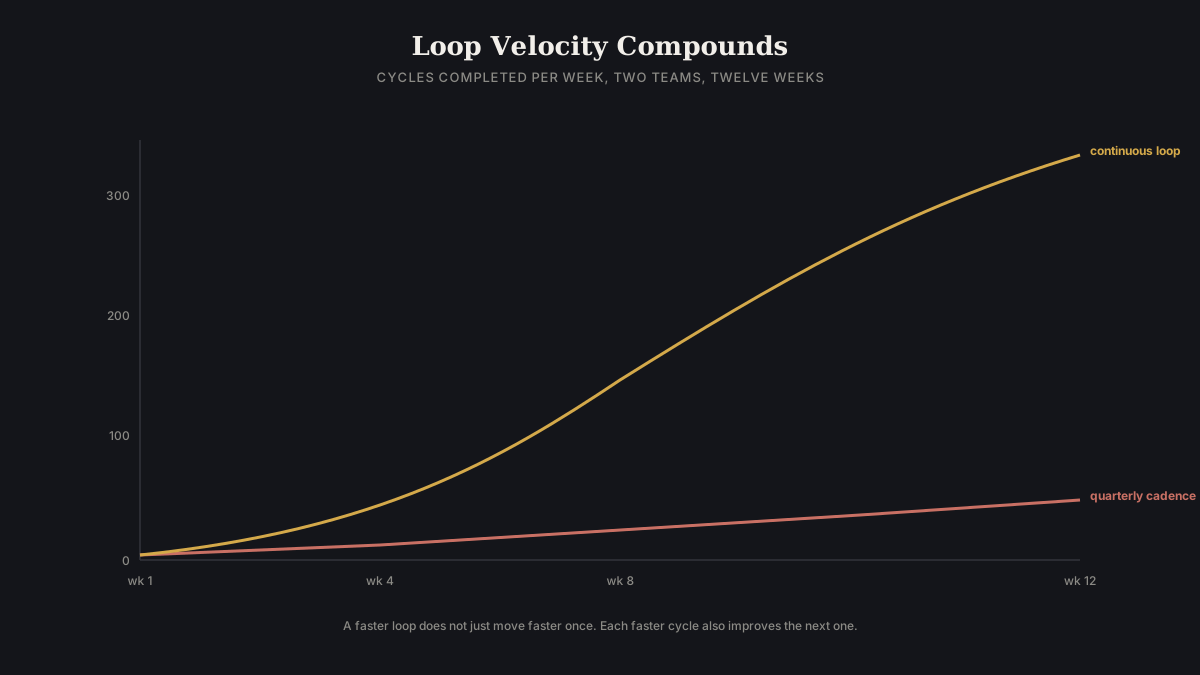
A team running a quarterly cadence completes roughly four full cycles a year, and each cycle's Learn stage informs the next cycle's Decide stage only after a full quarter's delay, by which point a meaningful share of what was learned may already be less relevant to current conditions. A team running the same four stages as a genuine, continuous loop can complete many more cycles in the same period, and critically, each cycle's improvement is available to the very next cycle, not held back until a scheduled review. This is why the difference in outcome between a linear, periodically reviewed process and a genuinely continuous loop tends to widen over time rather than staying constant: the loop is not just moving faster, it is compounding its own improvements faster, in the same way a shorter feedback loop in any complex system tends to produce better tuned outcomes than a longer one, given the same total amount of underlying signal.
This is also why loop velocity, not just loop presence, is a meaningful thing to measure and improve deliberately. Two teams can both claim to be running some version of this framework while operating at meaningfully different cycle speeds, and the team running a faster loop is not just marginally ahead, it is compounding an advantage that widens the longer both teams keep operating at their respective speeds.
Anatomy of One Cycle
It helps to look inside a single pass through the loop in more detail, since the framework's value depends on each stage having a genuinely defined input and output, not a vague, informal version of the same idea.
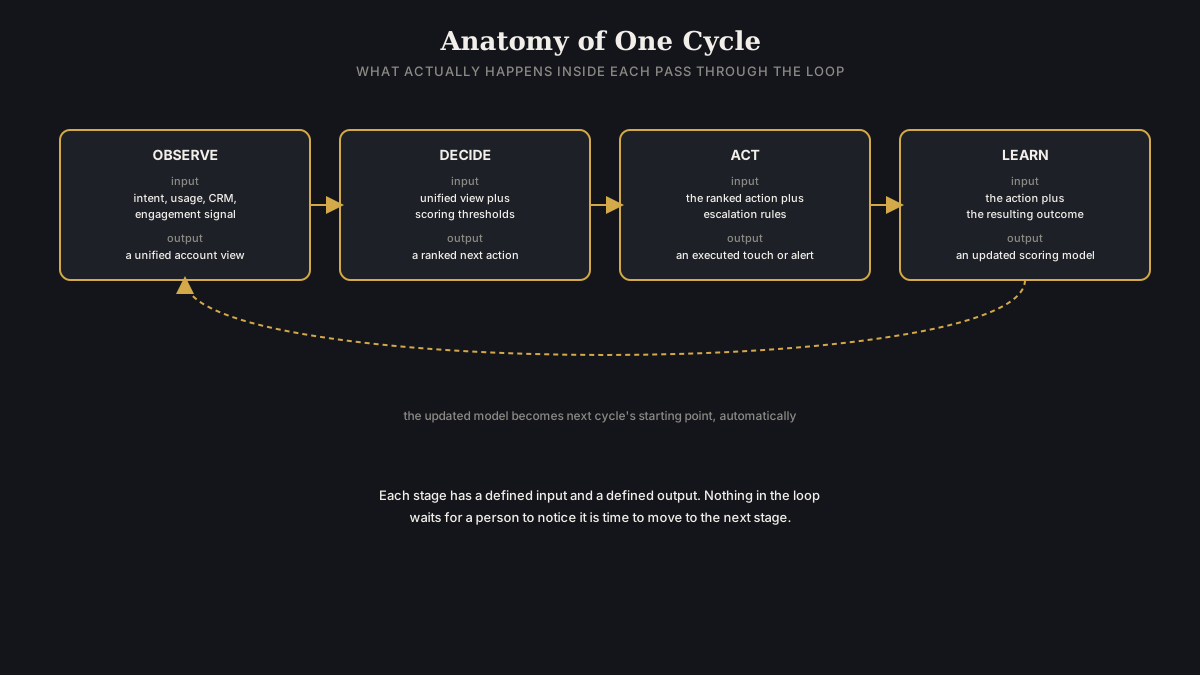
Observe takes in raw signal from wherever it originates and produces a unified account view as its output, nothing more. Decide takes that unified view, combined with the current scoring thresholds, and produces a specific, ranked next action. Act takes that ranked action, combined with any relevant escalation rules, and produces an executed touch or a routed alert. Learn takes the executed action together with its actual outcome and produces an updated input to the scoring model used in the next Decide stage, which is the specific mechanism that closes the loop rather than simply describing four related activities that happen to occur near each other.
This level of specificity matters because it is what distinguishes a genuine implementation of this framework from a team that has all four capabilities present somewhere in its stack without them being connected into an actual loop. A team can observe signal well, decide well, act well, and even produce genuinely useful learnings from past cycles, and still not be running a continuous loop in the sense this framework describes, if that learning sits in a report rather than automatically becoming the next cycle's scoring input.
Applying the Loop Across Functions
One of the more useful properties of this framework is that the four stages do not change shape from function to function within a GTM organization. What flows through them does.
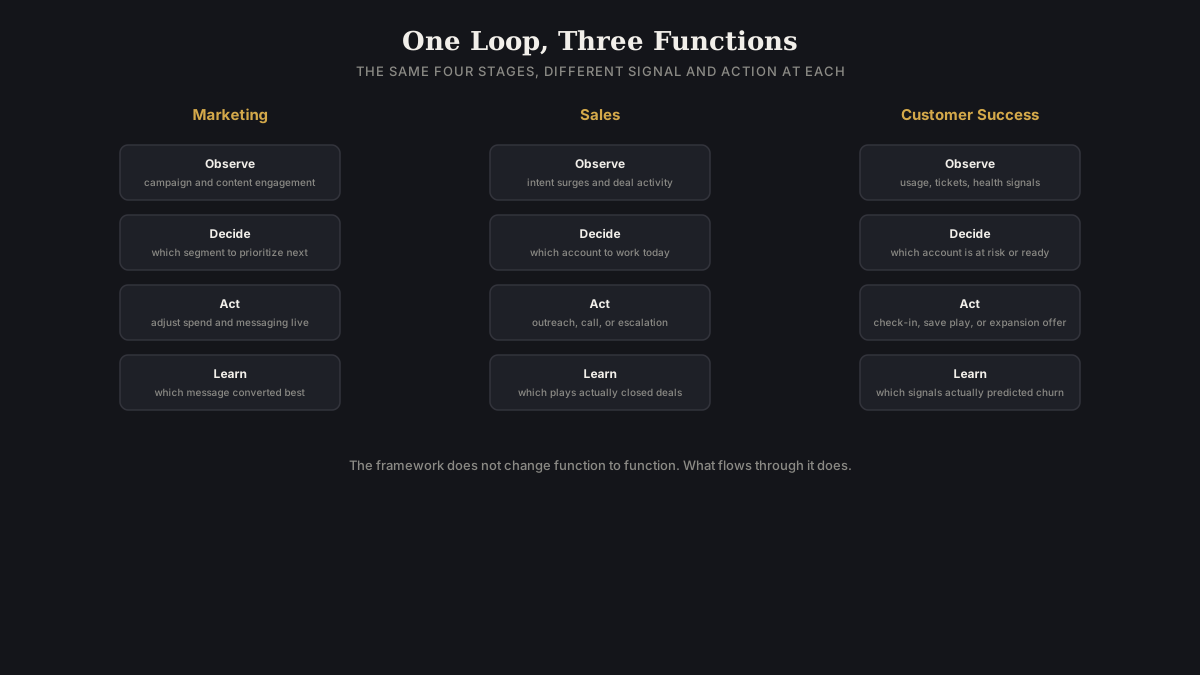
In marketing, Observe means tracking campaign and content engagement, Decide means choosing which segment or channel deserves the next allocation of budget or attention, Act means adjusting spend, targeting, or messaging in response, and Learn means feeding conversion data back into the model deciding future allocation. In sales, Observe means tracking intent surges and deal activity, Decide means ranking which account a rep should work next, Act means the actual outreach, call, or escalation, and Learn means feeding closed and lost outcomes back into account scoring. In customer success, Observe means tracking usage, ticket volume, and health signals, Decide means identifying which accounts are at risk or ready for expansion, Act means a check-in, a save play, or an expansion offer, and Learn means feeding actual churn and expansion outcomes back into the health scoring model.
| Function | Observe | Decide | Act | Learn |
|---|---|---|---|---|
| Marketing | Campaign and content engagement | Which segment to prioritize | Adjust spend and messaging | Which message actually converted |
| Sales | Intent surges and deal activity | Which account to work today | Outreach, call, or escalation | Which plays actually closed deals |
| Customer success | Usage, tickets, health signals | Which account is at risk or ready | Check-in, save play, or expansion offer | Which signals actually predicted churn |
This consistency is a genuine strength of the framework, not a coincidence. It means a team does not need a fundamentally different mental model for each function's coordination problem, and it means the underlying infrastructure, a signal layer, a scoring layer, an action layer, a feedback mechanism, can, in principle, be shared or at least architecturally consistent across functions rather than built as entirely separate systems for each one.
Common Failure Modes When Implementing the Loop
Teams attempting to build this framework in practice tend to run into a small number of recurring failure modes, each of which produces something that looks like the loop without actually functioning as one.
Stalling at Observe. A team invests heavily in unifying signal, building an impressively comprehensive account view, without building equally serious scoring logic on top of it. The result is a rich, well organized picture of what is happening that still requires a person to manually interpret and decide what it means, which leaves the actual coordination bottleneck exactly where it was before the investment, just with better looking underlying data feeding into it.
Deciding without acting. A scoring model produces genuinely good, well calibrated rankings, but the connection from that ranking to an actual executed action remains manual, a person has to check a dashboard, see the ranking, and personally decide to act on it. This is a common failure mode specifically because building a good scoring model feels like the hard, sophisticated part of the work, which makes it tempting to treat the remaining connection to action as a minor, later detail rather than an equally essential part of closing the loop.
Acting without learning. Actions execute reliably and at good volume, but the outcomes of those actions are never systematically captured and fed back into the scoring model that generated them. This is, based on patterns described elsewhere in this content series, the most common and most consequential failure mode of the four, because it is the one furthest from being visible as an active problem. A team in this position experiences steady, apparently functional operation, signals get observed, decisions get made, actions get executed, and nothing about that daily experience signals that the system is failing to improve itself over time. The cost only becomes visible in comparison, against a competitor or a later version of the same team's own process that has actually closed this connection.
Closing the loop for one function while leaving others as lines. A team builds a genuine, closed loop for one function, sales is the most common starting point, while marketing and customer success continue operating as disconnected, linear processes. This is often a reasonable and deliberate sequencing choice rather than a mistake, since building the full framework across every function simultaneously is rarely realistic. The failure mode specifically is treating the one closed function as if it represents the whole GTM motion's maturity, when in practice the disconnected functions continue to produce exactly the coordination gaps this framework is meant to close, just outside the one area where the work has actually been done.
Objections and Counterarguments
"This is a relabeling of the standard plan, do, check, act cycle used across many management disciplines, not a new framework." This is a fair and important observation, and it deserves a direct, honest answer rather than a claim of originality this framework does not need. Continuous feedback loop thinking has a long history across quality management, systems engineering, and other operational disciplines, as described in the lineage section above, and this framework does not claim to invent the underlying idea. What it offers is a specific, GTM native vocabulary and a specific architectural test, whether the Learn stage's output becomes an automatic input to the next Decide stage, or merely a report a person has to notice and manually act on, applied consistently to a domain, go to market, where this kind of continuous loop thinking has historically been underapplied relative to how thoroughly it has been adopted elsewhere.
"In practice, full automation of all four stages is unrealistic for most teams, so this framework describes an idealized state few can actually reach." This is a reasonable caution, and it is worth being explicit that the framework describes a target architecture, not a claim that every team should or can fully automate all four stages immediately. A team can meaningfully benefit from this framework by automating the connections between stages incrementally, starting with the Learn to Decide connection specifically, since that is typically the weakest link in most current GTM processes, as described in the failure modes above, without needing to achieve full end to end automation across every stage on day one. The framework's value as a diagnostic tool, helping a team see precisely where its current process breaks the loop, does not depend on the team having already achieved a fully automated implementation.
"Some parts of GTM genuinely benefit from a slower, more deliberate line rather than a fast, continuous loop." This is true, and it is an important qualification rather than a rebuttal. Foundational, infrequently revisited decisions, core positioning, target market definition, major pricing changes, are reasonably made through a more deliberate, linear process rather than a fast, continuously adjusted loop, a distinction this content series has drawn elsewhere between a durable strategic layer and a fast, continuously adjusted tactical layer beneath it. The Continuous GTM Loop framework applies most usefully to that faster, tactical layer, not to every decision a GTM organization makes, and a team applying this framework indiscriminately to decisions that genuinely warrant more deliberate, infrequent reconsideration risks the same kind of destabilizing churn this content series has cautioned against elsewhere regarding continuous strategy adjustment more broadly.
"Applying the same four-stage framework across every function risks oversimplifying real differences between how marketing, sales, and customer success actually operate." This is a fair concern, and it is worth acknowledging that the framework's consistency across functions is a description of shared architecture, not a claim that the functions are interchangeable or require identical staffing, tooling, or expertise. The signal, scoring logic, and appropriate actions differ substantially by function, as the cross-function table in this piece illustrates, and a team should not read this framework as license to treat marketing, sales, and customer success as functionally identical simply because they can be described using the same four stage vocabulary. The value of the shared vocabulary is in enabling consistent reasoning and, where genuinely appropriate, shared underlying infrastructure across functions, not in flattening real, substantive differences between how those functions actually operate day to day.
What This Means for Teams Applying the Framework
Start by mapping your current process against the four stages honestly. For any specific GTM motion, identify what currently happens at each of the four stages, and specifically whether the Learn stage's output actually reaches the Decide stage automatically, or whether it currently requires a person to notice a pattern and manually adjust the rules. This mapping exercise alone tends to reveal exactly where a team's current process is a line rather than a loop. A useful way to run this mapping is to pick a single, recent, concrete example, one specific account or one specific campaign, and trace exactly what happened at each of the four stages for that example, rather than trying to describe the process abstractly.
Prioritize closing the Learn to Decide connection first. Across most current GTM processes, this is the weakest and least automated connection in the loop, and closing it, even before fully automating the other stages, tends to produce the largest single improvement in how well the system adapts to what is actually working, since it is the specific mechanism that turns a one time process into a genuinely compounding one. This prioritization also tends to be more tractable than it first appears, since the Observe, Decide, and Act stages are frequently already reasonably well built individually in most modern GTM stacks, and the missing piece is specifically the automatic connection routing outcomes back into scoring, a narrower and more addressable engineering problem than rebuilding the entire loop from scratch.
Measure and deliberately improve loop velocity, not just loop presence. Having all four stages nominally in place is a necessary but insufficient condition for this framework to deliver its full value. A team should also track how quickly a cycle actually completes, from an observed signal to an executed action to a captured outcome, and treat shortening that cycle time as an ongoing, deliberate priority, not a one-time implementation milestone. A practical starting metric is simply timing, for a sample of recent cycles, how long elapsed between a signal first appearing and an action actually executing in response, since this single number tends to reveal more about a team's real loop velocity than any qualitative assessment of process maturity.
Apply the framework consistently across functions, while respecting what genuinely differs between them. Using the same four stage vocabulary across marketing, sales, and customer success makes it easier to build shared infrastructure and easier for leaders to reason consistently about coordination problems across functions, without requiring those functions to actually operate identically, since what flows through each stage remains genuinely function specific. A useful discipline here is using the shared vocabulary explicitly in cross functional planning conversations, since it gives different functions a common language for describing what would otherwise be described in each function's own, less transferable terminology, making it considerably easier to spot where one function's loop is closing well and another's is not.
Treat the framework as a diagnostic tool first, and an implementation blueprint second. The immediate value of this framework for most teams is not building a fully automated four stage system on day one, it is using the framework's precise stage definitions and the failure modes described earlier to diagnose, specifically and concretely, where a team's current GTM process is actually breaking down. That diagnostic use is available immediately, without any new tooling or engineering investment, and it is frequently the more valuable first step before committing to a larger, more expensive implementation effort.
The Loop as Built Infrastructure, Not Just a Diagram
Everything in this piece describes an architecture. Elevate GTM Solutions is where that architecture actually runs.
Elevate is the AI-native GTM platform and GTM operating system built around exactly this loop: a system that unifies GTM context, applies GTM intelligence to decide what matters next, executes through structured GTM workflows, and keeps adapting as markets, products, and segments change, rather than resetting to a static plan every quarter. The four stages described throughout this piece, Observe, Decide, Act, and Learn, map directly onto how Elevate is structured, GTM Context and GTM Intelligence feeding the Observe and Decide stages, GTM Activation and GTM Execution carrying out the Act stage, and GTM Analytics closing the loop back into the model rather than sitting in a dashboard nobody revisits.
This is a meaningful distinction from treating the Continuous GTM Loop as a whiteboard framework a team tries to approximate with a patchwork of disconnected tools. Elevate is built so that the Learn to Decide connection, identified earlier in this piece as the most commonly missing link in most GTM processes, is native to the platform rather than something a team has to engineer on their own. A GTM team adopting Elevate is not implementing a version of this framework from scratch, they are operating on a system where it is already the underlying architecture.
Conclusion
The Continuous GTM Loop is a simple framework built around a specific, testable claim: GTM coordination works better as a self-perpetuating loop, where each cycle's outcome automatically informs the next cycle's decisions, than as a line, where a process runs once, ends, and waits for a person to notice it is time to start again. The four stages, Observe, Decide, Act, and Learn, are not new ideas individually, and this piece has been direct about their lineage in earlier feedback loop frameworks across military strategy, quality management, and control theory. What matters is whether they are genuinely connected into a loop that closes itself, or simply present as four separate, disconnected capabilities that happen to resemble the framework without actually operating as one.
This distinction, closed loop versus disconnected capability, is the same architectural test this content series has applied elsewhere to GTM operating systems, CRM platforms, and the broader software category converging on similar language. The Continuous GTM Loop gives that test a specific, memorable shape, four stages, a defined input and output at each, and one connection, Learn back to Decide, that matters more than any other for turning a one time process into a genuinely compounding one.
Teams that build toward this shape deliberately, starting with the connection that matters most rather than trying to automate everything at once, and using the framework first as a diagnostic lens on their existing process before treating it as a full implementation blueprint, are building the specific architecture this content series has argued, across several pieces now, is where GTM software and GTM practice are both heading. The framework's simplicity is what makes it usable in that gradual, diagnostic way. A team does not need to have solved every stage before the framework starts being useful, it only needs to be honest about which stages are currently connected and which are not, which is a considerably lower bar to clear than building the full system this piece describes, and a genuinely useful starting point regardless of where a team currently stands.
Contents
Related Frameworks
GTM Frameworks
Explore frameworks for assessing, structuring, aligning, and evolving go-to-market.
View Framework Library →