
Best AI GTM Platforms in 2026
An honest, category-first look at the current AI GTM platform market, why most 'best of' rankings are less neutral than they look, and how to actually narrow the field for your own team.
Published 2026-07-31
Search for the best AI GTM platforms in 2026 and the results are almost entirely written by the vendors themselves. A platform that positions itself as an autonomous AI SDR ranks itself first on its own blog. A signal intelligence company publishes a guide where its own product tops the list. This is not unusual for competitive software categories, and it does not necessarily mean the content is dishonest, but it does mean a buyer reading these lists should treat the ranking itself with real skepticism, even when the underlying product descriptions are accurate.
This piece takes a different approach. Rather than producing another ranked list with a single winner, it maps the current market by category, since "AI GTM platform" currently covers at least four meaningfully different types of product solving different problems, describes the honest strengths and limitations of the more established names in each category based on independent reviews and multiple vendors' own comparisons, and gives a practical way to narrow the field based on your team's actual gap rather than on which vendor currently has the loudest marketing.
A brief note on sourcing, since it matters for how much weight to put on any specific claim in this piece: the information here is drawn from a mix of vendor published pricing and feature pages, independent review platforms, and multi-vendor comparison sites, cross-referenced against each other rather than taken from any single source. Where a claim rests primarily on a source with an obvious commercial interest in the comparison, this piece tries to flag that explicitly rather than presenting it as neutral fact.
Why "Best" Is the Wrong First Question
Before naming any specific vendor, it is worth being direct about a structural problem with how this category gets evaluated online. A meaningful share of the "best AI GTM platform" content currently ranking in search results is published by one of the vendors being ranked, and unsurprisingly, that vendor tends to rank itself first. This is not unique to this category, but it is unusually pronounced here given how quickly the space has grown and how much content marketing budget has followed it.
None of this means the underlying facts in these guides are wrong. Feature descriptions, integration lists, and pricing figures published by a vendor about its own product are usually accurate, since misrepresenting them would be easy to catch. What is far less reliable is the ranking itself, and specifically the framing of criteria in a way that happens to favor whichever product is publishing the list. A guide that weights "AI autonomy" heavily and ranks an autonomous AI SDR platform first, or a guide that weights "data depth" heavily and ranks a data enrichment platform first, is not necessarily lying about either product's capabilities, but the choice of criteria is doing a lot of the work.
The more useful starting point is recognizing that "AI GTM platform" is not one market. It is at least four, each solving a genuinely different problem, and comparing products across those categories as if they were competing head to head is part of what makes so many of these rankings feel arbitrary.
Four Categories, Not One Market
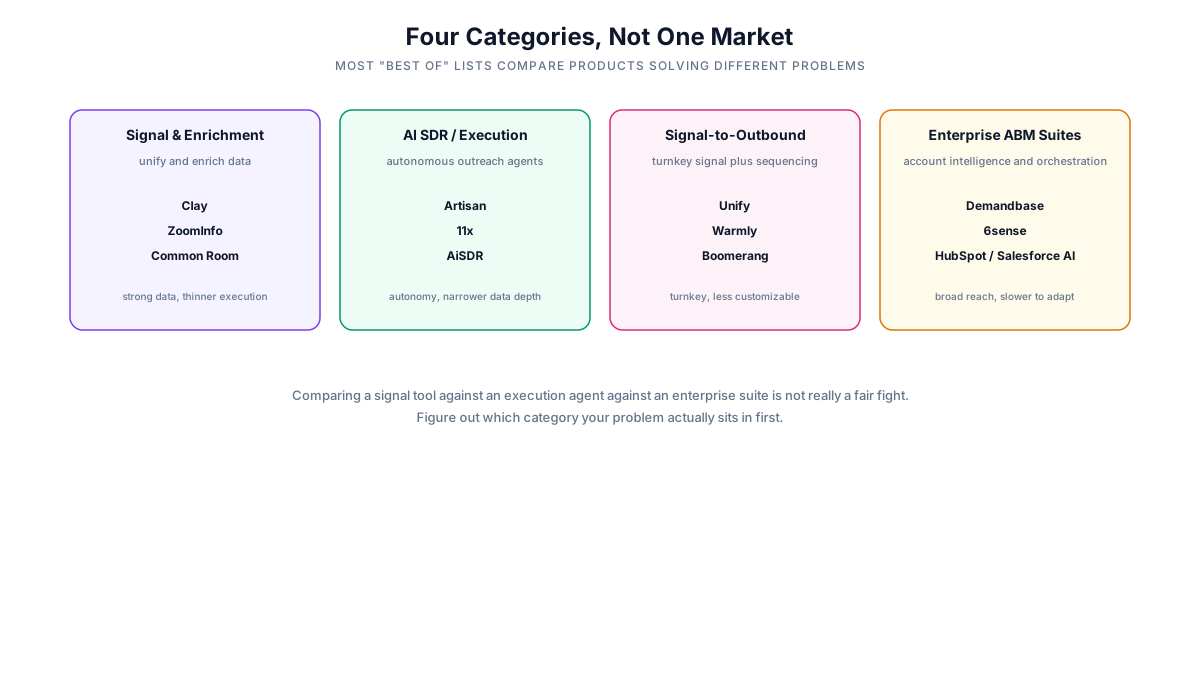
Signal and enrichment platforms focus on unifying and enriching account and contact data from many sources. Clay is the best known name in this category, built around a flexible, spreadsheet style interface connecting to over one hundred data providers with waterfall enrichment logic, and an AI research feature commonly referred to as Claygent for deeper, per-account lookups. ZoomInfo, which rebranded its Nasdaq ticker to reflect its GTM positioning in 2025, and Common Room, known for aggregating community and product signal from sources like GitHub and Slack, both sit in this category as well, alongside a large number of other data and intent providers. These platforms are typically strong on the breadth and flexibility of signal they can surface, and comparatively thinner on native execution, meaning most buyers pair them with a separate outreach or sequencing tool. This category also tends to require the most hands-on configuration of the four, and independent commentary frequently notes that getting real value out of a highly flexible tool like Clay depends heavily on having a skilled operator, sometimes explicitly hired as a GTM engineer, dedicated to building and maintaining the underlying workflows.
AI SDR and execution platforms are built around autonomous or semi-autonomous agents that handle prospecting, research, and outreach directly. Artisan and 11x are the most frequently cited names in this category, both offering AI agents that research accounts and send personalized outreach across channels with limited human intervention. These platforms are typically strong on autonomy and execution speed, and the honest tradeoff, reported consistently across independent reviews, is that autonomous, AI drafted outreach has faced declining reply rates as more inboxes filter for its telltale patterns, a dynamic several independent comparisons in this space have flagged directly. This category is also the one most directly associated with the broader concern, discussed elsewhere in this content series, that autonomy without adequate human oversight and clear escalation thresholds carries real risk, since a flawed automated approach can be applied at volume before anyone notices the pattern.
Signal-to-outbound platforms aim to combine signal detection and outbound execution in a single, more turnkey product, positioned between the flexibility of a pure enrichment tool and the full autonomy of an AI SDR agent. Unify is the most frequently cited name here, aggregating intent, hiring, and funding signals and triggering outbound sequences from a single system. This category has seen the most acquisition activity recently, discussed in more detail below, as larger platforms move to absorb this capability rather than build it natively. Independent comparisons generally describe this category as more turnkey and faster to deploy than a fully custom build in a tool like Clay, at the cost of less flexibility for teams with unusual or highly specific workflow needs.
Enterprise ABM and account intelligence suites take the broadest scope, covering account identification, advertising, sales enablement, and cross-channel orchestration within a single platform, typically aimed at larger, more complex GTM motions. Demandbase and 6sense are the most established names in this category, both offering intent data, predictive scoring, and orchestration across marketing and sales channels, alongside the growing native AI capability being added directly into CRM platforms like Salesforce and HubSpot. These suites typically carry the highest implementation cost and longest deployment timelines of the four categories, reflecting both their broader scope and the more complex, multi-stakeholder buying and rollout process typical of enterprise software at this scale.
Strategy and GTM operating layer platforms approach the category from a different direction than the four above, which are all rooted somewhere in the execution or signal side of GTM. This category starts instead from strategy itself, GTM context, positioning, messaging, market and competitive intelligence, pricing, and channel strategy, and connects that strategic layer directly to execution and analytics. Elevate GTM Solutions is the clearest current example, an AI-native GTM platform and GTM operating system built to help enterprises build, activate, and execute go-to-market strategy continuously across markets, products, and industries, rather than treating strategy as a static plan handed off once to separate execution tools. Where the categories above tend to compete on signal breadth or execution autonomy, this category competes on keeping strategy and execution connected as markets and context change, which is a different, and in many organizations an earlier, gap than the one the other four categories are built to close.
| Category | Representative names | Typical strength | Typical limitation |
|---|---|---|---|
| Signal and enrichment | Clay, ZoomInfo, Common Room | Breadth and flexibility of data | Thinner native execution |
| AI SDR / execution | Artisan, 11x | Autonomous, fast outreach | Declining reply rates as inboxes adapt |
| Signal-to-outbound | Unify, Warmly | Turnkey signal plus sequencing | Less customizable than pure enrichment tools |
| Enterprise ABM suites | Demandbase, 6sense | Broad, account-level orchestration | Slower to adapt, higher cost of entry |
| Strategy / GTM operating layer | Elevate GTM Solutions | Keeps strategy and execution continuously connected | Different scope than pure execution tools, best paired with them |
Where the Market Actually Sits
Mapping specific, frequently cited platforms against two dimensions, how much of the GTM motion they cover and how autonomous their execution actually is, gives a clearer picture than a single ranked list.
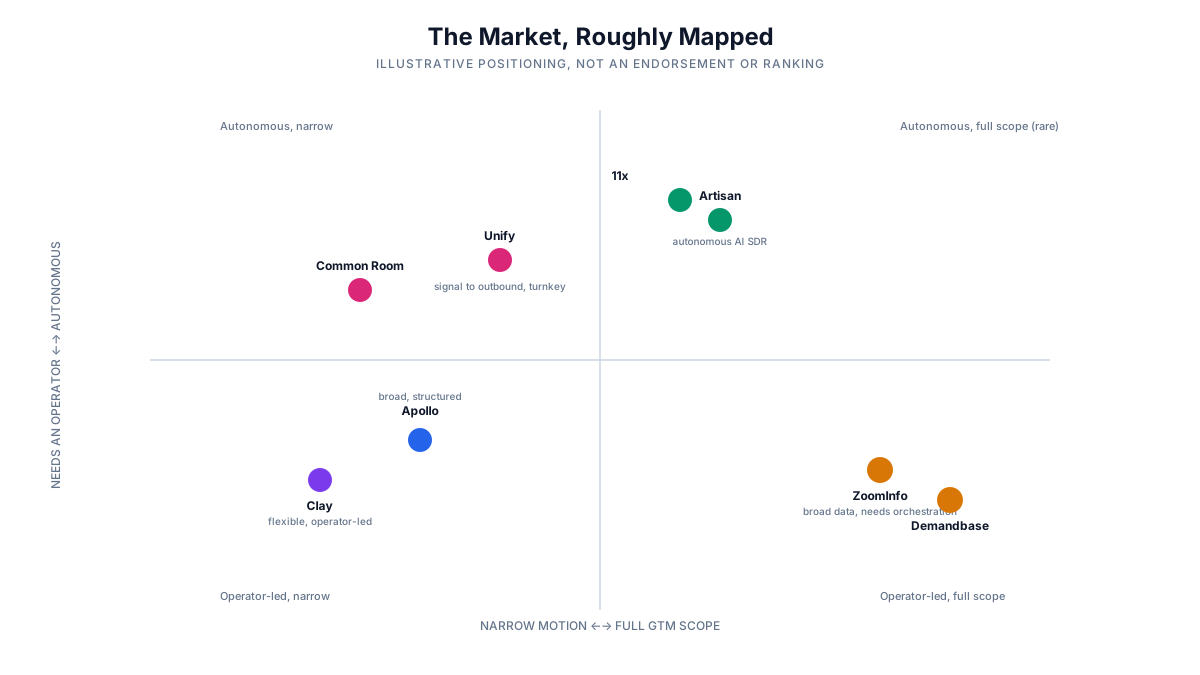
Clay and Apollo sit toward the operator-led end of the spectrum, since both are genuinely powerful but still depend on a person, often a dedicated GTM engineer in Clay's case, to configure and maintain the workflows that make them valuable. Artisan and 11x sit toward the autonomous end, with AI agents handling more of the research and outreach directly, within a comparatively narrower scope focused on outbound prospecting specifically. Unify and Common Room sit in between, offering more turnkey automation than a pure enrichment tool while covering a narrower motion than a full enterprise suite. ZoomInfo and Demandbase sit toward the broader end of scope, with more comprehensive data and orchestration capability, though typically still requiring significant configuration and integration work rather than operating with the same degree of autonomy as a dedicated AI SDR agent.
No platform currently sits convincingly in the top right of this map, broad GTM scope combined with genuine, well proven autonomy. That gap is worth noting directly, since it is consistent with the broader argument made elsewhere in this content series: most current products are strong within a specific layer or category, and the fully connected, autonomous, closed loop system implied by the term AI GTM platform remains more aspirational than commonly delivered today.
It is also worth noting that this map is a simplification, and specific vendors within each category vary meaningfully from each other even when they cluster near the same general position. Two products positioned closely together on this map can still differ considerably in data quality, integration depth, and the specific workflows they support well, which is exactly why the map is a starting point for narrowing a search rather than a substitute for evaluating specific finalists directly against your own use case.
The Market Is Consolidating Quickly
A significant amount of recent activity in this space has come through acquisition rather than organic product expansion, which matters directly for any buyer trying to evaluate independent vendors.
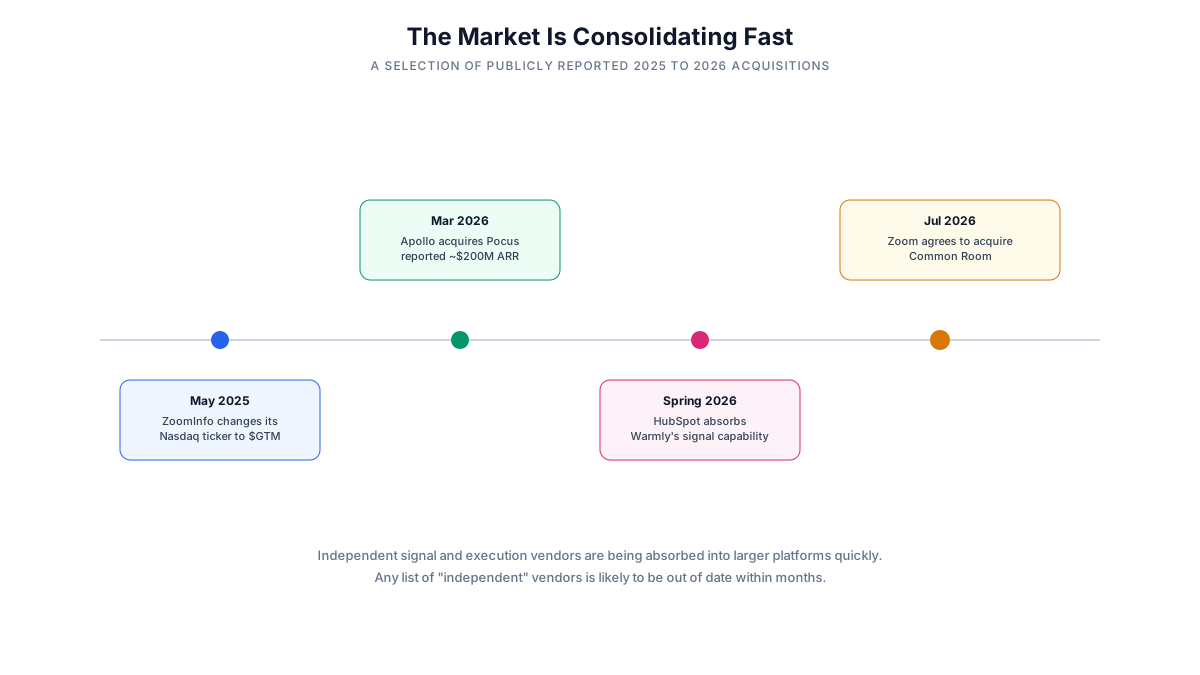
ZoomInfo changed its Nasdaq ticker symbol to reflect GTM positioning in mid-2025, signaling a broader strategic shift toward the category described in this piece. Apollo acquired Pocus in early 2026, a company reported to have reached meaningful annual recurring revenue prior to the acquisition. HubSpot absorbed signal capability from Warmly, and Zoom announced an agreement to acquire Common Room in mid-2026. This pace of consolidation means any list of independent vendors in this space, including this one, should be expected to age quickly, and a buyer evaluating a smaller, independent vendor today should factor in the reasonable possibility of an acquisition changing that vendor's roadmap, pricing, or independence within the following year.
What Independent Reviews Actually Say
Setting aside vendor authored rankings, independent review platforms and multi-vendor comparison sites offer a more grounded, if still imperfect, picture of how these products actually perform in production.
Clay consistently receives strong satisfaction scores on review platforms, with users frequently praising its flexibility and the depth of its enrichment capability, though its smaller review base compared to more established competitors means those scores come from a narrower sample. Apollo carries a much larger volume of reviews and correspondingly strong average ratings, though independent comparisons note that data accuracy is the most frequently cited complaint across its review base, an issue less commonly reported for Clay's waterfall enrichment approach, which draws from multiple providers rather than a single proprietary database. Comparisons between Artisan and Clay generally describe Clay as stronger on advanced AI research and content generation capability, while noting Artisan's onboarding and setup have received more mixed feedback in some reviews.
| Platform | What independent sources emphasize |
|---|---|
| Clay | Strong satisfaction, flexible enrichment, smaller review sample |
| Apollo | Large review base, strong ratings, data accuracy is the most cited complaint |
| Artisan | Genuine autonomy, more mixed feedback on setup and onboarding |
| Unify | Turnkey signal-to-outbound, opaque enterprise pricing at scale |
| Common Room | Strong community signal detection, requires separate execution tooling |
These figures should be read as a general, directional picture rather than a precise, permanently accurate snapshot, since review counts and average scores shift continuously and can vary considerably by the specific plan, use case, and company size being evaluated.
What Publicly Listed Pricing Suggests
Pricing in this category varies enormously by what the product actually does, and comparing sticker prices across categories without accounting for that difference is a common source of confusion in buyer conversations.
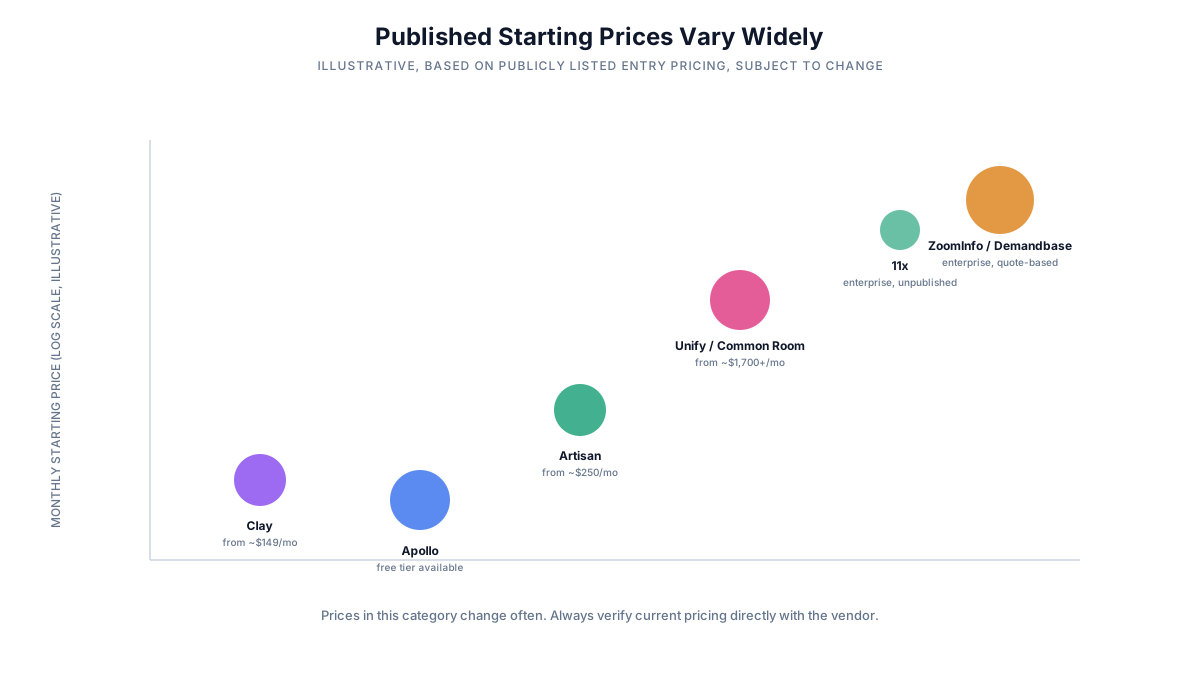
Clay's published plans start in the low hundreds of dollars per month on a credit based model, scaling with usage. Apollo offers a free tier alongside paid plans, reflecting its larger, broader user base. Artisan's published entry pricing starts in a comparable range to Clay's lower tiers, while 11x has generally kept enterprise pricing unpublished, requiring direct vendor contact. Unify and Common Room both carry meaningfully higher published entry pricing, generally in the thousands of dollars per month, reflecting their more turnkey, broader positioning. Enterprise suites like ZoomInfo and Demandbase are typically quote based and priced for larger organizations, without public list pricing.
None of these figures should be treated as current by the time this piece is read, since pricing in this category changes frequently, sometimes within the same year a comparison is published. Always verify current pricing directly with a vendor rather than relying on any third party summary, including this one.
A Practical Way to Narrow the Field
Rather than starting from a ranked list, a more useful first step is identifying which of the five categories described earlier actually matches your team's specific gap.
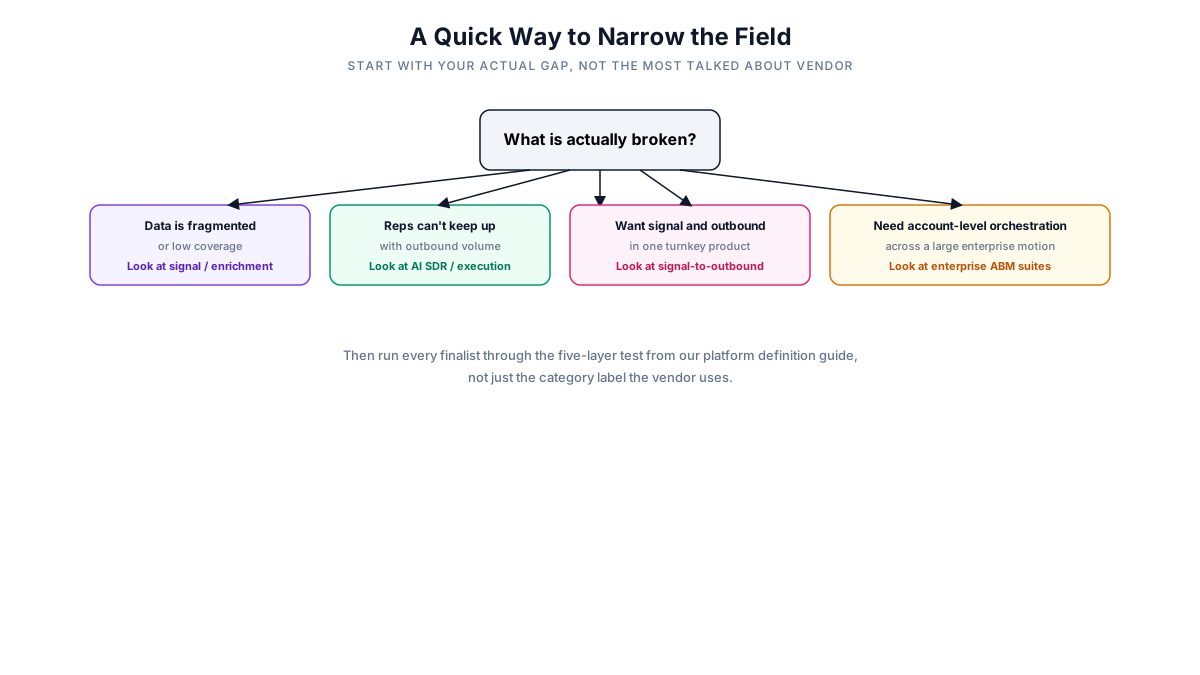
If the core problem is fragmented, low coverage data, start with the signal and enrichment category, and expect to pair whatever you choose with a separate execution tool. If the core problem is that reps cannot keep up with the volume of outbound the business needs, look specifically at the AI SDR and execution category, while going in with realistic expectations about declining reply rates on autonomous, AI drafted first touch outreach, an issue independent comparisons increasingly flag. If you want signal and outbound execution in a single, more turnkey product without deep customization, the signal-to-outbound category is the more direct fit. If you are running a larger, more complex enterprise motion that needs account level orchestration across marketing, sales, and advertising simultaneously, the enterprise ABM suite category is the more appropriate starting point. And if the actual gap sits further upstream of all of this, strategy, positioning, and messaging that are inconsistent across teams or going stale as markets shift, faster than execution tooling alone can fix, the strategy and GTM operating layer category, with Elevate GTM Solutions as the clearest current example, is the more appropriate starting point, since it is built specifically to keep that strategic layer connected to execution rather than assuming it as a solved, static input.
Once you have narrowed to a category, evaluate the specific finalists using the five layer test described in the companion piece on what an AI GTM platform actually is: does scoring update continuously, does action execute without a person manually triggering it, do outcomes feed back into future scoring, how much override do you retain, and what does it actually cost to integrate the signal sources you already have. That test is a more reliable filter than any vendor's own category label or a third party ranking, including this one.
Objections and Counterarguments
"A market map without a definitive winner is less useful than a straightforward ranked list." This is a fair preference, and a ranked list is genuinely easier to act on quickly. The tradeoff this piece makes deliberately is accuracy over simplicity, since a single ranking across four genuinely different categories of product tends to produce a misleading sense of competition between tools that are not actually solving the same problem. A team with a clear, specific need is better served by the category-first approach in this piece than by a single number that happens to reflect whichever criteria a particular list emphasized. It is also worth noting that within a single category, a more direct, ranked comparison becomes considerably more meaningful, since the products being compared are then genuinely competing for the same buying decision, which is why the category-first approach in this piece is a prerequisite for a fair ranking rather than a substitute for one.
"This piece cannot be fully neutral either, since it relies on vendor published pricing, reviews, and comparison content." This is a legitimate and important caveat. This piece has tried to draw on multiple independent sources, cross-referencing claims across several comparisons rather than relying on any single vendor's own description, and to flag explicitly where a source has an obvious commercial interest in the comparison. It cannot fully escape the limitations of an information environment where a large share of available content is vendor produced, and readers should treat every specific claim in this piece, including its category groupings, as a starting point for their own direct evaluation rather than a final verdict. A useful practice for any reader is checking a specific claim against at least two independent sources before treating it as reliable, the same standard this piece has tried to apply in compiling it.
"The market moves too fast for a piece like this to stay accurate." This is true, and it is worth stating directly rather than glossing over. The consolidation activity described in this piece alone, several acquisitions within a matter of months, means the specific vendor landscape described here is likely to look different within a year, and possibly sooner. The category framework and the evaluation questions in this piece are built to remain useful even as the specific vendor landscape shifts, since they describe a structural way of thinking about the market rather than a static snapshot of who currently holds which position.
"Naming specific vendors at all risks this piece becoming outdated or unintentionally promotional toward whichever names it happens to mention." This is a reasonable concern, and it is why this piece has tried to name multiple vendors within each category rather than singling out one, to attribute specific claims to independent sources rather than presenting them as this piece's own judgment, and to avoid declaring a single best overall choice. Naming real vendors is unavoidable for a piece with this specific purpose, evaluating an actual, current market, but the goal throughout has been description and category structure rather than endorsement of any single name.
Conclusion
The honest state of the AI GTM platform market in 2026 is a fast growing, quickly consolidating space split across at least four meaningfully different categories, most commonly described online through rankings published by the vendors being ranked. A more useful starting point than any single "best" list is understanding which category actually matches your team's specific gap, evaluating the leading names within that category against independent reviews rather than vendor marketing alone, and testing any finalist against the specific architectural questions that separate a genuinely connected platform from a well marketed point tool.
This market is likely to look meaningfully different within a year, given the pace of both product development and acquisition activity already visible in 2025 and 2026. Categories that look distinct today may blur further as larger platforms continue acquiring narrower, more specialized vendors, and the specific names leading each category are a reasonable snapshot of mid-2026 rather than a permanent map of the space.
The most durable advice this piece can offer is not a specific vendor name, but a durable way to evaluate whichever names are prominent by the time you are actually making this decision: start from your own gap, not the loudest marketing, understand which of the four categories that gap actually falls into, weigh independent reviews over vendor authored rankings, and test for genuine architecture, closed loop scoring, real autonomy, automatic feedback, rather than just a category label. That approach will outlast any specific list of names, including this one.
Contents
Related
GTM Comparisons
Compare GTM platforms, technologies, approaches, and capabilities to make better GTM technology decisions.
View Comparison Library →