Ask a revenue leader what their GTM system is, and the answer is very often the name of their CRM. That answer is understandable. The CRM is where deals live, where forecasts get built, where a company's entire sales history is recorded. It is, by a wide margin, the most visible and most referenced piece of software in most GTM organizations.
It is also, by design, not the same thing as a GTM system, and treating it as one is a category error worth examining carefully rather than dismissing as pedantic. A system of record and an operating system solve two different problems, and a company can have an excellent, well maintained CRM while still lacking anything that functions as a genuine GTM system, because the two were never built to do the same job.
This piece makes that distinction concrete: what a CRM is actually built to do, why that design is a poor fit for a large and growing share of modern GTM work, and what a genuine GTM system adds that a CRM, however well implemented, does not.
This is worth taking seriously rather than treating as a definitional quibble, because the confusion has a real cost. A team that believes its CRM already functions as a complete GTM system tends to under-invest in exactly the capabilities, continuous signal ingestion, forward looking scoring, cross-team coordination, that a genuine system requires, simply because it does not recognize those capabilities as missing. The goal of this piece is to make that gap visible and concrete, using how GTM work actually happens across a typical week rather than how a CRM is informally described, so that the investment decision that follows is made deliberately rather than by default.
What a CRM Is Actually For
A CRM is, at its core, a relational database with a sales shaped interface layered on top of it. Its job is to answer a specific, narrow set of questions well: who do we know at this account, what stage is this deal in, and what happened on the last call. It is a system of record, and systems of record share a defining trait: they are updated when someone writes to them, and they hold still until the next update.
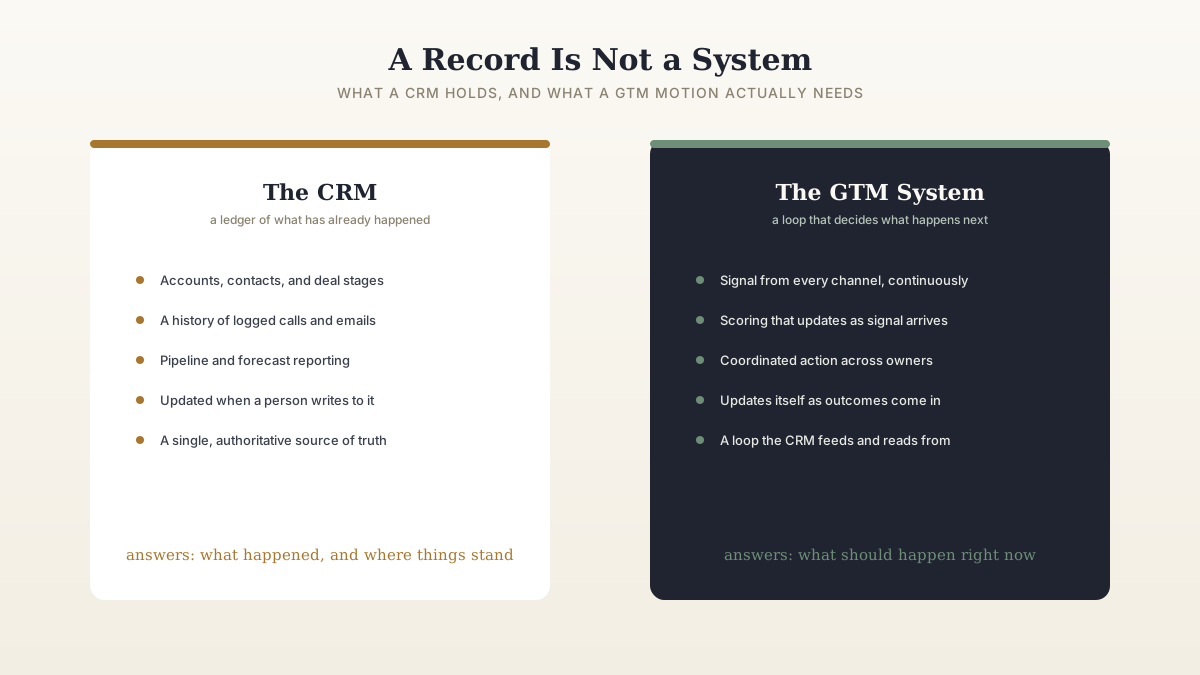
This is a valuable and durable job. Every mature GTM organization needs a reliable, auditable place to record accounts, contacts, and deal history, and a CRM does that job well enough to have become one of enterprise software's most stable and widely adopted categories. Nothing in this piece argues that a company should not have one, or that the job a CRM does is unimportant.
A Familiar Confusion: Mistaking the Record for the Operation
This is not the first time a system built to record activity got informally credited with running the activity itself, and the pattern is worth naming because it recurs predictably across enterprise software categories.
Enterprise resource planning software followed a closely related path. An ERP system was built, first and most thoroughly, to record financial transactions, inventory levels, and order status accurately. Because it became the central place where that data lived, it was sometimes informally treated as if it were also the system actually running a company's supply chain and operations decisions in real time, even though the actual coordination of demand planning, logistics, and supplier management commonly depended on a separate layer of planning software, or a great deal of manual coordination, built specifically to close that gap. The ERP system's excellence as a record did not automatically make it excellent as an operating layer, and companies that assumed otherwise typically discovered the gap only once a supply disruption or a demand spike exposed how much manual coordination had actually been happening around, rather than inside, the system of record.
The same pattern shows up again here. A CRM's excellence as a record of accounts, contacts, and deals is real and well earned. That excellence does not automatically extend to the different, harder problem of continuously deciding what should happen next across a fragmented, fast moving GTM motion, and assuming it does tends to leave that harder problem unaddressed, hiding behind the CRM's genuine and visible strength at the job it was actually built for.
Where the Analogy Breaks Down
The confusion starts when a CRM's role as a reliable record gets extended, informally, into a much larger claim: that it is also the place where a GTM motion actually runs. That extension does not hold up well against how a typical week of GTM work actually happens.
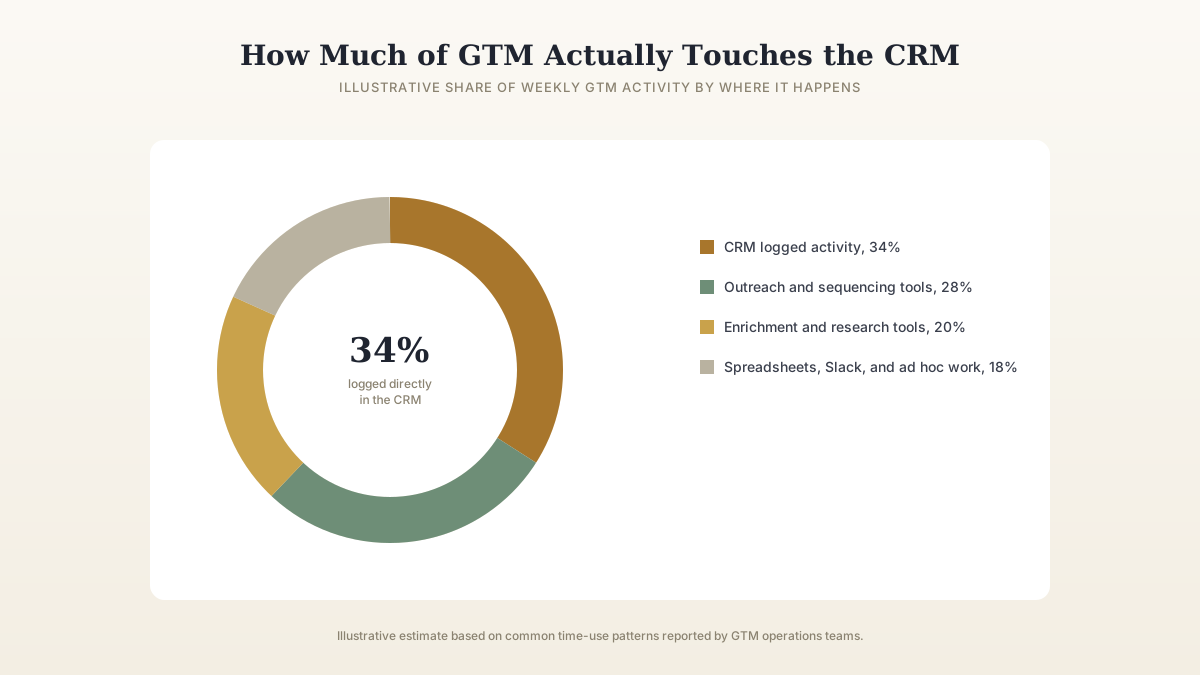
A useful way to see this is to trace where GTM activity and signal actually occur across a typical week, rather than assuming the CRM is the center of that activity by default. Illustrative patterns commonly reported by GTM operations teams suggest that CRM logged activity, the calls, emails, and stage changes a person or an integration writes directly into the record, represents a minority of a typical week's total GTM activity. A larger share happens in outreach and sequencing tools, enrichment and research platforms, and a long tail of spreadsheets, chat tools, and ad hoc coordination that never gets formally logged anywhere at all.
This matters because a system that only reliably captures a minority of what is actually happening cannot function as the operating center of a GTM motion, regardless of how good it is at the part it does capture. A CRM that perfectly records thirty four percent of a week's relevant activity is still missing the other two thirds, and a genuine operating system needs visibility into, and the ability to act on, considerably more of that full picture than a record built primarily around manually logged activity typically provides.
One Account's Week
It helps to make this concrete with a single account moving through a typical week, tracking which moments actually touch the CRM and which do not.
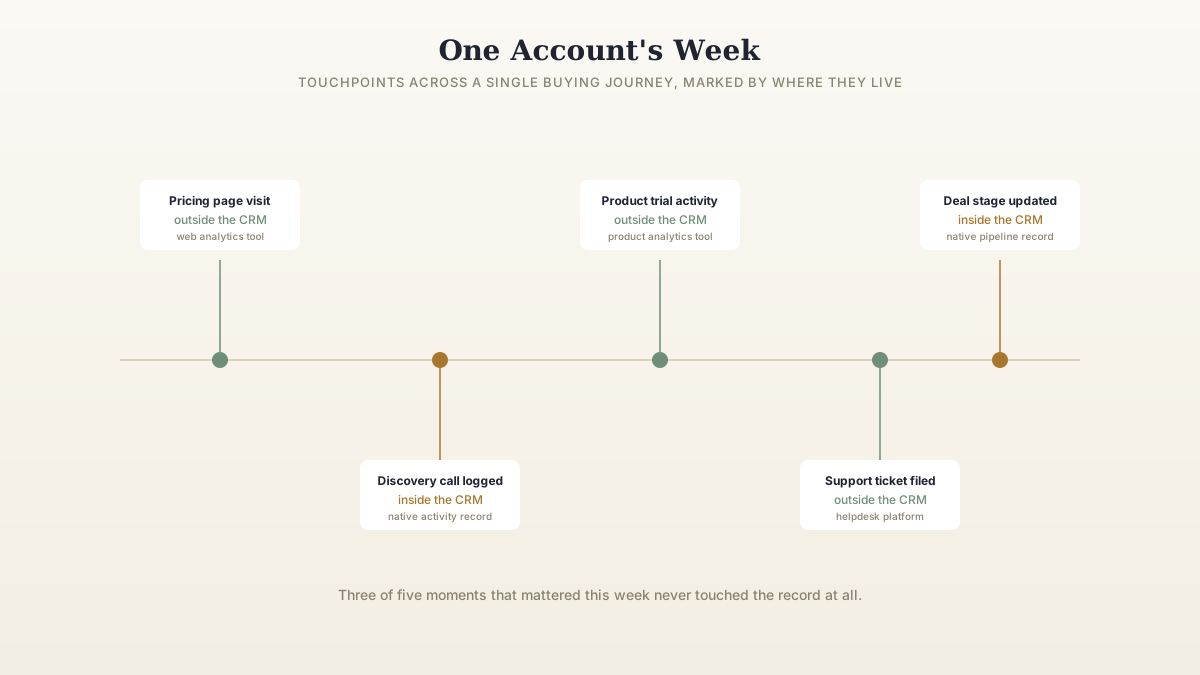
A pricing page visit, a strong buying signal, happens in a web analytics tool, not the CRM. A discovery call gets logged as an activity record, a genuine CRM touchpoint. Product trial usage, often one of the clearest indicators of real intent for a product led motion, happens entirely within a product analytics platform. A support ticket, which might reveal friction or urgency relevant to the deal, lives in a helpdesk system. A deal stage update, the final formal touchpoint, goes back into the CRM.
Of five moments that meaningfully shaped this single account's week, only two touched the record directly. The other three, arguably including the two most predictive of buying intent, pricing page interest and product usage, happened entirely outside it. A GTM motion that only reacts to what is visible inside the CRM is, by construction, reacting to a partial and non-random subset of what is actually happening, systematically missing exactly the kind of early, high intent signal that matters most for timely action.
Five Jobs a CRM Was Never Built For
Beyond the specific gap in signal visibility, a genuine GTM system does several things a CRM, by its original design, was not built to do.
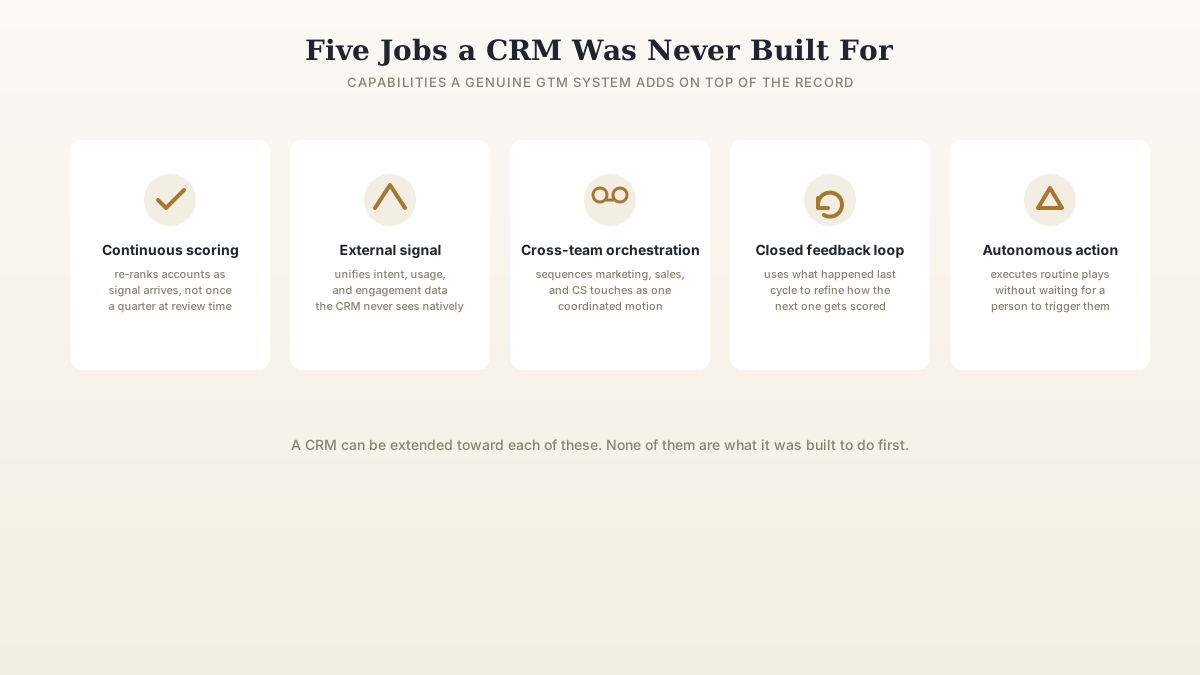
Continuous scoring re-ranks accounts as new signal arrives, rather than relying on a scoring rule configured once and revisited at the next quarterly review. External signal unification brings in intent, product usage, and engagement data the CRM's native data model was not built to natively capture or continuously ingest. Cross-team orchestration sequences marketing, sales, and customer success activity as one coordinated motion, rather than leaving each function's tools to operate independently with a person manually bridging the gaps between them. A closed feedback loop uses the outcome of one cycle, what worked, what did not, to automatically refine how the next cycle gets scored, rather than requiring a person to notice a pattern and manually adjust the rules. And autonomous action executes routine, well defined plays without waiting for a person to notice a signal and manually trigger a response.
A CRM can be extended toward each of these capabilities, through custom development, added modules, or connected third party tools, and many organizations do exactly that. The point is not that these capabilities are permanently impossible within a CRM centric architecture. It is that none of them were the CRM's original, core design purpose, and building them well on top of a system originally designed around manual record keeping is a real, separate undertaking, not something that comes standard simply because an organization has adopted a mature CRM.
It is worth being specific about why this matters beyond simple category accuracy. Each of these five capabilities requires a different kind of engineering and organizational investment than maintaining a well configured CRM does. Continuous scoring requires a system that re-evaluates constantly, not one that runs a batch process at a scheduled interval. External signal unification requires ongoing integration maintenance with data sources that change their own APIs and schemas independently of anything the GTM team controls. Cross-team orchestration requires shared ownership and shared logic across functions that often report to different leaders with different priorities. A closed feedback loop requires a system explicitly designed to measure its own outcomes and adjust, which is a fundamentally different design goal than accurately recording a static snapshot of the present. And autonomous action requires a level of trust in automated judgment that most organizations build gradually, not something granted by default simply because a workflow builder exists somewhere in the platform.
Where a Rep's Actual Week Goes
The gap described above is not just a data architecture question, it shows up directly in how individual contributors spend their time.
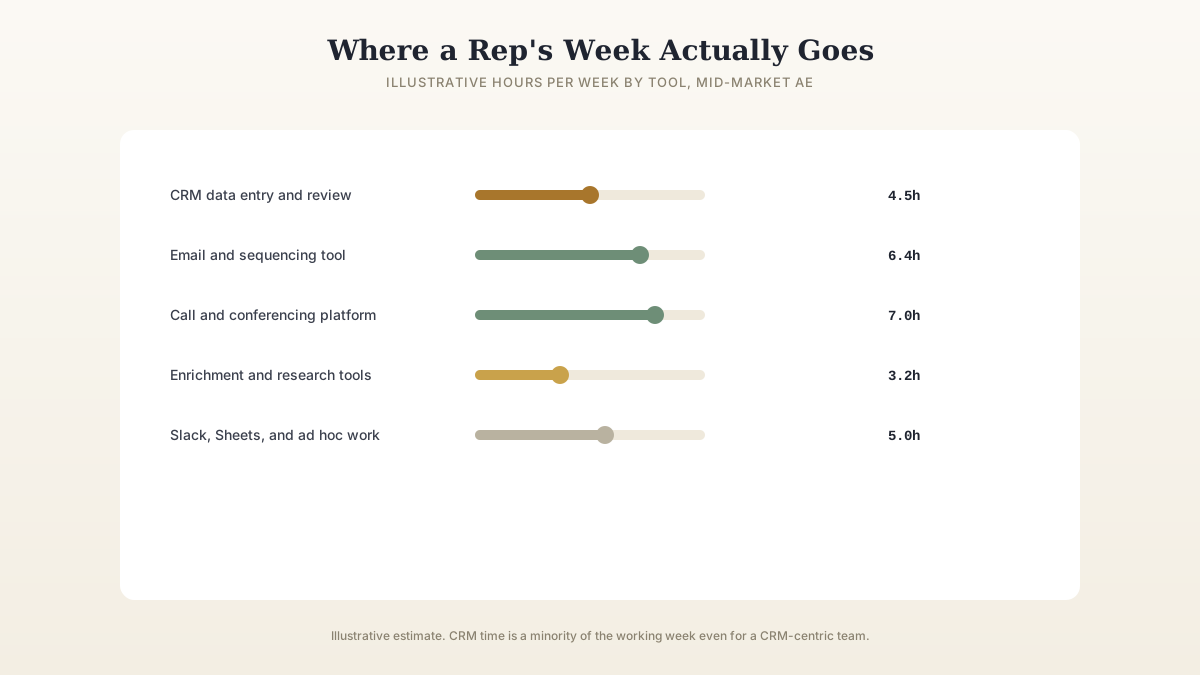
Illustrative patterns commonly reported for account executive time allocation suggest that CRM data entry and review, while a real and necessary part of the job, typically represents a modest share of total weekly working hours, well below the time spent in email and sequencing tools, on calls, and doing enrichment or ad hoc research and coordination work. This is not a criticism of the CRM specifically, it reflects the simple fact that most of the actual work of selling happens in conversation, research, and outreach, not in data entry. It is, however, a useful corrective against any assumption that the CRM functions as the operational center of a rep's actual working reality, when the numbers more commonly suggest it is one tool among several, and not the one that consumes the largest share of time.
Objections and Counterarguments
"Modern CRMs have added workflow automation, AI scoring, and broader platform capabilities specifically to close this gap." This is accurate, and it reflects genuine, ongoing investment by CRM vendors to extend their platforms beyond pure record keeping. The relevant question, addressed in more depth elsewhere in this content series, is whether those additions represent a genuinely closed, continuously self-refining loop or a set of valuable but still separately configured modules layered onto an architecture still centered on the record. This varies meaningfully by vendor and continues to evolve, and a fair evaluation should assess it specifically for whatever platform a team is considering rather than assuming the gap this piece describes is either permanently unaddressed or fully closed across the category.
"Plenty of successful companies run their entire GTM motion on CRM plus a few connected tools, without a dedicated operating layer." This is true, and it does not contradict this piece's argument as much as it might first appear to. Companies that succeed this way are typically doing the coordination work this piece describes manually, through skilled RevOps effort, disciplined process, and a meaningful amount of human judgment bridging the gaps between disconnected tools. That is a legitimate, often reasonable way to operate, particularly at a smaller scale, as described elsewhere in this series regarding the right sized coordination layer for earlier stage companies. It is not evidence that the CRM itself was the operating system, it is evidence that people were successfully doing the job an operating system would otherwise do more consistently and at greater scale. The distinction matters because that manual coordination work is real, valuable, and usually under-recognized, and a company that credits its CRM alone for GTM outcomes actually achieved through skilled human coordination risks underinvesting in the people and process that made those outcomes possible in the first place.
"This distinction is more useful in theory than in a real buying or build decision." There is a reasonable version of this objection, since the practical question a team ultimately needs to answer is not what category a tool belongs to, but whether their actual GTM coordination needs are being met. The distinction matters practically because a team that believes its CRM already functions as a complete operating system is less likely to notice, and less likely to invest deliberately in closing, the specific gaps in signal visibility, continuous scoring, and cross-team orchestration this piece has described, until those gaps show up as a costly, visible failure rather than as a planned, proactive investment. A missed expansion signal or a poorly coordinated multi-touch campaign rarely gets traced back to an architectural gap in how the GTM stack was conceived, it usually gets attributed to a specific rep's oversight or a specific campaign's poor execution, which means the underlying, systemic cause tends to go uncorrected long after any individual symptom has been addressed.
"This argument understates how central and valuable the CRM genuinely is." This is a fair caution, and it is worth restating plainly: nothing in this piece argues that a CRM is unnecessary or poorly designed for its actual purpose. The system of record function is foundational, and a genuine GTM system depends on, rather than replaces, an accurate underlying record. The argument is specifically about the gap between that foundational role and the broader, informal claim that a CRM is itself sufficient to serve as a company's complete GTM system, a claim this piece has tried to test against how GTM work actually happens across a typical week rather than against how the CRM is often informally described.
What This Means for GTM Teams
Separate the record from the system explicitly, in both language and planning. A useful first step is simply being precise in internal conversations: the CRM is the record, and a GTM system, wherever it currently lives, whether that is a formal platform, a set of connected tools, or manual RevOps judgment bridging the gaps, is the thing that decides what happens next. Naming this distinction clearly makes it much easier to identify where real investment is still needed, and it changes how planning conversations get framed, from "what CRM features are we missing" to "who or what is actually deciding our next action, and how reliably."
Audit how much of your actual GTM signal never touches the CRM. Following the account journey exercise described earlier in this piece, for a team's own actual GTM motion, is a concrete, low cost way to see the gap directly rather than taking this piece's general claim on faith. Most teams that run this exercise honestly find that a meaningful share of their most predictive signal lives outside the record entirely. A simple version of this exercise involves picking three recently closed or lost deals and mapping, as specifically as possible, every meaningful signal that influenced the outcome, then noting which of those signals were ever visible inside the CRM at the time they occurred.
Treat the CRM as an input and an output, not the operating center. A genuine GTM system reads from the CRM, since it needs an accurate account and deal picture, and writes back to it, since deal and activity history should stay current. It should not be the place where the actual moment to moment decisions about who to contact and when get made by default, simply because that is where the data happens to live. This reframing has practical implications for how a team designs its workflows, since it argues for building decision and orchestration logic as a distinct, deliberate layer rather than assuming it will emerge naturally from CRM configuration alone.
Invest deliberately in the layers a CRM does not natively provide. Whether through internal GTM engineering effort, a dedicated coordination layer, or a combination, the continuous scoring, external signal unification, and cross-team orchestration capabilities described in this piece need deliberate investment. They do not arrive automatically as a side effect of maintaining a well run CRM, and treating them as a natural extension of good CRM hygiene, rather than as a distinct capability requiring its own planning and resourcing, is one of the more common ways this gap goes unaddressed for longer than it should.
Where Elevate GTM Solutions Fits
This piece has drawn a clear line between a CRM, which answers what happened and where things stand, and a genuine GTM system, which answers what should happen next. Elevate GTM Solutions is built specifically to be that second system.
Elevate is the AI-native GTM platform and GTM operating system built to sit above the CRM rather than duplicate it: reading from the CRM for an accurate account and deal picture, and writing back to keep it current, while owning the parts of GTM coordination this piece has argued a CRM was never designed to handle, continuous GTM context and intelligence, structured strategy that stays current as markets shift, and execution tied directly to that strategy rather than left to disconnected tools and manual judgment. This is the same distinction this piece has made throughout: the CRM remains the record, and Elevate is built to be the system that actually runs on top of it.
Conclusion
A CRM answers a narrow, important question well: what has happened, and where do things currently stand. A genuine GTM system answers a different, broader question: given everything happening right now, across every channel and every tool, what should happen next. Those are not the same question, and a company can have an excellent answer to the first while having no real answer to the second at all.
This distinction is not an argument against CRM, which remains foundational infrastructure for any GTM organization. It is an argument against the informal habit of treating a well maintained record as if it were automatically a complete operating system, a habit this piece has tried to test directly against how GTM work actually happens, in one account's week, across a rep's actual working hours, and against what a CRM's original design was built to do.
The cost of this habit rarely announces itself clearly. It shows up as a signal that arrived in a tool nobody was watching closely enough, a deal that stalled because two teams were working from different pictures of the same account, or a strong buying indicator that sat unnoticed in a product analytics dashboard while the CRM, entirely accurately, continued to show the deal exactly where it had been the week before. None of these failures get attributed to an architectural gap in how the GTM stack was conceived. Each one gets explained individually, as a specific rep's oversight, a specific team's miscommunication, a specific tool's limitation, which is precisely why the underlying pattern this piece describes tends to persist even at companies that are otherwise disciplined and well run.
Teams that make this distinction explicitly, crediting the CRM for the real job it does while investing deliberately in the coordination layer it was never built to provide, are in a stronger position than teams that assume the record and the system were the same thing all along. The first group is building toward a genuine operating layer with open eyes about what that requires. The second group is likely to discover the gap eventually, usually at a moment, and a cost, of the market's choosing rather than their own.
Contents
Related Comparisons
Related Foundations
GTM Comparisons
Compare GTM platforms, technologies, approaches, and capabilities to make better GTM technology decisions.
View Comparison Library →