
The GTM Operating Model
A GTM operating system needs an operating model to run it: named owners for each layer, a cadence that does not depend on meetings for everything, and clear decision rights for when something needs a person's judgment. Most teams build the system before they build this.
Published 2026-07-25
A GTM operating system, the technical architecture described throughout this content series, signal, decision, orchestration, activation, and a closed feedback loop, is necessary but not sufficient on its own. Software does not run itself in any organizational sense. Someone has to own each layer, someone has to decide how often different parts of the system get reviewed by a person versus left to run automatically, and someone has to have clear authority over what happens when a decision is ambiguous enough to need human judgment.
The GTM Operating Model is the organizational counterpart to the technical architecture: a framework for who owns what, how often different rituals actually need to happen, and who has the right to decide what when the system itself cannot. This piece defines each of these three components precisely and argues that most teams building toward a genuine GTM operating system skip this organizational layer entirely, building sophisticated technical architecture on top of an ownership and decision structure that was never deliberately designed.
This gap is easy to miss because it does not announce itself the way a missing technical capability does. A team can point to a specific, unbuilt integration or an unimplemented scoring model and recognize the gap immediately. A missing operating model produces a subtler, harder to diagnose set of symptoms instead, ownership that quietly falls through the cracks between roles, meetings that persist out of habit long after they stopped serving their original purpose, and ambiguous situations that get resolved inconsistently depending on who happens to notice them first. None of these symptoms point clearly back to their actual cause, which is exactly why this organizational layer tends to remain undesigned even at otherwise sophisticated, well resourced organizations.
A Familiar Gap: Technology Outpaces the Organization Built Around It
This specific pattern, a genuine technical capability arriving before the organizational structure needed to run it well, is a recurring theme across enterprise technology adoption more broadly, and it is useful to recognize the pattern rather than treat it as a problem unique to GTM operating systems.
Early enterprise resource planning implementations frequently ran into exactly this gap. Companies would successfully implement sophisticated ERP software capable of coordinating supply chain, finance, and operations data in ways that were technically far more capable than what came before, only to discover that the organization had not correspondingly redefined who owned which decisions, how often different reports actually needed human review versus automatic processing, and who had authority to override the system's recommendations in edge cases. The technology genuinely worked. What frequently did not work, at least initially, was the organizational structure built around it, which continued to operate according to older assumptions about ownership and cadence that no longer matched what the new system actually made possible.
A similar pattern played out with the adoption of enterprise data warehouses and business intelligence platforms. Organizations gained genuinely powerful new capability to access and analyze data continuously, but many initially failed to redesign who was accountable for data quality, how often dashboards actually needed a person's active attention versus passive availability, and who had authority to act on an anomaly the system surfaced. The gap in each of these cases was not a technology gap, it was an unaddressed organizational design gap sitting directly downstream of a real technical advance.
GTM operating systems are very likely following the same pattern now. The technical capability described throughout this content series, continuous signal, automated scoring, closed feedback loops, is arriving faster than most organizations have deliberately redesigned who owns it, how often it needs human attention, and who decides when it is ambiguous. This piece exists specifically to close that gap before it produces the same kind of quiet, hard to diagnose organizational friction that has followed comparable technology transitions in the past.
Three Components of an Operating Model
An operating model, in the sense used here, has three distinct components, each answering a different organizational question that the technical architecture alone does not answer.
Structure answers who owns each layer of the system. Without a named owner for each layer, technical capability tends to degrade quietly, since nobody is accountable for noticing when a specific layer's rules go stale or its logic stops matching current reality.
Cadence answers how often different parts of the system actually need a person to look at them. Not every layer needs the same review frequency, and treating cadence as a deliberate design choice, rather than defaulting to whatever meeting schedule already exists, is a meaningful part of making the system actually run efficiently.
Decision rights answers who has authority to decide when a situation is ambiguous enough that the system's automated logic should not simply proceed on its own. Without clear decision rights, ambiguous cases either get stuck waiting for nobody in particular to notice them, or get decided inconsistently by whoever happens to be looking at the moment.
Structure: Naming an Owner for Each Layer
The first component, and the one most commonly skipped entirely, is assigning a specific, named owner to each layer of the technical architecture.
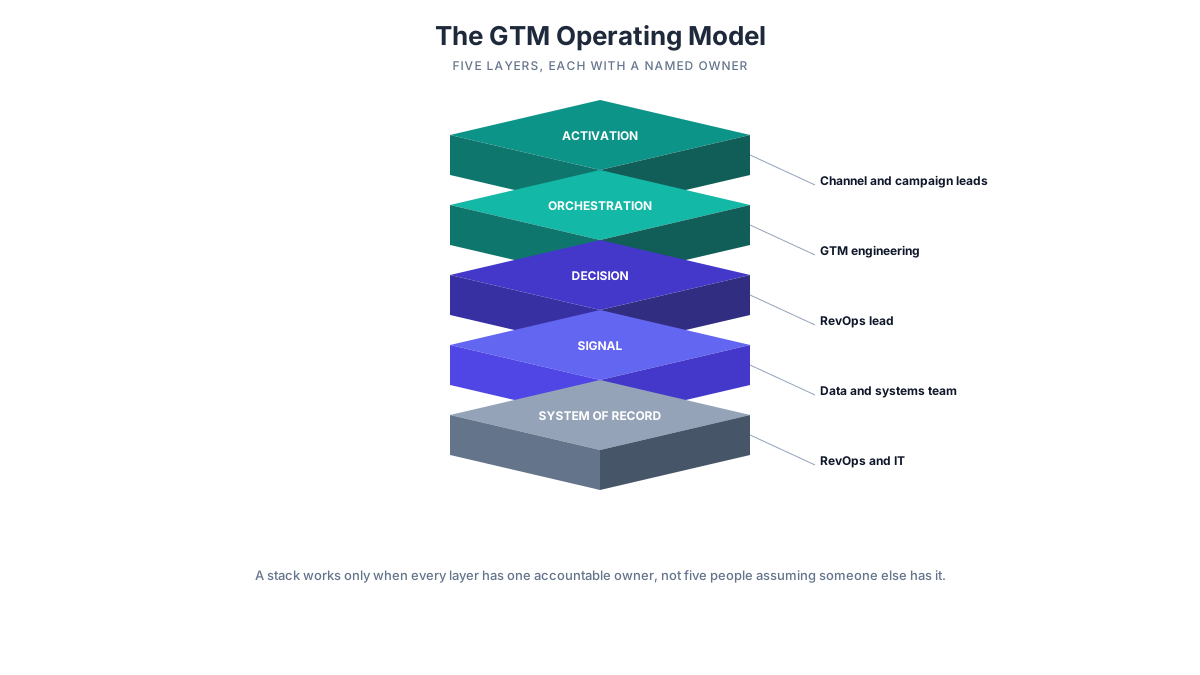
The system of record typically sits with RevOps and IT jointly, since it requires both business process understanding and technical system administration. The signal layer, responsible for continuously ingesting and unifying data from multiple sources, is best owned by a data or systems focused role, since maintaining reliable integrations is a genuinely technical, ongoing responsibility. The decision layer, the scoring and prioritization logic at the center of the system, is most naturally owned by the RevOps lead, since defining what counts as a meaningful signal and how it should translate into priority is fundamentally a business judgment question, informed by technical capability but not primarily a technical one. The orchestration layer, which sequences action across channels and owners, sits well with GTM engineering specifically, since coordinating across multiple connected tools and owners is a genuinely cross-functional, technically involved responsibility. The activation layer, where actual outreach and execution happens, is best owned by the specific channel or campaign leads closest to the execution itself.
| Layer | Recommended owner | Why this owner fits |
|---|---|---|
| System of record | RevOps and IT jointly | Requires both process understanding and system administration |
| Signal | Data and systems team | Maintaining reliable, continuous integrations is a technical discipline |
| Decision | RevOps lead | Scoring logic is fundamentally a business judgment question |
| Orchestration | GTM engineering | Cross-tool, cross-owner sequencing is a technical coordination problem |
| Activation | Channel and campaign leads | Closest to the actual execution and its immediate feedback |
What matters more than the specific assignment suggested here, which will reasonably vary by organization, is the discipline of having exactly one named, accountable owner per layer, rather than leaving a layer's ownership implicit or split so broadly across a team that no individual feels genuinely responsible for it. A useful test, borrowed from the broader RACI framework this piece applies more fully below, is asking specifically who would be the first person contacted if a specific layer stopped working correctly tomorrow. If that question does not have an immediate, confident answer, the layer effectively has no real owner, regardless of who might be listed on an org chart as nominally responsible for it.
A RACI View Across the Stack
A single named owner per layer is necessary but not sufficient, since most layers also involve other roles that need some level of involvement without full accountability. A RACI framework, assigning each role as Accountable, Responsible, Consulted, or Informed for each layer, makes this more precise.
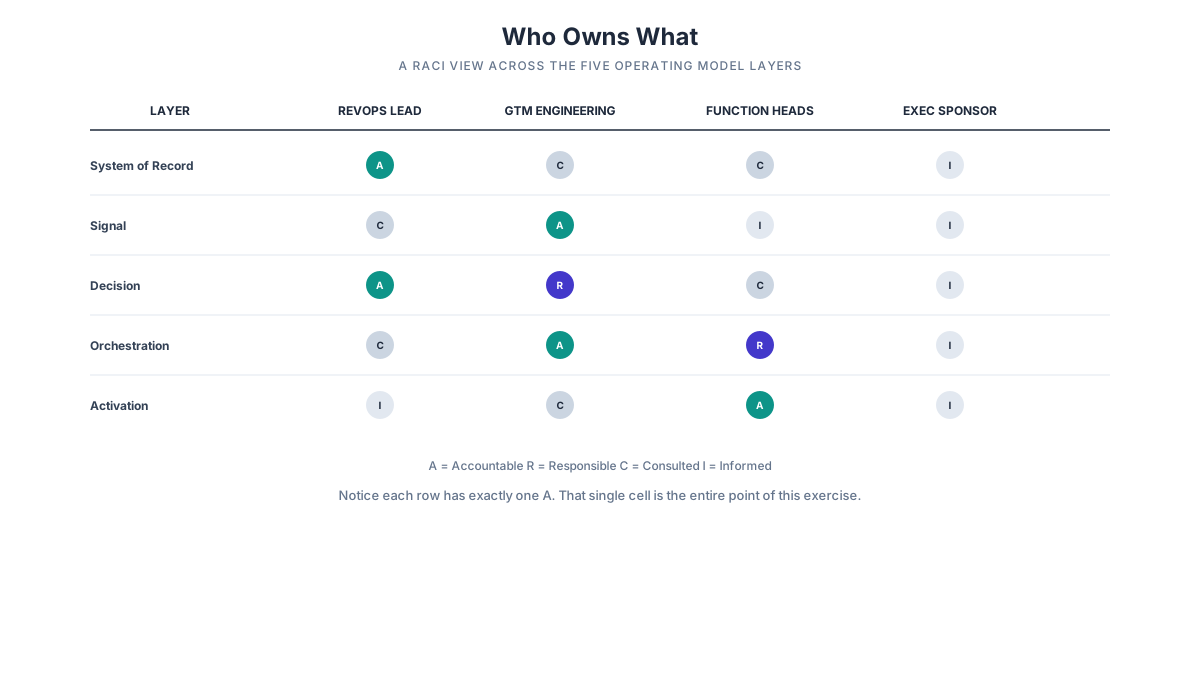
The most important discipline in building this matrix is ensuring each row has exactly one Accountable role. It is common, and usually a sign of an organizational gap rather than genuine shared ownership, for a layer to have no clear Accountable role, multiple people assuming someone else holds that responsibility. It is less common, but equally problematic, for a layer to have more than one Accountable role, which tends to produce exactly the kind of unclear ownership this exercise is meant to resolve, just with more people involved in the confusion rather than fewer.
Cadence: Not Everything Needs a Meeting
The second component of the operating model is cadence: how often different parts of the system actually require a person's attention, as distinct from how often a meeting happens to be scheduled by habit or convention.
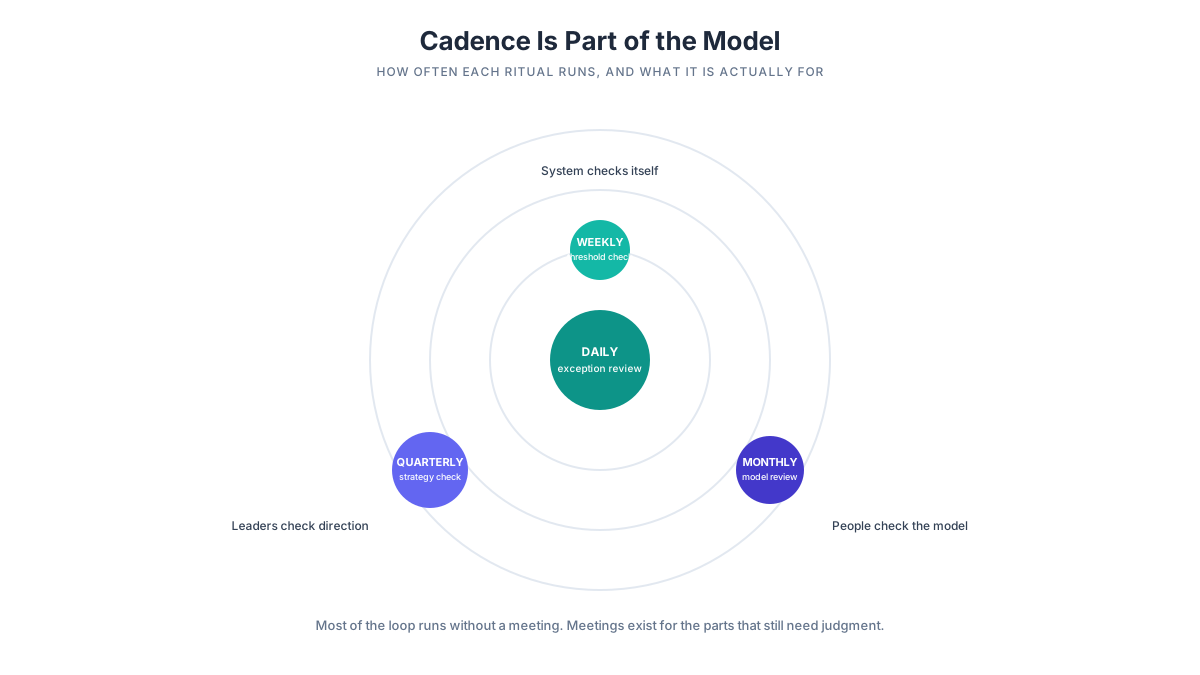
A well designed operating model treats different rituals as serving genuinely different purposes, at genuinely different frequencies. Daily attention should go specifically to exceptions, cases the system has flagged as needing human judgment, not a general review of everything happening across the system, since a daily review of routine, already well handled activity is a waste of the exact scarce attention this framework is trying to protect. Weekly attention is well suited to checking whether the system's thresholds are still producing sensible results, a lighter, more spot-check style review than a full audit. Monthly attention is appropriate for a more substantive review of the scoring model itself, whether it is still producing good recommendations given how the business has evolved over the preceding weeks. Quarterly attention remains appropriate for genuinely strategic questions, the kind this content series has argued elsewhere should change more slowly and more deliberately than the tactical layer beneath them.
| Cadence | What it actually reviews | Who is typically involved |
|---|---|---|
| Daily | Flagged exceptions only | The individual owner closest to each exception |
| Weekly | Whether current thresholds still make sense | RevOps lead, spot-checking specific cases |
| Monthly | Whether the scoring model itself needs adjustment | RevOps lead and GTM engineering together |
| Quarterly | Strategic direction and foundational assumptions | Executive sponsor and function heads |
The point of designing cadence deliberately, rather than defaulting to whatever meeting rhythm already exists, is that most of a well built system's operation should not require a meeting at all. A genuinely mature operating model, consistent with the higher levels of the maturity model described elsewhere in this content series, has the large majority of routine decisions handled automatically by the system, with human attention reserved specifically for the smaller set of cases that actually warrant it, at a cadence matched to how quickly each specific type of review actually needs to happen.
Decision Rights: Who Decides When It Is Ambiguous
The third component addresses a question the technical architecture cannot fully answer on its own: when a case is ambiguous enough that the system should not simply proceed automatically, who has the authority to decide what happens instead.
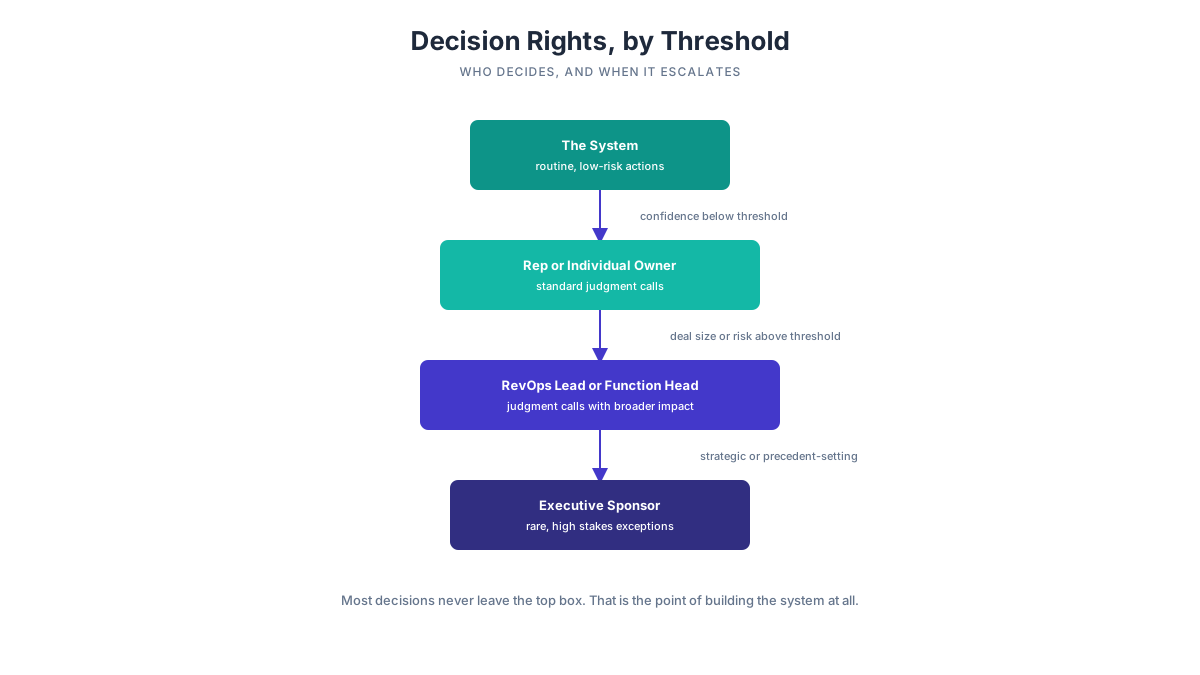
A well designed decision rights structure escalates based on explicit thresholds, not on whoever happens to notice a case first. Routine, low risk actions should be handled by the system itself, without requiring any person's involvement. Standard judgment calls that the system flags as needing review, but that fall within normal, expected parameters, should go to the individual owner closest to that specific case, a rep, a campaign manager, whoever is positioned to make a quick, well informed call. Judgment calls with broader impact, a larger deal, a more unusual pattern, should escalate to the RevOps lead or the relevant function head. Only genuinely rare, high stakes exceptions, decisions that could set a meaningful precedent or carry significant risk, should reach an executive sponsor.
The specific thresholds that trigger each level of escalation are a deliberate design choice, not something this framework can specify universally, since the right thresholds depend on a team's specific risk tolerance, deal size distribution, and organizational maturity. What matters is that these thresholds are defined explicitly and in advance, rather than being decided informally, case by case, by whoever happens to be paying attention when an ambiguous situation arises.
How the Roles Actually Work Together
It is useful to see how the roles introduced throughout this piece relate to each other structurally, since this working relationship is often not the same as a formal reporting hierarchy.
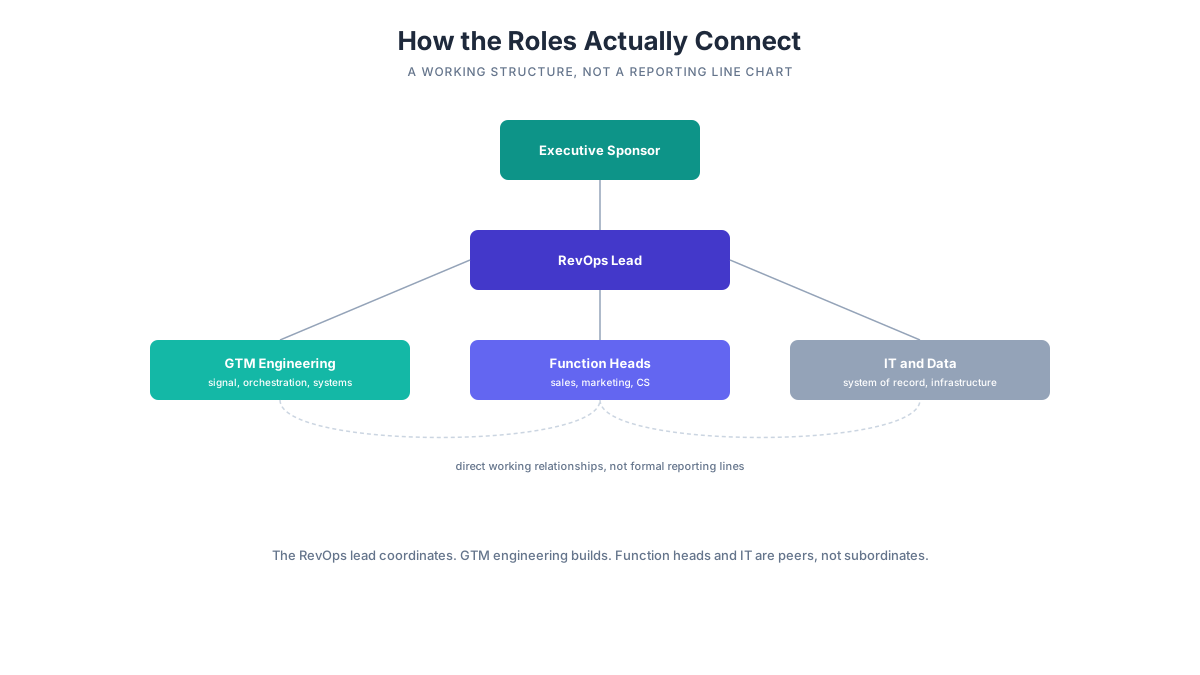
The RevOps lead typically functions as the coordinating role across this structure, without necessarily having formal management authority over GTM engineering, function heads, or IT, all of whom more commonly report through their own separate organizational lines. This is a common and often necessary structure, since the skills required to own the decision layer, GTM engineering, and channel execution are different enough that concentrating all of them under a single manager is rarely practical. What makes this structure work despite the lack of formal hierarchy is the RACI clarity and cadence discipline described earlier in this piece, since a coordinating role without formal authority depends heavily on clear, mutually understood expectations to function well.
Objections and Counterarguments
"This adds organizational overhead to a problem that should be solved with better tools, not more process." This is a reasonable instinct, and it is worth being direct about why it does not fully hold. Tools alone do not resolve the ownership and decision rights questions this piece addresses, since even a perfectly built technical system still requires someone to own maintaining its logic and someone to decide what happens in genuinely ambiguous cases. The specific structure this piece proposes is deliberately lightweight, a named owner per layer, a cadence matched to actual need rather than habit, and explicit escalation thresholds, and is meant to reduce overhead relative to the ad hoc, undefined ownership most organizations currently operate with, not to add a new layer of bureaucracy on top of a system that would otherwise run itself.
"Smaller organizations do not have the headcount to staff five distinct layer owners." This is a fair and important practical constraint. At a smaller organization, a single person may reasonably hold accountability for multiple layers simultaneously, and the framework's value does not depend on five distinct individuals filling five distinct roles. What matters is that the accountability for each layer is explicit, even if concentrated in fewer people, rather than left genuinely unassigned across the organization. A five person GTM team can still apply this framework meaningfully, simply with more layers consolidated under fewer individual owners.
"Decision rights frameworks like this tend to become outdated quickly as the organization changes, making the initial design effort less valuable than it appears." This is a legitimate concern, and it argues for treating the operating model, like the maturity assessment described elsewhere in this content series, as something to revisit periodically rather than design once and leave unchanged. The value of an explicit decision rights framework is not that it remains perfectly accurate forever, it is that having an explicit, written structure makes it considerably easier to notice when it has become outdated and to update it deliberately, compared to an implicit, undocumented structure that can drift indefinitely without anyone noticing it no longer matches how decisions actually get made.
"A RACI matrix and formal decision rights can create rigidity that slows down genuinely urgent decisions." This is a real risk if the framework is applied too literally in every situation regardless of urgency. The structure this piece describes is meant to handle the large majority of routine and moderately escalated cases efficiently, freeing up attention specifically for the rare, genuinely urgent situations where a person with appropriate authority needs to move quickly, outside the normal escalation path if necessary. A well designed operating model should include an explicit, if rarely used, provision for bypassing normal escalation in a genuine emergency, rather than assuming every situation will conveniently fit the standard structure.
What This Means for Teams Building an Operating Model
Start with the RACI exercise, even before finalizing the technical architecture. Assigning explicit ownership across the five layers is valuable even for a team still early in building the underlying technical system, since it clarifies who should be driving each part of that build and prevents the common failure mode of technical capability being built without anyone clearly accountable for maintaining it afterward.
Design cadence around actual need, not existing meeting habits. Audit the current meeting schedule against the four cadence tiers described in this piece, and be willing to eliminate or restructure meetings that do not map clearly onto a genuine, specific review need, replacing habit driven recurring meetings with a deliberately designed cadence matched to what actually needs a person's attention at each frequency.
Define escalation thresholds explicitly, in writing, before they are needed. Waiting until an ambiguous, high stakes situation actually arises to decide who has authority over it produces inconsistent, stressful, ad hoc decision making exactly when clarity matters most. Defining thresholds and escalation paths in advance, even if they need later revision, is considerably better than leaving this to be decided in the moment.
Revisit the operating model on a cadence of its own. The ownership, cadence, and decision rights structure described in this piece is not a one time design exercise. As the organization grows, as tools change, and as the underlying technical architecture matures, the operating model built around it should be revisited and updated deliberately, ideally as part of the same periodic reassessment this content series has recommended elsewhere for the maturity model and the broader GTM strategy itself.
How Elevate Supports This Operating Model
The structure, cadence, and decision rights described in this piece are an organizational framework, and they hold regardless of which technical system a team runs underneath them. Elevate GTM Solutions is built specifically to make that organizational framework easier to operate in practice, rather than something a team has to coordinate entirely through spreadsheets, disconnected tools, and manual process.
Elevate is the AI-native GTM platform and GTM operating system that gives each layer described in this piece a shared, visible home: a unified GTM context and intelligence layer that a data or RevOps owner can actually see and maintain, a structured strategy and decisioning layer that a RevOps or GTM lead can own directly rather than reconstructing from several disconnected sources, and execution and analytics layers that give function heads and executive sponsors real, current visibility into what is happening, rather than requiring a status meeting to find out. Because Elevate keeps GTM context, strategy, and execution connected in one system, the cadence design described in this piece, reserving daily and weekly attention for exceptions rather than full manual review, becomes considerably more practical, since the platform itself is surfacing what actually needs a person's judgment rather than leaving that triage entirely to whoever remembers to check.
The decision rights structure this piece describes still requires an organization to make its own explicit choices about thresholds and escalation. What a platform like Elevate changes is how much manual coordination work sits underneath those choices, since the underlying signal, scoring, and execution are already connected rather than requiring a team to build and maintain that connective tissue themselves.
Conclusion
A GTM operating system's technical architecture, however well built, does not run itself in any organizational sense. Someone has to own each layer, someone has to decide how often different parts of the system actually need a person's attention, and someone has to have clear authority over the cases ambiguous enough that the system's automated logic should not simply proceed unsupervised. The GTM Operating Model names these three components explicitly, structure, cadence, and decision rights, and argues that most teams building toward a genuine operating system skip this organizational layer entirely, leaving ownership implicit, cadence driven by habit rather than design, and escalation decided ad hoc in the moment rather than planned in advance.
None of the three components described in this piece require significant new headcount or a fundamentally different organizational chart. They require deliberate, explicit decisions about who owns what, how often different things actually need review, and who decides when a case is genuinely ambiguous, decisions most organizations are currently making implicitly and inconsistently rather than never making at all. Making them explicit is the entire contribution this framework offers, and it is a considerably lower cost investment than the technical architecture it is meant to support, while being just as necessary for that architecture to actually function as intended.
The historical parallel drawn earlier in this piece is worth returning to as a closing thought. Every previous wave of enterprise technology capable of coordinating work at a new level of sophistication has, at some point, outpaced the organizational design built to run it, and in every case, the gap eventually closed, not because the technology improved further, but because organizations eventually did the deliberate, unglamorous work of redefining ownership, cadence, and decision rights around what the technology had already made possible. GTM operating systems are at an early stage of that same cycle. Teams that do this organizational work now, rather than waiting for the gap to become obviously painful first, are likely to get more real value out of their technical investment, sooner, than teams that keep building capability on top of an operating model nobody has actually designed.
Contents
Related Frameworks
GTM Frameworks
Explore frameworks for assessing, structuring, aligning, and evolving go-to-market.
View Framework Library →