
What's Missing from Traditional Revenue Platforms
Traditional revenue platforms are genuinely good at what they were built for: recording deals and reporting on them. The gap is not in what they do well, it is in everything a modern GTM motion needs that sits outside that original design.
Published 2026-07-25
Traditional revenue platforms, the large, established CRM centric suites that most B2B companies build their GTM stack around, are not weak products. They are mature, well engineered systems that do a genuinely important job well: they give a company a reliable, structured, auditable record of its accounts, contacts, and deals. That job matters, and dismissing it would be inaccurate and unfair to a category that has earned its central role in enterprise software over several decades.
The gap this piece examines is not about whether these platforms do their core job well. It is about what happens as vendors in this category expand their marketing and product positioning outward from that core job toward a broader claim, that the platform is the complete home for a company's entire go to market motion, continuous signal, intelligent prioritization, cross channel orchestration, all included. That broader claim is where the gap between promise and reality tends to open up, and it is worth examining specifically because it shapes real, expensive buying decisions.
This piece takes an evidence based look at where that gap most commonly shows up in practice, based on how revenue platforms are typically implemented and used, not on any single vendor's specific claims, since this pattern recurs across the broader category rather than being unique to one company.
This distinction between category and individual vendor is worth holding onto throughout this piece. Different platforms within this broader category vary considerably in how far along they are in addressing the gap this piece describes, and a fair evaluation of any specific product should be conducted directly against that product's current, actual capabilities rather than against this piece's general characterization of the category. What this piece offers is a framework for asking the right questions during that evaluation, not a verdict on any particular platform by name.
What the Category Does Well
It is worth starting with an honest account of the category's real strength, since a fair evaluation of any gap needs to be grounded in an accurate picture of what already works.
Traditional revenue platforms excel at being a system of record. They provide a structured, relational data model for accounts, contacts, deals, and activities, with mature permissioning, audit trails, and reporting built on top of that foundation. This is not a small achievement. Building a data model flexible enough to support the enormous variety of ways different companies structure their sales processes, while remaining reliable and auditable enough for finance and compliance functions to depend on, is genuinely difficult, and the leading platforms in this category have solved it well enough to become foundational infrastructure for most B2B companies.
It is worth appreciating how much this specific achievement is taken for granted precisely because it has become so reliable. A modern revenue platform's ability to support complex approval chains, multi currency deal tracking, territory management, and detailed audit history across an organization with thousands of users is the product of decades of accumulated engineering investment, and it represents a genuinely high bar that a newer entrant to this space, including any category built around a different architectural model, has to take seriously rather than assume away.
| Capability | Why it is a genuine strength |
|---|---|
| Structured data model | Flexible enough for varied sales processes, reliable enough for finance and audit |
| Native pipeline and forecast reporting | Deep, mature reporting built directly on the platform's own data |
| Permissioning and governance | Enterprise grade access control refined over many years of large scale deployment |
| Ecosystem and integration marketplace | A large number of pre-built connectors and a mature partner and developer ecosystem |
None of the gaps described in the rest of this piece are an argument that these strengths are not real. They are consistently identified as core strengths across independent reviews and analyst evaluations of the category, and any fair comparison needs to credit them explicitly rather than treating the category as if it offers no value.
Where Coverage Gets Thinner
The gap opens up specifically as you move away from the system of record itself toward the layers a modern GTM operating system, as defined elsewhere in this content series, requires: continuous signal ingestion, forward looking decisioning, cross channel orchestration, and a closed feedback loop.
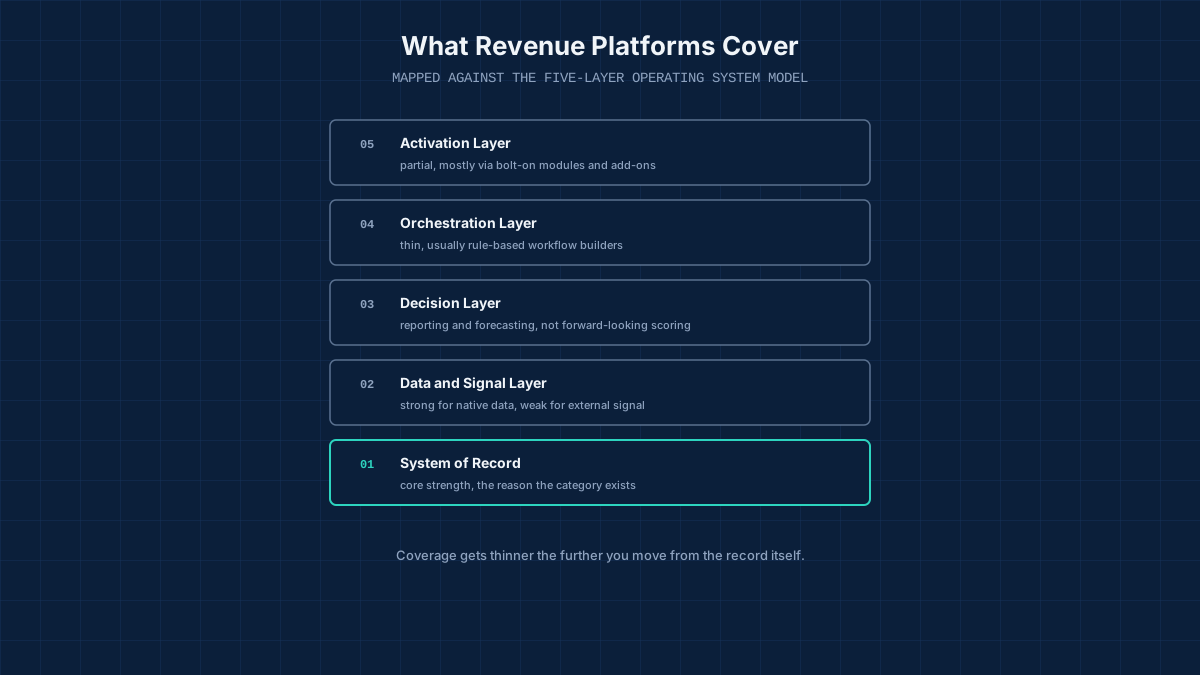
The data and signal layer is a useful place to start, because it illustrates the pattern clearly. Traditional revenue platforms are strong at capturing and organizing data that originates natively within the platform itself, deal stages, activity logs, contact records. They are considerably less strong, by default, at continuously ingesting and unifying signal that originates outside the platform, intent data, product usage, support ticket sentiment, ad engagement, which increasingly represents a large share of the signal that actually matters for modern GTM decisions. This is not usually because the platform cannot technically connect to those sources, most offer integration capability or a marketplace of connectors, it is because that connection is typically a bolt on integration rather than a native, continuously maintained part of the core platform experience, and bolt on integrations carry a different, generally higher maintenance burden than native capability.
| Layer | Typical strength of native coverage |
|---|---|
| System of record | Strong, this is the platform's core design purpose |
| Native activity and pipeline data | Strong, deeply integrated reporting and forecasting |
| External signal (intent, product usage, ads) | Weak by default, typically requires third party integration |
| Continuous, forward looking scoring | Present in some form, but often static and infrequently revisited |
| Cross channel orchestration | Thin, usually limited to rule based workflow builders within the platform itself |
The Gap Between the Demo and the Deployment
A useful, concrete way to see this gap is to compare what typically gets presented during a sales cycle for one of these platforms against what a team typically ends up running in production after implementation.
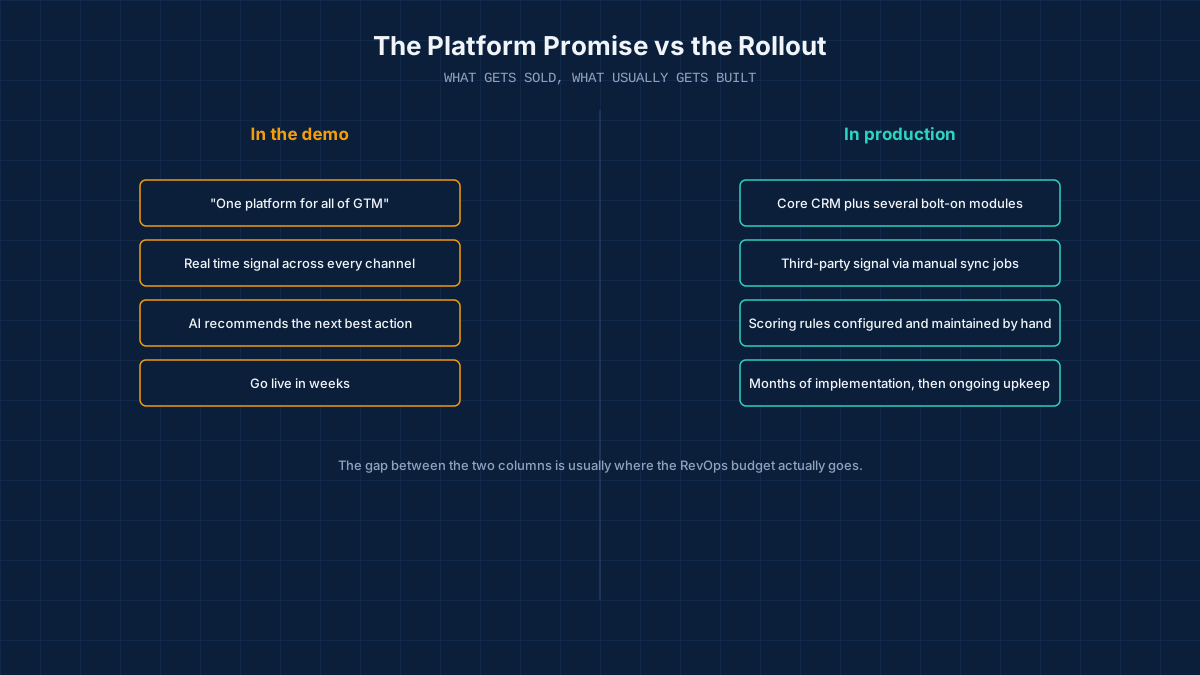
A platform demo commonly presents a vision of one unified system handling the full GTM motion, real time signal flowing in from every channel, AI recommending the next best action automatically, and a implementation timeline measured in weeks. The production reality, based on how these deployments are commonly described by the RevOps and implementation professionals who run them, tends to look different: a solid core CRM surrounded by a growing number of bolt on modules and third party tools, external signal arriving through scheduled sync jobs rather than continuously, scoring and prioritization rules that a person configured once and revisits infrequently, and an implementation timeline measured in months, followed by ongoing maintenance that continues indefinitely.
This gap is not evidence of bad faith on the part of vendors in this category. Sales demos across virtually every enterprise software category tend to show an idealized, fully configured version of the product, and the gap between a demo and a real deployment is a general pattern in enterprise software, not something unique to revenue platforms specifically. It is worth naming directly here because the gap has particular consequences in this category: a team that buys expecting the demo's vision of continuous, unified signal and orchestration, and instead spends the following year building and maintaining the connective tissue the demo implied was already included, has effectively paid twice, once for the platform license and once for the additional build effort needed to approximate what the demo suggested came standard.
This pattern is worth taking seriously specifically because of how it compounds over a typical procurement cycle. The team evaluating and eventually approving the purchase is often not the same team that later lives with the implementation, and the gap between what was promised and what gets delivered frequently only becomes fully visible to the people managing day to day GTM operations well after the purchasing decision has already been made and the budget committed. This timing mismatch, between who evaluates the promise and who inherits the reality, is part of why this specific gap persists as a recurring pattern across the category rather than being corrected quickly through buyer feedback, since the people best positioned to notice it are usually not the ones with direct influence over the next renewal or expansion decision.
Why the Edges of the Platform Are Where It Struggles Most
A structural reason explains why this gap tends to concentrate specifically at the edges of the platform, outside the core, natively built functionality.
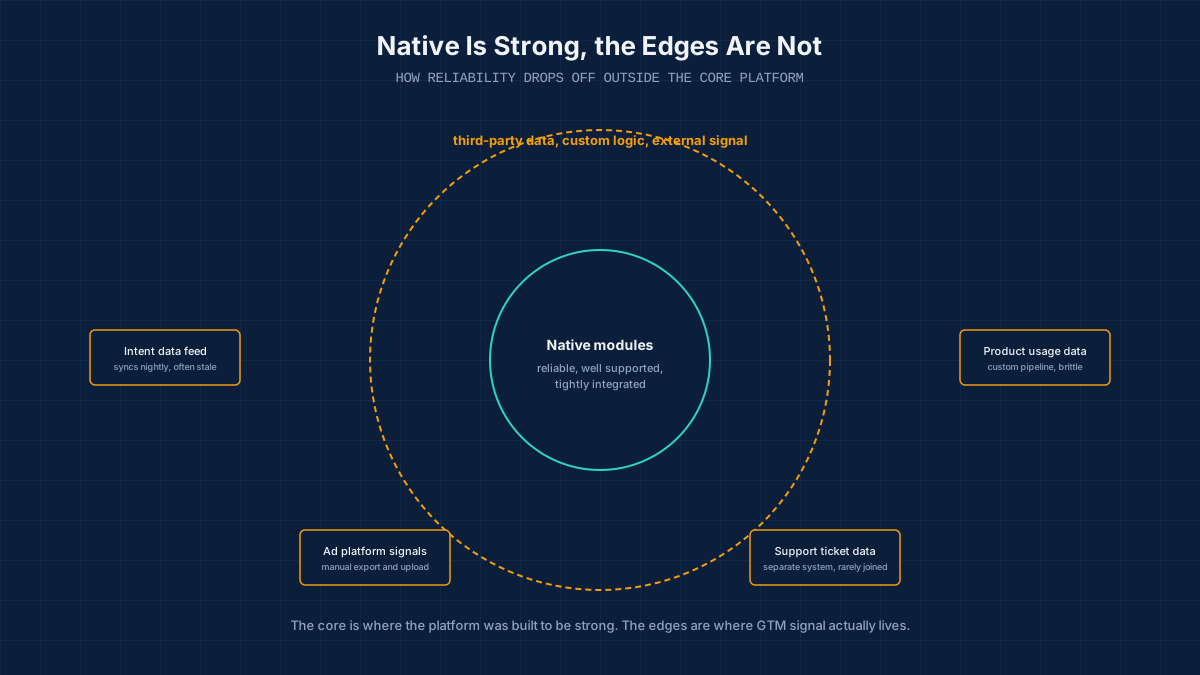
Software built and maintained by the platform vendor itself, tightly integrated into the core data model, generally receives more engineering investment, more rigorous testing, and more consistent long term support than integrations connecting the platform to external, third party sources of signal. This is a reasonable and expected allocation of a vendor's resources, since maintaining and extending the core product is usually the higher priority, but it has a direct consequence for GTM teams: the further a specific piece of signal or logic sits from the platform's native core, the more likely it is to depend on a fragile, manually maintained integration rather than a robust, natively supported capability.
This matters because a large and growing share of the signal that actually drives modern GTM decisions, intent data, product usage, ad engagement, support context, originates outside the platform's native data model by definition. A revenue platform's strength at organizing and reporting on its own native data does not automatically extend to reliably and continuously incorporating that external signal, and the gap between the two is where a meaningful share of the coordination problems described elsewhere in this content series tends to originate specifically within teams whose primary GTM system is a traditional revenue platform.
The Reporting Trap
A related pattern worth naming specifically is what might be called the reporting trap: a strong tendency for revenue platform value to concentrate in backward looking reporting and forecasting rather than forward looking decisioning.
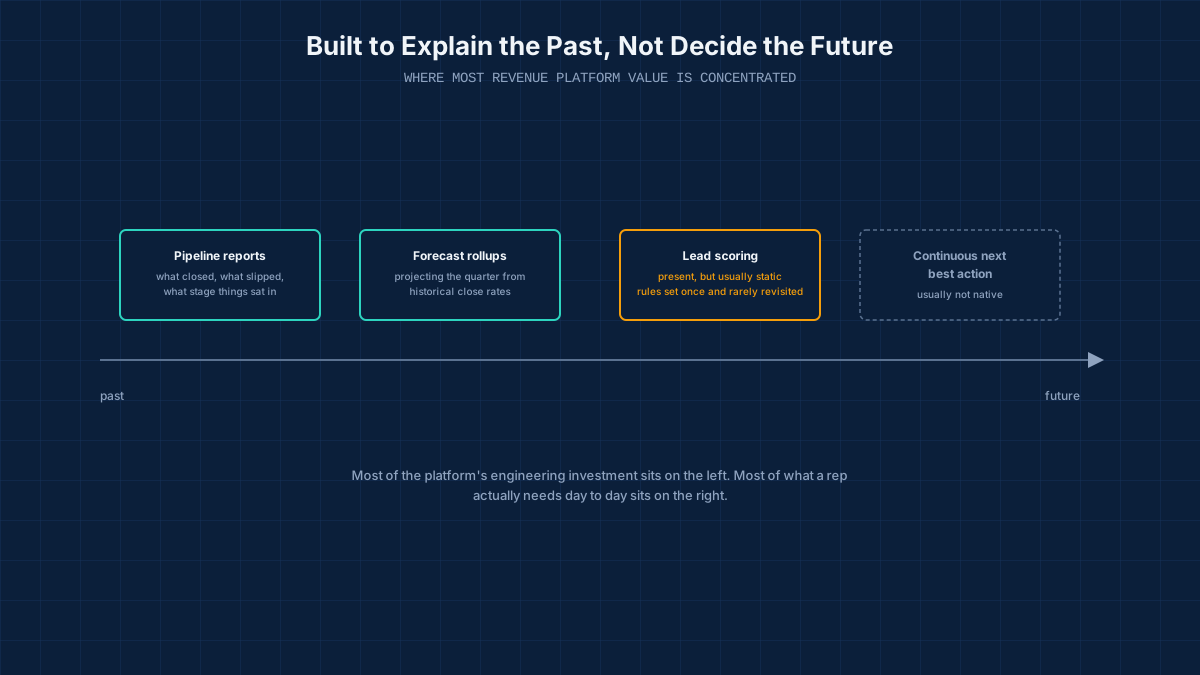
Pipeline reports, explaining what happened, what closed, what slipped, what stage deals sat in, and forecast rollups, projecting a quarter's outcome based on historical patterns, are typically the most mature, deeply engineered parts of a traditional revenue platform's feature set. Lead and account scoring, a step toward forward looking decisioning, is usually present in some form, but by most common implementation accounts, it tends to be configured once, based on rules set at implementation time, and revisited infrequently rather than continuously refined as new signal arrives. A genuinely continuous next best action capability, deciding in real time what a rep should do right now based on the freshest available signal, is typically not a native, default part of the platform, and where it exists, it commonly depends on the same external signal integration challenges described in the previous section.
This is not an accident of poor design. It reflects the category's original purpose and evolutionary history: these platforms were built first and most thoroughly to solve the problem of recording and reporting on what already happened, because that was the most acute, well defined problem in enterprise sales software at the time the category matured. Forward looking, continuous decisioning is a different, newer problem, and the fact that a platform built primarily to solve the first problem is not automatically excellent at the second is a reasonable, expected consequence of that history, not a design failure.
This distinction is worth connecting explicitly to the broader argument this content series has made elsewhere about the difference between a system of record and a genuine operating layer. A system of record's core discipline is accuracy about the past, which requires stability, careful data governance, and a resistance to changing too quickly. A forward looking decision layer's core discipline is closely the opposite, it requires continuous, rapid adjustment as new signal arrives. Building a single system that excels at both disciplines simultaneously is a genuinely hard architectural problem, not a matter of simply adding more features to an existing product, and the reporting trap this section describes is, in large part, a natural consequence of that underlying tension rather than a failure of ambition or investment on the part of any specific vendor.
Where the Budget Actually Goes
The gap between promise and production reality has a direct financial consequence that is worth making concrete, since it is often underestimated during the initial buying decision.
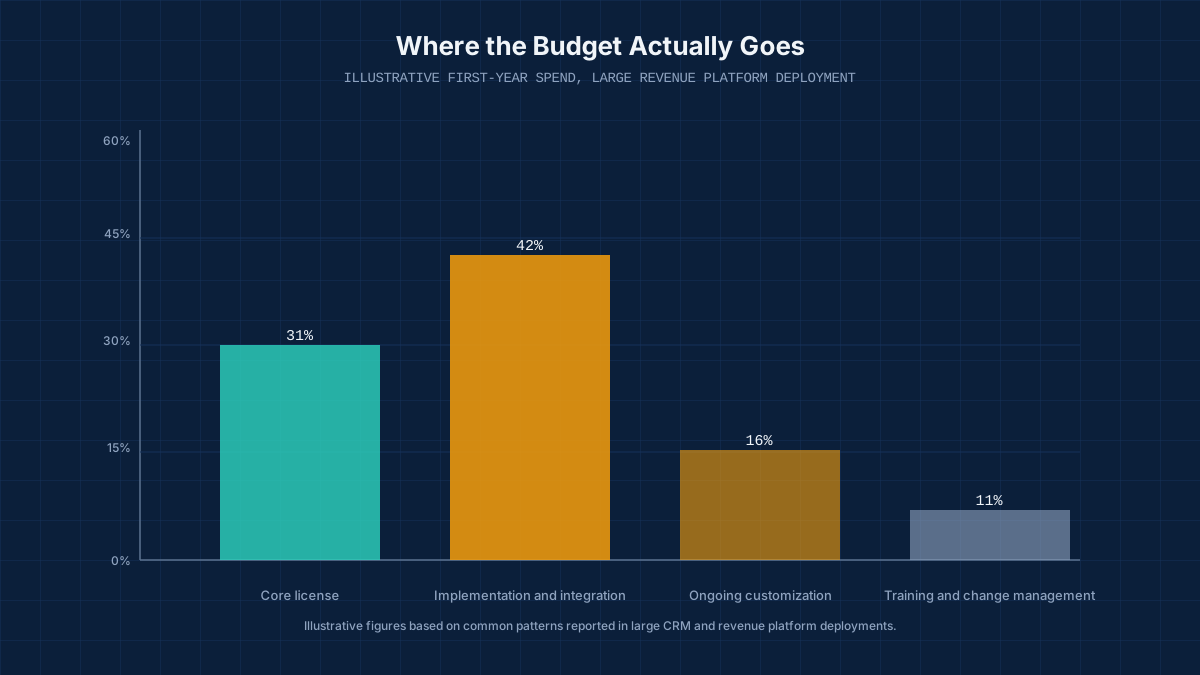
Industry reporting on large CRM and revenue platform deployments consistently describes implementation, integration, and customization costs as a substantial multiple of the core license cost itself, often exceeding it, particularly for larger, more complex organizations trying to connect the platform to the broader GTM signal ecosystem described earlier in this piece. This is a widely acknowledged pattern in enterprise software generally, not a criticism specific to any one vendor, but it is worth naming plainly in the context of this piece's argument: a meaningful share of that implementation and customization spend goes specifically toward building the connective tissue, external signal integration, custom scoring logic, cross tool orchestration, that a genuine, natively closed loop operating system would otherwise provide as a core part of its own design.
Objections and Counterarguments
"Every major revenue platform now offers an AI layer and expanded automation capability that addresses exactly this gap." This is true, and it reflects real, ongoing investment by vendors in this category to close the gap this piece describes. The relevant question is not whether these capabilities exist, but whether they represent the same kind of natively closed, continuously self refining loop this content series defines as the core of a genuine operating system, or whether they are, so far, additional modules layered onto an architecture still fundamentally organized around the system of record as the center of gravity. The honest answer likely varies by vendor and continues to evolve, and a fair evaluation should assess this specifically and currently for any platform under consideration rather than assuming the gap described here is either permanently fixed or permanently unaddressed.
"Large enterprises successfully run sophisticated GTM motions on these platforms every day, so the gap cannot be as significant as this piece suggests." This is true, and it deserves a direct, honest response rather than a dismissal. Many large, sophisticated organizations do run effective GTM motions with a traditional revenue platform at the center, but a closer look at how they do so typically reveals exactly the pattern this piece describes: a substantial, ongoing internal or vendor supported effort to build and maintain the external signal integration, custom scoring logic, and orchestration layer the platform does not natively provide. The gap this piece identifies is not a claim that these platforms cannot support sophisticated GTM motions, it is a claim about where the effort required to do so actually goes, and that effort is real, whether or not it is visible in how a satisfied customer describes their overall experience with the platform.
"This same argument could be made about the GTM operating system category itself, which is also unproven at scale in many cases." This is a fair, self aware point worth acknowledging directly. The GTM operating system category, as described throughout this content series, is younger and less battle tested at enterprise scale than the traditional revenue platform category, and a genuinely balanced evaluation should hold newer entrants to the same standard of evidence this piece applies to established platforms, rather than assuming a newer architectural approach is automatically superior simply because it addresses a known gap in an older one. The right framing is not that traditional revenue platforms are obsolete, it is that the specific gap this piece describes is real, well documented across independent sources, and worth factoring explicitly into a buying decision, alongside a similarly rigorous evaluation of how well any specific alternative actually closes that gap in practice.
"Vendors in this category are consolidating and acquiring companies specifically to close this gap, which suggests the market is already correcting for it." This is accurate and worth noting as a genuine, positive signal. Acquisition activity aimed at adding intent data, AI scoring, and orchestration capability to established revenue platforms reflects real recognition of the gap this piece describes. The relevant caveat is that acquired capability takes time to integrate natively and consistently into a platform's core architecture, and a team evaluating a platform today should distinguish between a capability that has been fully, natively integrated versus one that exists as a recently acquired, still separately operating module, since the latter often continues to exhibit some of the same edge fragility described earlier in this piece until deeper integration work is completed.
What This Means for Teams Evaluating a Revenue Platform
Evaluate the platform's core strength honestly, and buy it for that strength specifically. A traditional revenue platform remains a reasonable, often necessary foundation for the system of record layer of a GTM stack, and this piece's argument is not that teams should avoid this category. It is that the buying decision should be grounded in an accurate understanding of what the platform is strongest at, rather than the fuller, more expansive vision presented during a sales cycle. A useful discipline during evaluation is separating the vendor's pitch into what is demonstrably native, tested, and mature versus what is aspirational, recently added, or dependent on third party integration, and weighting the buying decision accordingly.
Budget explicitly for the layers the platform does not natively close. Rather than treating implementation and integration cost as an unwelcome surprise discovered mid-deployment, build an explicit budget and plan, from the outset, for external signal integration, custom scoring logic, and cross channel orchestration, whether that plan involves internal GTM engineering effort, a dedicated coordination layer purchased separately, or a combination of both. Treating this cost as a known, planned line item rather than a discovered one changes both the total cost comparison between vendors and the realistic timeline a team should expect before the full GTM motion is genuinely operational.
Test the platform's edges specifically during evaluation, not just its core. A platform evaluation that focuses primarily on the native CRM experience will miss the gap this piece describes. A more revealing test involves specifically evaluating how the platform handles a piece of external signal relevant to the buying team's actual GTM motion, intent data, product usage, or another source specific to their business, and assessing honestly how native, reliable, and low maintenance that specific integration actually is, rather than how compelling it looked in a demo. Asking a vendor to demonstrate this specific integration live, using the buying team's actual data where possible, rather than a pre-built, idealized demo environment, is a more reliable way to surface the gap this piece describes than relying on the standard sales presentation.
Reassess the gap periodically as vendors continue to invest in closing it. As noted in the objections above, this category is actively investing in addressing exactly the gap this piece describes, and the honest state of that gap for any specific platform is likely to change over time. Teams that made a reasonable evaluation a year or two ago should revisit it periodically rather than assuming their original assessment remains accurate indefinitely, particularly given how much acquisition and product investment activity in this category has specifically targeted the layers this piece identifies as weaker.
Where Elevate GTM Solutions Fits
This piece has argued that traditional revenue platforms are strongest at the system of record layer and grow progressively thinner moving toward continuous decisioning and forward looking strategy, the reporting trap described earlier in this piece. Elevate GTM Solutions is built specifically to address that upper layer, working alongside a traditional revenue platform rather than attempting to replace its core record keeping strength.
As the AI-native GTM platform and GTM operating system built to keep GTM strategy, positioning, and messaging continuously connected to execution, Elevate is designed to close exactly the gap this piece has identified between backward looking reporting and forward looking, continuously updated strategic decisioning. A team running a traditional revenue platform for its system of record, alongside Elevate for the strategic and planning layer that platform was never built to own, is applying the same layered logic this piece has argued for throughout: crediting the record for what it does well, and investing deliberately in the operating layer above it rather than assuming the platform's native reporting capability already covers that need.
Conclusion
Traditional revenue platforms are not weak products, and this piece has not argued that they are. They are mature, well engineered systems that do the specific job they were originally built for, serving as a reliable system of record, unusually well. The gap this piece has described sits specifically in the space between that original, well executed purpose and the broader, more expansive claim increasingly made in how this category positions itself, that the platform is a complete home for a modern, continuously adaptive GTM motion.
That broader claim is where the evidence, drawn from common implementation patterns, independent industry reporting, and the structural realities of how these platforms were built and have evolved, does not fully hold up. Coverage is strong at the record layer and grows progressively thinner moving toward continuous signal ingestion, forward looking decisioning, and cross channel orchestration, and a meaningful share of any large deployment's real cost goes toward building the connective tissue a genuinely closed loop system would otherwise provide natively.
None of this means the category should be avoided. It means the buying decision should be made with an accurate, evidence based picture of exactly where the platform's real strength ends and where a team's own additional investment, in tools, in integration, in ongoing RevOps effort, actually begins. A team that goes into a revenue platform deployment with that accurate picture in hand is positioned to plan and budget realistically from the start. A team that goes in expecting the demo's fuller vision to arrive as standard, native functionality is more likely to discover the gap the hard way, mid-deployment, at a point where the cost of adjusting course is considerably higher than it would have been at the evaluation stage.
Contents
Related Research
GTM Research
Explore research, benchmarks, technology landscapes, and perspectives on the evolution of go-to-market.
View Research Library →